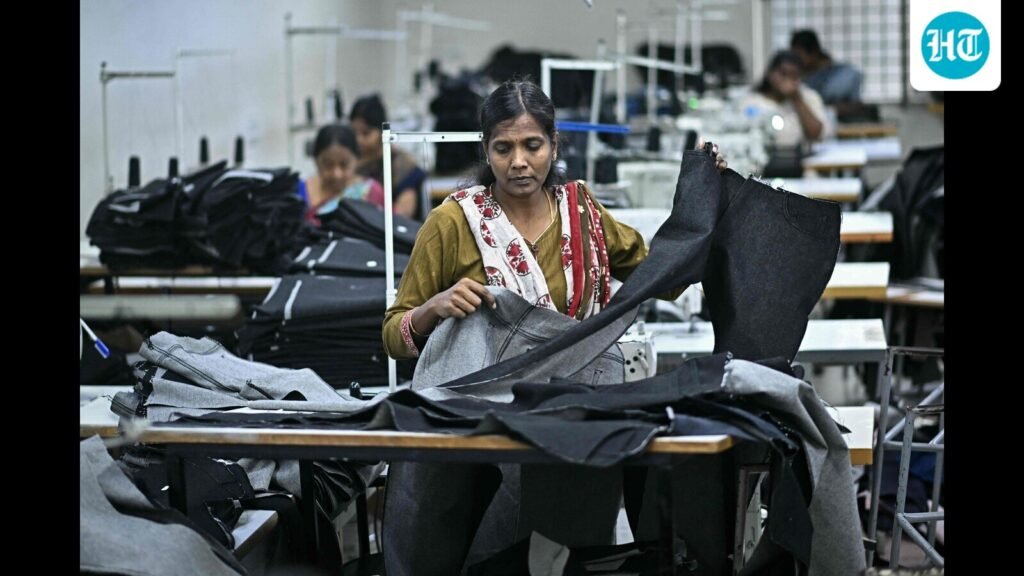
The us tarifs will Bite India’s Textile Sector – Exports to the US Stand at $ 10.7 billion annual, and some estimates project a 40% decline, as experts, as experts, more experts. Given this, India’s Textile Sector Badly Needs New Markets. The imperative for this is spelled out by the fact that sector contributes 2.3% to the gdp, accounts for 13% of Industrial Production, and Compresses 12% of the Country’s Total Expos. Employing Over 45 Million, Many of Them Rural Women, It is Second only to Agriculture in Terms of Livelihoods. Against this backdrop, can the Comprehensive Economic and Trade Agreement (CETA), Signed by India and the uk in July and expected to be implemented in early 2026, Offset Some of the Hurt? Under Ceta, The UK Will Eliminate Tariffs on Several Labor-Intensive Indian Exports, Leading to Significant Market Access Gains.

Despite Facing A 9% Import duty in the UK So far, India Managed to Secure a 6% Share in Its Readymade Garment Imports, Exporting Goods Worth Approximately $ 1.2 Billion Annually. With the elimination of tarifs, shipments to the uk are projection to increase by 30-40%.
However. The India – Japan Comprehensive Economic Partnership Agreement (CEPA) is a case in point. Despite Similar concessions, Indian textiles struggled to find a footing in Japan’s highly structured and quality-conscious market. In the Uk Too, India is seeking to expand in a playing field dominated by china, bangladesh, and vietnam-Countries with Well-Etynched Supplier Relationships, Agile Products Cycles, Costation Costs Are Difential to Match. Several of them also enjoy zero-duty access, which could be effectively neutralise India’s advantage under Ceta. Therefore, The Challenge Lies in Whether Indian Textile Exporters Can Match or Outperform Such Global Competitors in Speed, Quality, and Relibility.
Moreover, While Tariff Walls Fall Under Ceta, Non-Tariff Barriers Will Continue to Pose Stiff Challenges. The uk has been steadily tightening its regulations on Sustainability, Labor Rights, and Carbon Emissions. Standards Compliance, Traceability, and Carbon Labelling Are Bopeing Decisive Factors for Gaining Market Access. Indian firms will therefore need to invest in eco-friendly technologies, follow the rulebook on transparent and ethical supply chains, and comply with internationally accessible standards. Without these, tariff concessions will offer only marginal gains.
Encouragingly, Thought, India’s Textile Sector Has Not Been Left With Policy Support. The production linked incentive (PLI) Scheme for Textiles, Pradhan Mantri Mega Integrated Textile Region and Apparel (PM MITRA) Parks, The Textile Cluster Development Scheme (TCDS), the amened Technology Upgradation Fund Scheme (Atofs), The National Technical Textiles Mission (NTTM), and the Samarth Skilling Program, All seek to address infrastructure gaps, modernise Productions, and Strengthene. Workforce. If implemented effectively, they could raise the industry’s annual growth rate to 15–20% over the next five years. India’s Textile Strategy must be guided by more than just capital outlays. High-Frequency, Granular Data on Export Trends, Buyer Requirements, Compliance Gaps, and Global Demand Patterns Must Information BOTH PULH POLICY and PRIVATE Strategy.
The stakes are particularly high for regional textile clusters. Nearly 80% of India’s Textile Production is concentrated in msme clusters. Tamil Nadu Alone Accounted for $ 7.99 Billion in Textile Exports in 2024-25, Equivalent to 26.8%of of India’s Total, Followed by Gujarat (18.9%) and Maharashtra (12.8%). Hubs like Tiruppur, Coimbatore, and Erode in Tamil Nadu are alredy know for their expense-oriented ecosystems, Combining skilled labor with infrastructure and entrepreneurial dynamism. With Ceta in place, tiruppur’s knitwear, for instance, even Competitors.
Equally Important High-Margin segments like Technical Textiles for Health Care, Defense, and Mobility Present Untapped Potential. These offer scope for innovation and brand-building, with less competition from low-cost producers. To that end, enabling msmes and start-ups to innovate, digitise, and upgrade practices shall be vital. Collaborations with the Creative Industries, Digital Integration with E-Commerce Platforms, and Co-Branding with UK Retailers could retailers even India’s positions and record in thes
Whether Ceta Proves to be a game-Congress for Indian Textiles will depend on how effectively the country navigates the post-Tariff Terrain-Where COST SHALL MATER, But Credibility Will Matter more; Where Speed Shall Help, But Standards will Seal the Deal.
Renjith Ramachandran Teaches at the Indian Institute of Management (IIM), Tiruchirappalli, and Amarendu Nandy Teaches at IIM Ranchi. The views expressed are personal