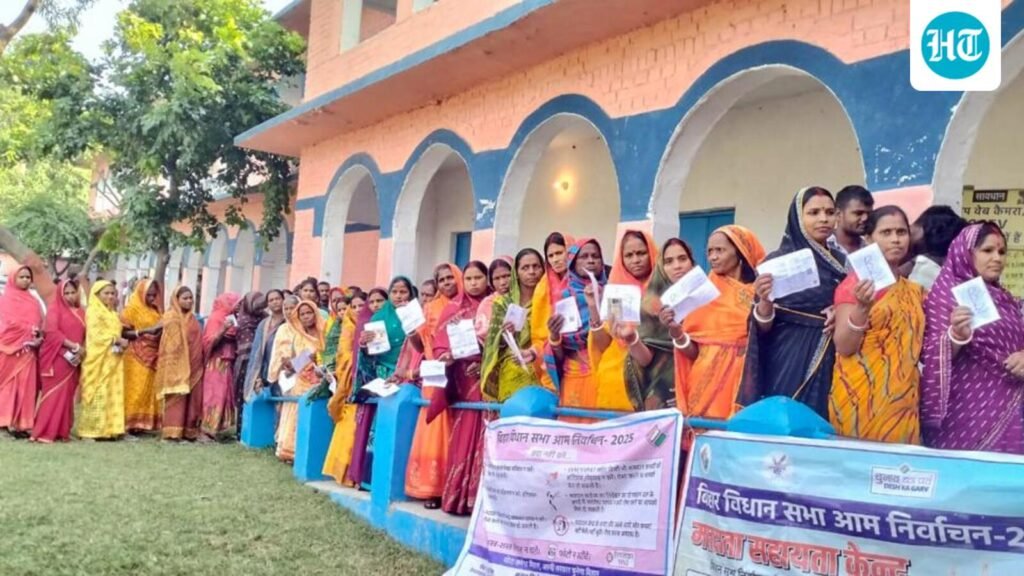
The NDA’s victory in Bihar in 2025 was not secured through traditional caste arithmetic or last-minute alliance manoeuvres. It was delivered by women. With a record 71.6% female turnout compared to 62.8% for men, the election showed how decisively women now shape electoral outcomes. Bihar has become the strongest example of a broader transformation underway across Indian democracy — the rise of women as an independent political constituency.

This shift has coincided with the rapid expansion of unconditional cash transfers (UCTs) targeted at women. What started as an administrative tool for smoother welfare delivery has evolved into a central political strategy. Governments in Madhya Pradesh, Maharashtra, Delhi, Bihar, Telangana, and Karnataka have embraced women-centric cash schemes because they deliver something more powerful than welfare improvements: electoral returns.
Yet the question remains whether this new model of politics, built on direct deposits into women’s bank accounts, actually improves women’s economic lives. Recent global evidence offers a nuanced answer.
Women voters are reshaping electoral outcomes: The political prominence of UCTs to women is best understood against the backdrop of rising vote femaler participation. For decades, women voted at lower rates than men. That gap has not only closed but, in many states, women now outvote men.
During the 2025 Delhi assembly election, female turnout reached 60.92%, edging out the male turnout of 60.21%. It was the first time women outvoted men in the capital’s electoral history.
Bihar demonstrates an even sharper shift. Female turnout rose from 59.58% in the 2020 assembly election to 71.6% in 2025, far above male turnout in both years. This marks women as not just an engaged electorate, but the most influential swing group in the state.
Maharashtra’s 2024 assembly election showed similar patterns. Women’s turnout was approximately 65.22% statewide, slightly higher than men’s, and women cast 46.29 lakh more votes than they did in 2019. Even small percentage-point differences matter at this scale.
Nationally, in the 2024 Lok Sabha election, 312 million of the 642 million voters were women. The gender gap in turnout, once a defining feature of Indian elections, has almost entirely disappeared. Improvements in literacy, media access, enrollment drives by the Election Commission, and grassroots mobilization by women’s organizations have brought women voters to the political forefront. Parties have quickly adapted, designing welfare and cash policies specifically to appeal to them.
Why women-targeted cash transfers resonate: To understand the political success of these schemes, one must consider the structural constraints women face in India. Women remain marginalized from the formal economy, productive assets, and credit markets. Their labor-force participation is among the lowest in the world. The burden of unpaid care work limits mobility and access to skills and employment.
The Periodic Labor Force Survey (2023–24) reports that the share of rural women in regular salaried jobs has fallen from 10.5% in 2017–18 to 7.8% in 2023–24. Even when women work, they are concentrated in low-wage, insecure, informal employment. Given this context, unconditional monthly transfers of `1,000 to `2,500 provide critically needed liquidity, enabling households to stabilize consumption, manage health expenses, avoid high-cost borrowing, and expand women’s bargaining power within the home.
Cash gives women something many of them never had: predictable, independent income. This is why these schemes resonate not only economically but psychologically, and why they have become an electoral force.
Unconditional cash transfers work, but with limits: The most comprehensive global analysis on unconditional cash transfers comes from the US National Bureau of Economic Research (NBER)’s recent meta-analysis synthesizing 115 randomized evaluations across 72 UCT programs in 34 low- and middle-income countries. The findings challenge several assumptions in Indian political discourse.
The study reports strong positive average effects on monthly consumption, food intake, income, labor force participation, food security, psychological well-being, and total assets. These improvements directly contradict the narrative that cash reduces the incentive to work. Instead, labor participation and income rise across contexts, indicating that liquidity constraints, rather than complacency, limit economic activity.
Crucially, the study finds that targeting cash to women produces larger gains in consumption and income than non-targeted transfers. This aligns with the logic behind schemes like Madhya Pradesh’s Ladli Behna and Maharashtra’s Ladki Bahin, where women recipients prioritize food, education, and household stability.
Yet, the evidence also highlights important limitations. While food security and psychological well-being improve significantly, unconditional cash transfers alone do not consistently improve child nutrition indicators like height-for-age or enhance school enrollment. These outcomes require complementary public services. The study also finds no evidence that cash transfers enable households to escape long-term poverty traps without additional support.
Cash improves welfare. It does not replace the need for childcare infrastructure, public health systems, nutritional programs, or employment opportunities.
Why political parties love UCTs: Politically, women-targeted cash transfers offer unmatched advantages. They are simple to administer, deliver immediate results, and create a direct connection between political leaders and beneficiaries. Recipients often associate the transfer with a specific chief minister or party, creating a sense of personalized welfare.
In Madhya Pradesh, Ladli Behna reshaped the electoral landscape by providing `1,250 per month to more than one crore women. Many identified themselves as Ladli Behna beneficiaries, and their support proved decisive in back-to-back elections.
In Maharashtra, the Ladki Bahin Yojana was launched just before the 2024 polls, promising `1,500 per month. Women queued in large numbers to apply, signaling an immediate political impact even before implementation.
In Delhi, the promised Mahila Samman Yojana, offering `2,100 per month to low-income women, has influenced electoral discourse despite not yet being rolled out.
Bihar’s 2025 election saw intense competition between a ruling alliance offering recurring support and an opposition promising a one-time transfer of `30,000. Women became the central battleground and cash the primary tool of persuasion.
The risks ahead: Despite their benefits, women-targeted UCTs pose real risks.
First, fiscal sustainability is a growing concern. Programs like Ladli Behna require tens of thousands of crores of rupees annually. States with limited revenue bases may struggle to sustain these commitments.
Second, the personalization of welfare encourages clientelism. Cash schemes timed around elections, branded with leaders’ faces, can shift citizen-state relations from rights-based entitlements to patronage networks.
Third, cash alone cannot address India’s deep gender inequalities. Without childcare, transport safety, better schools, and employment pathways, women remain economically constrained even with regular income.
The way forward: India needs to move from transactional cash transfers to a more institutional, fiscally responsible framework for women’s empowerment. Income support must be legislated rather than branded, paired with public services instead of replacing them, and delivered through transparent digital platforms that enable accountability and feedback.
Women-targeted UCTs have already changed Indian politics. The challenge now is to ensure they also change women’s economic futures. Cash can begin that journey. It cannot complete it.
Piyush Zaware is a researcher in economics of human development at the University of Chicago. The views expressed are personal