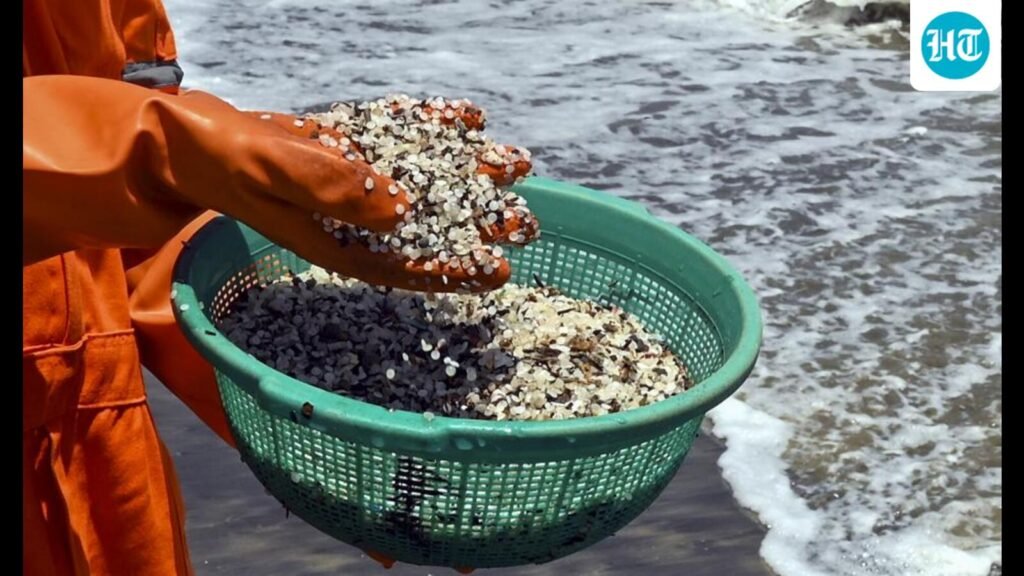
Plastic Island is the unfortunate nickname a small island in Norway called Lisle Lyngøy had earned, thanks to half a century of undisturbed accumulation of marine waste on its shores and in its surrounding waters. Then, in August 2021, a surface clean-up of plastic and other waste was initiated, with a follow-up cleaning exercise in April 2022. The result? A significant drop in the volume of microplastics in the fresh water and ocean in the beach zone as early as the following year.

I cite this as an inspiring example of what happens when intention meets action. That is exactly what the India–Norway Marine Pollution and Plastic Waste Forum 2025, which Norway is currently hosting in Mumbai, aims to do. It has brought together Indian and Norwegian government officials, scientists, businesses, civil society and youth, not to discuss abstract goals, but to take stock of what is working, identify what can be scaled up and forge new collaborations for a tangible impact. The Forum charts progress from grassroots behavioral change and circular models to business innovations and science-policy integration – all through the lens of Indo-Norwegian collaboration.
In 2019, when Indian Prime Minister (PM) Narendra Modi and former Norwegian PM Erna Solberg launched our collaboration on the blue economy, including the landmark India-Norway Marine Pollution Initiative, they set in motion a partnership anchored in science, policy and shared responsibility for the oceans we depend on. Six years later, that partnership has evolved into one of our most dynamic and forward-looking areas of cooperation, guided by a powerful conviction. The transition from marine pollution to blue prosperity is possible if we act together.
Since its launch, the India–Norway Marine Pollution Initiative has supported five core projects with Indian and Norwegian entities, spanning the entire chain of marine and plastic pollution, from source to end-of-life management. These efforts have strengthened circular economy models, improved waste management and plastic waste co-processing systems in coastal regions, developed monitoring tools for plastics and chemicals in rivers, and mobilized thousands through citizen-led plastic clean-up campaigns. This year, the project steering committee decided to extend the Marine Pollution Initiative until 2030. The Norwegian embassy and India’s ministry of environment, forest and climate change are now working on a broadened partnership. Our goal is not only to deepen existing collaborations but also to bring in more Indian states, more private-sector actors, and more scientific and youth-driven initiatives.
The work we do bilaterally with India strengthens our joint contribution internationally. Although the Global Plastics Treaty negotiations in Geneva could not reach a consensus, the meeting saw clear progress on several difficult issues, and the momentum is strong for global efforts to tackle plastic pollution. Norway has committed NOK 1.6 billion (over 1,300 crore) since 2018 to combat marine litter across more than 30 countries, focusing especially on heavily populated and fast-growing countries in Asia, including India.
The volume of plastic waste in the world’s oceans has been estimated to be around 75-199 million tonnes. With 19-23 million tonnes of plastic waste leaking into aquatic ecosystems every year, that number is projected to triple by 2040 unless meaningful interventions are undertaken, cautions the United Nations Environment Programme.
Marine pollution is not simply an environmental crisis; it is also an economic one. The United Nations Environment Assembly had estimated more than a decade ago that plastic waste causes at least $13 billion in damage annually to marine ecosystems from lost fisheries, impaired tourism, clean-up costs and more.
On the positive side, clean coasts mean stronger tourism, healthier fisheries and more resilient coastal communities. Efficient waste management systems create employment and reduce costs. Circular business models open up new market opportunities.
India’s leadership, in phasing out single-use plastics, strengthening waste management systems and empowering local governments, has created a strong foundation for pollution mitigation. Norway’s experience in producer accountability systems, microplastics monitoring and circular business models offers complementary expertise. For Norway, India continues to be a strategic partner whose innovations, scale and community-driven approaches carry lessons for the world. Together, we can support solutions that are not only environmentally sound but also economically viable. With India’s enormous potential, innovation and enthusiasm, the energy on the ground is palpable. The India–Norway Marine Pollution & Plastic Waste Forum builds on this momentum, facilitating strong synergies across the board. Blue prosperity is not an abstract ambition but an achievable path for sustainable growth. India and Norway can help lead the way.
May-Elin Stener is Norway’s ambassador to India. The views expressed are personal