From Ancient Skills to Future Readiness: How India Is Reclaiming the Dignity of Work Through Vocational Education

India’s history is shaped not only by kings and kingdoms, but by the skilled hands of its people. From the carefully planned cities of the Indus Valley to the majestic temples and forts of the medieval era, generations of artisans, farmers, and craftsmen laid the foundation for a thriving economy. This tradition of skill and innovation once made India a beacon in global trade. But, centuries of colonial rule and a shift toward academic elitism devalued these contributions, creating a legacy of disconnect between education and livelihood that continues to haunt us.
A System Disrupted
British colonial education policies, particularly Macaulay in 1835, deliberately undermined India’s indigenous education systems, thus dismissing the value of ‘manual labour’ and ‘traditional skills’. As a result, generations grew up associating education with white-collar jobs — and manual work with failure.
Mahatma Gandhi strongly believed that education should combine learning with productive work, forming the basis of his concept of Nai Talim (Basic education). He viewed vocational education as a means to build character, promote self-sufficiency in villages, and develop a balanced individual who contributes meaningfully to society. Post-independence reforms like craft education and the introduction of Socially Useful Productive Work (SUPW) in schools tried to reverse this trend by reintroducing skills such as weaving, pottery, woodwork, and gardening into the curriculum. Without proper assessments, trained instructors, or meaningful connections to industries, vocational education remained marginalized — perceived as a fallback option rather than a respected path to education and employment.
Learning that Meets the Real World
Today, much of India’s vocational education remains outdated, poorly aligned with industry requirements, and largely seen as a second-tier option. The result? In 2023, just 2.8% of secondary students in India were enrolled in vocational tracks. That number speaks volumes — not about a lack of talent or ambition, but about a system that hasn’t earned the trust of students or employers. In contrast, countries like Germany (18.1%), Switzerland (34%), and South Korea (7.6%) have strong secondary-level VET enrolment, mainly due to robust industry linkages, clear career progression, and social respect for skilled professions. India lags behind, with only 2.8% of secondary students enrolled in vocational courses, as of 2023. It calls for a complete overhaul — revamping outdated curricula, building real-time industry linkages, and ensuring that every skill learned translates into real, recognized opportunity. In a world where skills are the new currency, it is time India invests in a vocational education system that speaks the language of the real world — and delivers on the promise of progress for all.
NEP 2020: A Turning Point for Vocational Education
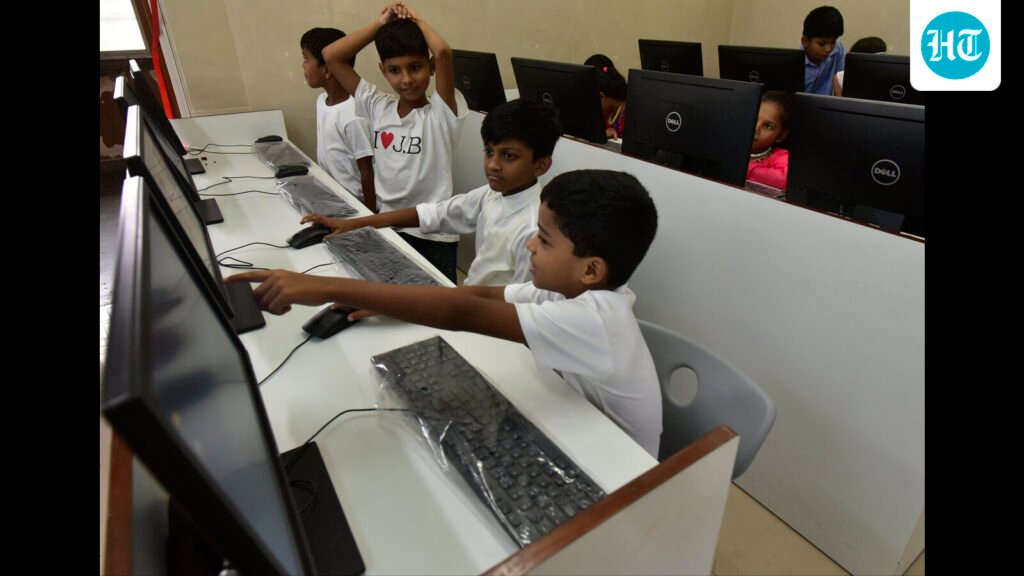
India is ready to rewrite its story, one that honors the dignity of skilled work and embraces vocational education as a vital path to opportunity. Prime Minister (PM) Narendra Modi’s focus on “skilling with speed” reflects his vision which aims to rapidly equip the nation’s youth with industry-relevant vocational skills. This vision emphasizes the integration of the three core elements — scale, speed and sustainability — to ensure that India can train a vast number of young people efficiently and effectively. Through this approach, the initiative seeks to position India as a global hub of skilled talent, fostering a workforce that is capable, agile, and ready to meet the challenges of a dynamic world economy. His leadership and vision have significantly influenced the policy’s direction, philosophy, and implementation strategy. The NEP 2020 reflects his broader goals of creating an atmanirbhar (self-reliant), skilled, and globally competitive India through transformative education. For the first time, vocational education is being placed at the heart of India’s learning ecosystem — not as a side stream, but as an essential part of holistic education. From Grade 6 onward, students are introduced to vocational subjects through “bagless days,” internships, and hands-on projects. They explore skills ranging from traditional crafts like carpentry, pottery, and cooking to emerging areas like artificial intelligence, coding, and robotics. The objective is ambitious yet achievable: Provide vocational exposure to at least 50% of learners by 2025. This shift is reinforced by the National Curriculum Framework for School Education (2023), which moves away from rote memorization and toward experiential, competency-based learning.
Kaushal Bodh: NCERT’s Bold Step
To bring this vision to life in classrooms, the National Council of Educational Research and Training (NCERT) has introduced Kaushal Bodh — an activity book that introduces foundational vocational concepts to students in Grades 6 to 8. It focuses on real-world themes such as “Work with Life Forms,” “Work with Machines and Materials,” and “Work in Human Services,” encouraging students to learn by doing and to understand the dignity and diversity of skilled work. By incorporating project-based learning, local artisans, and digital tools, Kaushal Bodh bridges the gap between theory and practice — between the classroom and the world outside it.
Flexibility and Lifelong Learning: The Role of the National Credit Framework
PM Modi emphasized moving away from rote learning toward holistic, multidisciplinary, and experiential education — skilling, reskilling, and upskilling. Reflecting his vision for ‘Digital India’, Skill India Digital Hub (SIDH) initiative integrates technology across all levels of education and it uses digital tools, online learning platforms to promote e-learning, teacher training, and equitable access to quality education. Dharmendra Pradhan, Union minister of education, has emphasized that one of the biggest challenges today is to educate and skill the vast population between the ages of 15 and 25. He further stated that in the future, it is skill and competencies, rather than degrees, that will determine success and progress. One of the most transformative tools now reshaping India’s learning landscape is the National Credit Framework (NCrF), launched in 2023. Academic Bank of Credits (ABC), a digital repository allows students to earn, store, and transfer academic credits across institutions, disciplines, and even time. It brings unprecedented flexibility, allowing learners to pursue modular, personalized, and lifelong educational pathways that span both vocational and academic streams. This will also promote entrepreneurship and technology integration, encouraging students to become job creators rather than job seekers.
Building India’s Future with Skilled Hands
NEP 2020 serves as a blueprint for realizing the PM’s vision of “Viksit Bharat” (Developed India) by 2047 through education that is holistic, skill-based, and rooted in Indian ethos. The future belongs to those who can turn knowledge into action, and India’s skilled hands are poised to build a stronger, more inclusive tomorrow. It is time to believe in skills, respect craftsmanship, and unlock the true potential of every learner. The future is not just imagined — it’s built. Let’s build it together.
Dinesh Prasad Saklani is director, NCERT. The views expressed are personal