Obituaries and tributes focus on what we learn through the lives of others. They are, in short, our means of making sense of loss, and celebrating those whose journeys touch our own.

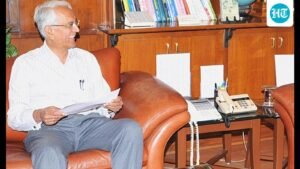
This tribute to ambassador PS Raghavan is, in part, the usual celebration of the life and work of a fine man, a truly legendary diplomat, and his many unsung contributions to India. But it is also a tribute not only to the enormous amount I learned about both work and life from him, but also –– sadly, from his personal example — his deeply painful final days. In short, from the way he prepared calmly, rationally for his untimely end, Raghavan sir also taught me how to face death. And so, I am truly beholden to him for literally a lifetime’s lessons.
First, to his life. It would be an arrogance to suggest just how outstanding my erstwhile senior colleague was as a diplomat, strategic analyst, and an incisive observer of the world. But it bears repeating that his analysis was always accurate because it was based on unemotional logic, and therefore, it was always precise and clinical. And it was excellent because it was grounded in meticulous and thorough research. Most of all, it was brilliant because it was always scrupulously honest, as he himself was, intellectually and otherwise. And that made him doubly rare.
Second, to his work. I was among the fortunate few to have worked with him while he was Joint Secretary (JS) to Prime Minister Vajpayee. And I saw how no work was ever beneath him, and no detail escaped his attention — from table plans to the drafting and framing of our nuclear command authority. He was a quiet central figure in that PMO and its foreign and security policy, helmed as it was by the late great Brajesh Mishra. And yet Raghavan sir consciously avoided the limelight.
A consummate professional, he let his work speak for him, and it always spoke volumes. Such was his impact that he made the post of JS to PM his own, and so colleagues from that era remember him as JS (R), by the mundane designation for marking him files and papers. That sobriquet stuck, including during his second career in the National Security Advisory Board, because he personified that assignment.
Third, his approach to life. Raghavan sir had both breadth of vision and attention to detail to build institutions. Yet, he was far from being impersonal or Olympian. To the contrary, he had a light, personal touch and a wry sense of humor. He was down-to-earth and always approachable. He never sought favors for himself, but was always willing to address grievances. Possibly the finest officer to occupy two of the most powerful posts in the ministry of external affairs’s administration, he is remembered even today as the most approachable, most considerate occupant of both offices, and the one who left a lasting legacy of institutional transparency.
A difficult ask was met with “let me see what I can do”; an unfair ask only elicited a gentle smile of regret. He also created our modern Development Partnership Administration, leading it in both design and management, and in defending the plan in 2011 in Cabinet – as only an additional secretary. And he worked on delivering the restructured National Security Council Secretariat.
Many remember all this and more: This is only the tip of the iceberg of his achievements. Colleagues will recall his legendary appetite for work, focus, apparent disregard for rest, and consistent cheer. A workaholic, he led from the front. But he always found time for the lives and families of everyone in his team.
His dry wit was paired with a razor sharp tongue, but he was never unkind. Take for instance his gentle put-down of a particularly peripatetic officer in Delhi who was, frustratingly, invariably abroad: He asked the officer in all seriousness when a next visit to India was planned.
Finally, his last lesson. Over the last 10 months, following the discovery of the terminal illness that led him to logout of all social networks, I saw another side of him: Detachment. Of course, he fought resolutely, trying everything science offered. But he also prepared dispassionately for the inevitable once all curative roads ran out.
Rational to the last, he saw no point in announcing his ordeal, not because he feared the outcome, but because he saw no merit in expressions of support, or shock. At our last meeting in Bengaluru a month ago, he said: “Hope is not a strategy. I need to set matters in order, for whenever it is that I am gone.”
And while it is distressing to think of his final days of agony, and the impact upon his remarkably resilient wife, Barbara, who did all she could for him, it was deeply humbling to see how he readied himself to meet fate entirely on his own terms. He did so with great grace and wit to the end.
As I struggled to find the words to say farewell, knowing I would almost certainly never see him again, I wished him “Godspeed”. And gaunt though he was with pain, his eyes flashed with the old light and he smiled disarmingly, to say: “Ah yes, Vikram, very good! Godspeed, is it? Where to?”
As always, he had the literal and figurative last word.
Vikram Doraiswami is hhigh commissioner of India to the UK. The views expressed are personal