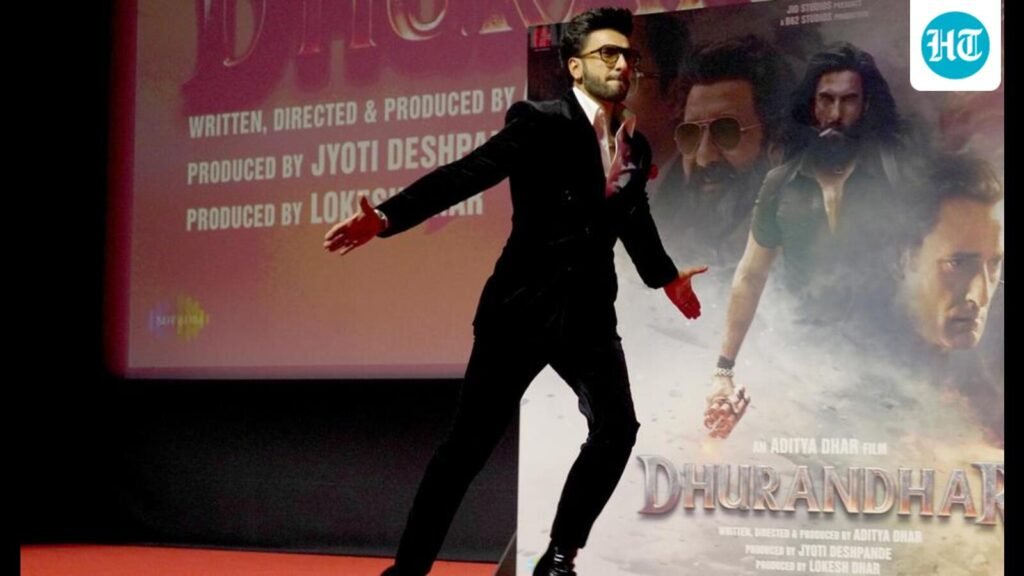
“Did you watch? Dhurandhar?”, a colleague asked, as I was making myself coffee at the workplace. He’s a new guy. So, I stood silent for a bit, and then cautiously answered, “Yes”, to this deeply personal question and added nothing more. Because going by the internet, your opinion about a movie can expose your latent misogyny, your choice at the polling booth, and reveal if you are training for an armed rebellion on Sunday mornings.

The new guy didn’t relent. He stood there, coffee mug in hand, waiting for me to add my review of the movie. These days, one is more comfortable discussing their bedroom than their movie choices.
“Yeah, it’s well-made. Akshay Khanna did a great job; slightly long, I felt.”
I just quoted the intersection of the reviews from both sides of the political spectrum. Still unable to deduct my leanings from this safe answer, he pressed forward, “Don’t you think it was a bit unfair…”
“Oh, I am going to write about this in my next column. Will do a detailed thing.” And I bailed out with my coffee mug.
Dhurandharthe fiery Aditya Dhar movie, is the latest litmus test — a hard-hitting movie largely about Karachi gangs and how they aid the larger apparatus of State-sponsored terrorism. It was a subject begging to be picked up. There is a reason. All port cities, be it Mumbai, Rio De Janeiro or Karachi, see a lot of high-value freight movement via shipping containers. Smuggling thrives as inspection rates are low (below 5%). When there is good money to be made, criminal networks try to infiltrate. And the competition for this easy revenue leads to turf battles. The result? Gang wars. Such ports also require a lot of cheap labour, in great density around the port. Hence, these cities also become migrant hubs (Lyari in Karachi gets a lot of Baloch people). These rootless migrants become a rich source of recruitment for the gangs, and any attrition is quickly replenished by the next lot of ambitious yet cruel ganglords.
All of this makes for great movie material. Rags-to-revolver stories are a dime a dozen. Port cities rule this genre. Mumbai’s crime-world was painted in movies such as truth, Really,and CompanyAnd who can forget City of God based on Rio’s organized crime networks? Instead of waiting for the Pakistani film industry, the Indians lapped up the Karachi gang-lore. The makers added a layer of spy infiltration and merged the chronology of terrorist attacks with Lyari crime history. The line between fact and fiction has been conveniently kept hazy in the interest of box office collections. Still, the real highlight of the movie was its stylized violence, choreographed with a techno-pop background track. The first victims of this on-screen violence may have been the henchmen of Rehman Dakait, but the second-order victims have been the movie critics.
The internet is the new port city. Opinions are like shipping containers: You have two sides who want complete control over it.
The nationalist majority and the Leftist minority, who constantly need newer battlegrounds, newer props to fight. After the state elections, the latest bone of contention is DhurandharIt has its clear political bias; how palatable it is depends on which side of the spectrum you sit,
The progressive minority has labels (bigot, fascist, misogynist, etc), haloed mouthpieces, and clever English prose; the majority has, well, the majority. With its brute force, it bends the free market, screws the economics, and squeezes the minority out of their fancy positions of privilege. People take down their reviews; others get hate. Earlier, this majority was powerless except for polling day; now, it’s armed with the internet and there is a daily referendum.
The oligarchy of opinions suited the intelligentsia, but with social media making it an opinion-democracy, things have been rough. Someone half your age can “ratio” your academic opinion with a meme. And you will kick yourself for voyeuristically reading all the abuses thrown at you. The worst bit is when the hate comes with perfect grammar. That hurts more.
There will be zero conversions — each side with their arguments trying to proselytise the other, but to no avail. Both sides are rigid, helped by Silicon Valley algorithms that work on confirmation bias and drag you to the extremes of the spectrum. But, if someone thinks they have cracked the success code of Bollywood and can win by making a movie pandering to a particular demographic, they will fail for certain.
The invisible hand of the value-seeking Indian consumer, can make a Colors of spring or a Hyder a super hit while also making a Dhurandhar a blockbuster. So, while the keyboard warriors fight, the silent Indian consumer still keeps everyone guessing, including my new colleague.
Abhishek Asthana is a tech and media entrepreneur, and tweets as @gabbbarsingh. The views expressed are personal