Over the past decade, the Union and state governments have rightly focused on building the hard arteries of growth: Expanding the allocation for the national highway network by ten times, growing the metro rail system by four times, rolling out smart meters, strengthening power grids, and adding massive renewable energy capacity. But infrastructure alone does not make great cities. That said, to truly unlock urban India’s potential — to attract global talent, spur innovation, and secure a competitive edge — the country must now build the vital organs of its urban swathes: the systems that deliver clean air, safe water, circular waste management, and climate resilience. It is imperative, therefore, that the Union Budget for the coming financial year signals a decisive turn from building city infrastructure to making a significant deposit towards creating vibrant cities that thrive and attract the best.

First, India’s transport policy must evolve to manage mobility and cut emissions. Several Indian cities now rank among the world’s top 100 when it comes to paralyzing traffic congestion — wasting time, eroding productivity and elevating pollution. Our research already shows that electric vehicle (EV) adoption is highest in states with larger subsidies. Taking a cue from the success of the Union government’s Faster Adoption and Manufacturing of Hybrid and Electric Vehicles (FAME), PM Electric Drive Revolution in Innovative Vehicle Enhancement (PM E-DRIVE) and PM e-Bus Seva schemes, the budget must continue tapering incentives on public charging infrastructure and EV subsidies, especially for light commercial vehicles and two-wheelers. It should incentivize Indian cities to pilot congestion pricing and parking reforms, with revenues reinvested in electric buses and charging infrastructure, while also funding better first- and last-mile connectivity — contiguous walkable footpaths, cycle lanes, and planned hawking zones — through upcoming phases of the Atal Mission for Rejuvenation and Urban Transformation (AMRUT).
Second, the budget must catalyse a circular economy in waste management. Urban India generates 62 million tonnes of waste annually, a figure set to rise by more than seven times by 2050. The Swachh Bharat Mission boosted waste treatment capacity significantly, but systemic gaps persist. The budget must catalyse a circular waste revolution by de-risking municipal projects through Urban Infrastructure Investment Trusts (InvITs) and Hybrid Annuity Models. We should incentivise recycled products through green public procurement mandates, guaranteeing offtake for compost, biogas, and recycled plastics. An analysis by the Council on Energy, Environment and Water (CEEW) shows this could attract ₹2.14 lakh crore in investment and create 2.6 million jobs by 2047.
Third, the budget should launch a dedicated mission to unlock the circular economy of treated wastewater. Growing cities create more wastewater, but also need evergrowing quantities of safe tap water. CEEW research indicates that by 2047, treated used-water could meet substantial industrial and irrigation demand in India, unlocking a ₹3 lakh crore economic opportunity. The budget must mandate city-specific used-water reuse plans as a condition to access the grant components of the Urban Challenge Fund and other existing schemes. It should promote differential water tariffs — lower prices for treated used-water — to make using recycled water economically attractive.
Fourth, the budget could explicitly prioritize the use of India’s Disaster Management Fund for climate-proofing our cities. The 16th Finance Commission allocation is expected to be announced along with the budget. It will define India’s disaster risk financing architecture for the next five years. With heatwaves now covered as a trigger warranting use of the Disaster Mitigation Fund, dedicated support is needed for heat-risk reduction and Heat Action Plans, especially as 57% of Indian districts face high heat risk. For urban flooding, where rainfall intensity now routinely breaches older drainage design norms, the budget should commit ₹10,000 crore to expand the 15th Finance Commission’s pilot — which covered seven cities with ₹2,500 crore—to at least 25 high-risk cities, financing drainage upgrades.
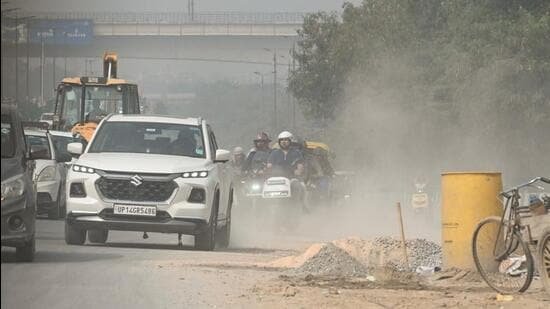
Fifth, the budget must tackle urban dust at its source by steering the construction sector, poised to exceed $2 trillion, toward cleaner practices. This requires three targeted fiscal interventions. One, restructuring the Goods and Services Tax rate applicable to recycled construction materials to achieve cost parity and uniform quality standards. It must also introduce a Production-Linked Incentive scheme for clean construction, rewarding developers with tax benefits for using recycled materials and ensuring compliance. Finally, there is a case for pivoting funding from short-term road-dust mitigation to financing end-to-end road paving and maintenance.
Sixth, the budget should enable better digital governance of our cities. As India has shown with Aadhaar and the Unified Payments Interface (UPI), interoperable digital public infrastructure (DPI) can trigger exponential change. For our cities, DPI can serve a dual role: As a signal to deploy proven solutions at scale, and as an ecosystem enabler to foster innovation. The budget should allocate funds for a national network of open-access environmental sensors — for air, water, and waste — creating a public and real-time data backbone. A substantial allocation, building on the ₹2,000 crore Mission Mausam, can deploy a dense grid of air quality monitors nationwide. Similar integrated sensor networks for air, water, and waste will create a new platform to build smarter, more responsive, and climate-resilient cities. Every municipality could then host a standardized, unified data command centre, integrating feeds from these sensors to monitor pollution plumes, water pressure, and waste collection in real-time. This platform could then be overlaid with dynamic layers on heat risk, precipitation, and flooding, enabling pre-emptive, targeted interventions.
Finally, the budget is an opportunity to declare that Indian cities will value their natural ecosystems as essential infrastructure. Urban wetlands, biodiversity parks, and tree canopies are life-support systems that cool neighborhoods, absorb floodwater, filter air, and sustain well-being. The proof of concept already exists in living landscapes — from the wastewater-treating East Kolkata Wetlands to the restored habitats of Delhi’s Yamuna Biodiversity Park. By directing funds to conserve and enhance these green-blue commons — and by developing metrics to quantify their economic value toward public health, tourism, and resilience — we can ensure that nature is recognized as the bedrock of a city’s livability and economic vitality.
This shift from hard infrastructure to a holistic quality of life for citizens, enabled by digital innovation and natural capital, is what will attract the finest minds, anchor investment, and foster the innovation ecosystems of tomorrow. Let this budget be a down payment on the future of India’s cities.
Arunabha Ghosh is CEO, Council on Energy, Environment and Water (CEEW). The views expressed are personal