The India–European Union Free Trade Agreement (FTA) is more than the culmination of a long and complex negotiation. It signals a conscious shift in how India is positioning itself in a changing global economy. At a time when trade is increasingly shaped by geopolitical uncertainty, supply-chain stress and strategic realignment, this partnership stands out not just because of its scale, but because of its purpose. It brings together two large and deeply complementary economies that together account for one-fourth of global GDP and lays the groundwork for building a sustainable, future-ready economic relationship.

What makes this agreement the “mother of all partnerships” is that it is not built around narrow transactional gains. It is comprehensive in design and long-term in ambition. By covering trade in goods and services alongside investment, digital trade, sustainability, mobility, and technology cooperation, it creates an economic framework rather than a simple tariff exchange. This matters for the Indian industry because competitiveness today is no longer defined only by access to markets. It is defined by the ability to operate within stable, trusted, and resilient networks that span production, innovation, and skills.
At its core, the agreement offers Indian businesses something increasingly scarce in the global system — predictability. Preferential access to a large and rules-based market allows firms to move from short-term gains and take long-term decisions on investment, exports, capacity, and partnerships. This is particularly important for labour-intensive sectors including textiles, gems and jewellery, leather, footwear, electrical machinery, chemicals, auto components etc. These sectors form the backbone of employment and would substantially gain from improved access to European markets, creating many more quality jobs. But the deeper opportunity lies in helping Indian firms, including the MSMEs, to move beyond competing solely on cost and into more durable, value-driven relationships meeting global standards.
This is where global value-chain integration becomes central. Both Indian and European companies are actively diversifying supply chains to reduce concentration risks and build resilience. India, with its scale, aggressive reform agenda and improved industrial infrastructure, is well placed to emerge as a trusted production and innovation partner of Europe, becoming an indispensable node in global value chains.
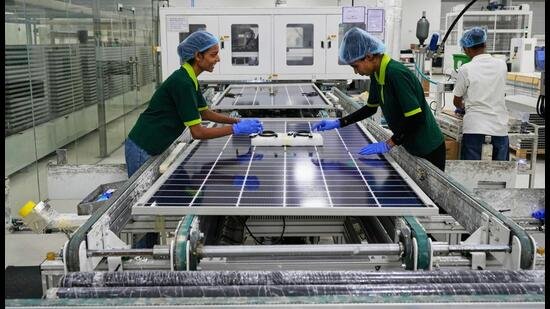
Technology cooperation quietly underpins much of this shift. The agreement creates the conditions for deeper collaboration in areas such as clean technologies, digital infrastructure, artificial intelligence, semiconductors, agriculture technology and advanced electronics. Here, Europe’s strength in innovation and India’s ability to scale form a natural complement. For the Indian industry, the opportunity is not just to adopt advanced technologies, but to participate in their co-development, localization and deployment. Such collaboration can accelerate India’s movement into higher-value manufacturing and technology-intensive sectors, while giving Indian firms a stake in shaping future industrial ecosystems.
Equally important is the impact on services and human capital, where India’s demographic advantage becomes a strategic asset. As one of the youngest large economies in the world, India brings a deep pool of skilled professionals across technology, engineering, research, health care, and business services. The agreement improves the ability of this workforce to connect with Europe’s aging but innovation-driven economies through greater certainty around services access and mobility.
Another defining feature of this partnership is the growing convergence on security and defence. For the Indian industry, this opens opportunities for collaboration in advanced defense and dual-use technology ecosystems, and integration into trusted supply chains for strategic goods. This would strengthen domestic industrial capabilities while reducing vulnerabilities in an increasingly challenging global environment.
Further, this FTA is especially significant as it strongly feeds into India’s own goal of becoming a developed economy with inclusivity. It goes to the heart of industrial transformation, bringing together scale and strategy, technology and talent, access, and resilience. If implemented with focus and supported by domestic capacity building, it has the potential to shape India’s industrial trajectory for decades — positioning Indian industry not on the margins of global trade, but firmly at the center of resilient, high-value and future-ready economic networks.
Chandrajit Banerjee is director general, CII. The views expressed are personal