The government of India had set an ambitious target of achieving $1 trillion in merchandise exports. However, India remains far from realizing this goal, with merchandise exports standing at around $437 billion as of FY 2024-25. This shortfall is also reflected in India’s low and largely stagnant share in global exports, which has hovered around 2% for some years. In the current global environment, characterized by supply-chain realignments, India has an opportunity to significantly expand its export footprint. To seize this opportunity, the Union Budget 2026 should prioritize a competitiveness-driven trade reform agenda. A fundamental principle to keep in mind is that cost-efficient imports are essential for scaling exports. Accordingly, a key element of any competitiveness strategy must be the facilitation of imports of intermediate and capital goods, which are critical for domestic production, export competitiveness, and deeper integration into global value chains.

Following significant reforms in FY 2025–26, including income tax and Goods and Services Tax rationalization, the next major reform priority should be customs, as indicated by the finance minister, Nirmala Sitharaman, at the HT Leadership Summit. Customs reforms are essential to facilitating ease of importing, which in turn can support higher exports. In this regard, there are several concrete areas where the Union Budget can deliver meaningful gains. This article discusses three broad aspects of customs reform.
First, rationalization of the customs duty structure is essential to simplify import compliance and attract greater foreign investment. Currently, imports into India are subject to multiple layers of duties and cesses, making the process of importing both burdensome and costly. While last year’s budget reduced the number of basic customs duty (BCD) slabs to eight by merging several rates, many products were made subject to additional levies such as cesses, the social welfare surcharge (SWS), and the agriculture infrastructure and development cess (AIDC), which has meant there is little change in the effective customs duty ultimately faced by importers.
If the aim is to meaningfully improve the ease of doing business in India, this layered tariff structure needs to be addressed in the upcoming budget. At present, India’s customs schedule combines relatively high tariff rates with a complex duty structure, which sends adverse signals to foreign producers considering locating their operations in the country. To this end, it is also important to present a comprehensive view of all applicable import duties and charges, including customs duties, anti-dumping duties, other levies, and GST, so that importers can accurately assess the total cost of importing a product.
Second, and closely related, is the urgent need to correct the problem of inverted duty structures (IDS) in the customs schedule, particularly where intermediate inputs and capital goods face higher tariffs than the final goods. As of 2023, nearly half of India’s imports consist of intermediate inputs, capital goods, and raw materials that face tariff rates above 5%. This suggests potential cost inefficiencies when downstream industries utilize these inputs.
For instance, sorbitol, a key intermediate used in pharmaceutical production, attracts a BCD of 20%, while several finished pharmaceutical products face a lower BCD of 10%. Similarly, in the automobile sector, certain truck parts attract a BCD of 15%, whereas fully built truck imports are taxed at 10%. In the electronics sector, static converters, critical intermediates, are subject to a BCD of 20%, while compressors that use these converters attract a lower BCD of 15%.
Such cases illustrate the persistence of inverted duty structures, which weaken domestic supply chains and discourage efficient production. As a guiding principle, intermediate goods across the customs schedule should attract lower tariff rates than finished products, to support cost-effective manufacturing and deeper global value chain integration. Addressing these distortions should, therefore, be a priority in the upcoming Union Budget.
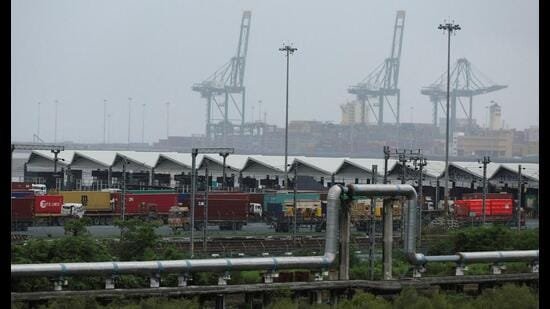
Third, the focus must shift to customs procedures and port-level delays, which continue to disrupt supply chains and can adversely affect the timely fulfillment of export orders, an increasingly important determinant of competitiveness in global markets. Delays in customs clearance raise transaction costs, create uncertainty for exporters, and weaken India’s reliability as a production and sourcing destination.
To address this, the Union Budget should allocate resources for faster and more efficient customs clearances, with a strong emphasis on end-to-end digitalisation of customs processes. Such reforms would not only improve supply-chain efficiency but also enhance India’s attractiveness for global value chain participation.
For India to achieve its export targets and establish itself as a strong player in global value chains, it must adopt an import strategy that enables access to cost-efficient inputs. In this context, customs reforms can play a critical role by addressing key challenges such as the multiplicity of duties, inverted duty structures, and delays in customs clearance. If designed and implemented effectively, customs reforms can help India leverage emerging opportunities in the global economy and provide a much-needed boost to the manufacturing sector.
Prerna Prabhakar is fellow at the Center for Social and Economic Progress (CSEP). The views expressed are personal