Budget 2026-27 reaffirmed that rare earths remain a focus area for the government. Finance minister Nirmala Sitharaman spoke of supporting dedicated rare earth corridors in states where monazite-rich coastal beach sands are found. These hold an estimated 7.23 million tonnes of rare-earth oxides.

The announcement carries forward two ongoing projects. The Scheme to Promote Manufacturing of Sintered Rare Earth Permanent Magnet, announced in November 2025 with an outlay of ₹7,280 crore, seeks to incentivize the full supply chain from rare-earth oxides to finished magnets. It works alongside the National Critical Mineral Mission (NCMM), which focuses on mining, refining, and recycling critical minerals, including rare earths.
The focus on mining, processing, and research is welcome. However, new mines and refineries will take years to materialize. For instance, despite the mention in the budget speech, no money has been budgeted for the rare-earth permanent magnet scheme this year. The scheme envisages a seven-year implementation cycle, with the first two years dedicated to constructing facilities for rare-earth magnet manufacturing. Even so, none of the ₹750-crore capital subsidy meant for the construction of these facilities has been budgeted for this year.
While mining and refining involve long gestation periods, India is still not using the fastest lever to increase rare earth resources: recycling. There was no specific announcement in the budget to encourage this segment of the supply chain. In a new research paper for The Takshashila Institution, we find that recycling alone can meet over 35% of India’s baseline rare-earth demand within the next decade. Discarded products contain refined material. Recycling provides concentrated feedstock, lower environmental costs, and a pathway that can scale quickly. That scale is sufficient to act as insurance against China’s mercantilist moves.
There is a structural reason why the budget merely mentions “supporting” rare-earth corridors in some states. Mining has struggled in India despite the country holding the world’s third-largest reserves of rare earths. Monazite mineral, which contains rare-earth oxides, is co-located with thorium, a radioactive material linked to India’s nuclear programme. Because of this association, monazite remains tightly controlled by the department of atomic energy. Current rules effectively restrict private participation.
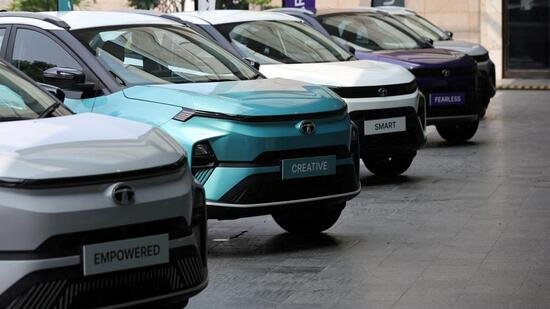
Recycling avoids this delay. India is the world’s third-largest generator of electronic waste, with volumes growing at around 30% annually. As India’s clean energy transition accelerates, magnet-rich waste will grow further. By 2030, scrapped electric vehicles (EVs) will become a major resource. EV motors contain large quantities of rare-earth magnets. An electric car can contain up to 1.5 kilograms of permanent magnets. Modern wind turbines use roughly 600 kilograms of rare earth magnets per megawatt of capacity. As these assets reach their end of life, they will generate dense, recoverable materials. These sources can supply over 6,000 tonnes of rare earth material annually within the next decade. This is enough to meet more than 35% of India’s baseline demand.
Despite this potential, a formal rare-earth recycling industry does not exist in India today. Most e-waste in India is collected through informal networks. Their focus is on metals like copper, aluminium, and gold, which have established scrap value. The second barrier is price volatility. Recycling rare earths requires capital-intensive plants that cost hundreds of crores to build. China has a history of dumping cheap, subsidized REEs to cause artificial drops in price, to snuff out potential competitors. This makes private investment difficult to justify without some form of risk protection. Current government schemes on recycling do not provide sufficient financial support. The solution is to integrate existing waste networks into a system that preserves strategic materials. Three policy changes can do this.
First, reform the Extended Producer Responsibility rules. The current framework rewards recyclers based on weight, not value. Rare-earth-bearing components should be classified as high-value with a strategic multiplier. Higher credits would allow recyclers to pay more for magnet-rich scrap, drawing material into organized channels.
Second, provide offtake guarantees for recycled rare-earth oxides at a floor price. Predictable revenue would allow recyclers to raise debt and invest at scale. The material purchased would be added to the National Critical Mineral Stockpile. The budget could have announced this.
Third, open a green channel for imports of electronic waste. Domestic e-waste should only be the starting point. Indian recyclers must be allowed to import pre-sorted, high-value feedstock from abroad. Larger volumes would lower costs through economies of scale.
In sum, while the budget does a good job of indicating the government’s intent about rare earths, it has yet to target the segment that offers the fastest path to resilience.
Pranay Kotasthane and Tannmay Kumarr Baid are researchers with the Takshashila Institution. The views expressed are personal