Within the span of just one week, India may have succeeded in clawing itself back into the geopolitical sweet spot that it was so used to finding itself until 2024, and something that it regrettably lost in 2025. The much-awaited trade deal with the US, coming close on the heels of the Free Trade Agreement (FTA) with the EU, effectively rearranges the global order in ways that enhance geopolitical space for India even while offering significant. strategic opportunities.

But first the context. The lack of a trade deal with the US was becoming more than a minor irritant. It acted as a huge strategic roadblock for India as the latter sought to fashion a multipolar world out of the current geopolitical turbulence. And while it did not jeopardize the whole of the India-US relationship at any stage, it did cast a pall of gloom over it. The trade deal has not come a day too soon, and both countries must now make haste to exploit the opportunities offered by the most consequential strategic partnership of the 21st century.
The details and the fine print of the trade deal between India and the US had not emerged at the time of writing this article. But it is hard to overstate the strategic and geopolitical implications of it. A preliminary assessment is given here.
The personal chemistry between Prime Minister (PM) Narendra Modi and US President Donald Trump was critical in both preventing the ties from collapsing earlier and in arriving at the deal now. Indeed, Trump said as much when he stated that “out of friendship and respect for PM Modi”, the two countries and he himself agreed to a trade deal. Modi warmly reciprocated that sentiment when he thanked his friend Trump for the “wonderful announcement”.
India’s negotiating strategy with the US, based on “no confrontation, no capitulation and continued conversation”, was the best one under the circumstances, and it bore fruit. India was patient and dignified. To be fair to Trump, he never criticized Modi. This helped matters in the end.
The timing of the deal, roughly coinciding with the arrival of the US ambassador to India, Sergio Gor, provides the envoy with a shot in the arm. He now has a tremendous opportunity to take ties to a whole new level. This is possible also because of the unique access and clout that Gor enjoys with Trump. Can a visit by Trump to India take place before too long?
The deal is fundamentally in the interest of both countries. For India, it provides an excellent opportunity to access one of the most important markets in the world and avail of cooperation in commerce, defence, technology, Artificial Intelligence (AI), and critical minerals, among others.
The Transforming Relationship Utilizing Strategic Technology (TRUST) initiative and Catalyzing Opportunities for Military Partnership, Accelerated Commerce & Technology (COMPACT) are both back on the agenda. India must push these initiatives forward.
The fact that the world’s oldest democracy and the largest one have fully mended their ties enables the US to send signals to China and others, ahead of the all-important talks between Trump and Chinese President Xi Jinping in April.
More broadly, the FTA with the EU, and now the trade deal with the US, offer India a unique 1991-redux moment. Two basic things are imperative.
One, India must make use of the present conjuncture to carry out deep-seated structural reforms that it has postponed so far. These are well-documented and relate, inter aliato land, labour, agriculture, power, and investment.
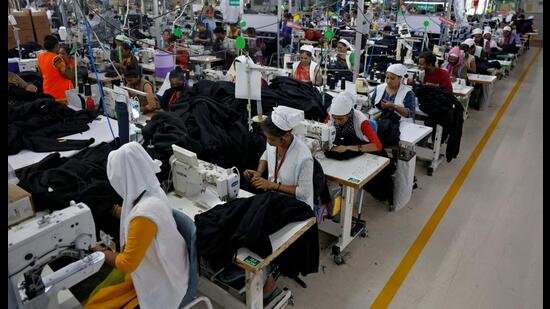
Two, expose Indian manufacturing in the private sector to sustained and calibrated foreign competition so that they modernise, and play a more important part in contributing to our GDP. The FTAs will be meaningless without the above two imperatives.
PM Modi has said on multiple occasions that this is not an era of war. It is time India did its bit to bring the war in Ukraine to an end. Russia’s legitimate security interests must be protected; it must also be an integral part of any European security architecture. At the same time, Ukraine’s territorial and security interests must also be respected. That said, the onus is now clearly on Russia to bring this unfortunate conflict to an end.
The external geopolitical environment and the trade, investment and tech climate have rarely been more favorable than it is now for India. We cannot afford to squander this golden opportunity. The Union government could set up a task force to monitor and oversee the implementation of the trade deals we have arrived at, particularly the ones with the EU and the US.
The fundamental strategic weakness of India arises from one brutal fact: Its economic heft has not kept pace with its rising geopolitical clout. It is time to fix this once and for all. This also aligns perfectly with the government’s vision of Viksit Bharat and the laudable goal of becoming a $30-trillion economy by 2047.
We have seen now that the world is betting on India. India must justify the confidence reposed in it. We owe this both to ourselves and to the world.
Mohan Kumar is former Indian ambassador to France. The views expressed are personal