When former International Monetary Fund chief economist Gita Gopinath said at Davos recently that the impact of pollution on the Indian economy was far more consequential than any impact of any tariffs imposed on India, it triggered predictable outrage. The comment was read as a slight to national ambition. But professor Gopinath was simply stating an empirical truth — population health is not a by-product of growth; it is one of its prerequisites.

In that vein, finance minister (FM) Nirmala Sitharaman’s effort to raise tobacco taxes should be read not as a narrow fiscal move, but as a statement of economic intent. She has chosen to use one of the most powerful tools available to the State — tax policy — to improve population health, and by extension, the foundations of long-term economic growth.
Effective February 1, India has reintroduced a formal excise duty on cigarettes, ranging from ₹2,050 to ₹₹8,500 per 1,000 sticks depending on cigarette length. This follows the passage of the Central Excise (Amendment) Bill, 2025, which replaces a temporary levy with a more durable legal framework. The excise is imposed on top of existing taxes, including the 28% Goods and Services Tax and the compensation cess.
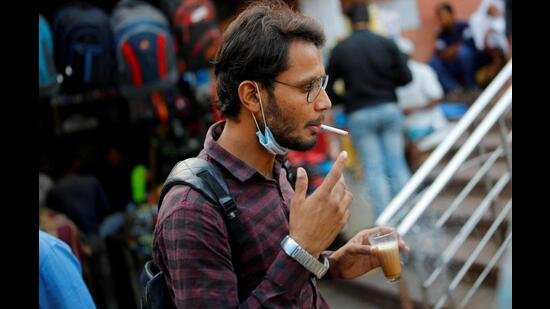
These tax increases represent price increases of 15–30% across commonly consumed segments. For example, a packet of Wills Navy Cut — 76 mm in length and priced at ₹95 for a pack of 10 — is likely to rise to around ₹120, or roughly ₹2.50 per stick. Larger 84 mm cigarettes such as Wills Classic, Wills Classic Milds, and Gold Flake Lights, previously priced at about ₹170 per pack of 10, are expected to move to ₹220–225.
To understand why the tax increase is a more consequential health investment than anything in an otherwise lackluster health budget, it helps to step back and look at India’s tobacco tax history. India has long taxed cigarettes heavily in statutory terms, but inconsistently in economic effect. Taxes have been raised episodically, often through complex, length-based slabs that encourage manufacturers to redesign products rather than reduce sales. Cigarette taxes have coexisted with persistently low taxes on beedis and uneven enforcement on smokeless tobacco. The system has been effective at raising revenue but has diluted health impact by allowing users to switch products instead of quitting.
Even after the latest increase, total taxes on cigarettes in India account for only 53% of the retail price. That is well below the 75% benchmark recommended by the World Health Organization as the level at which tobacco taxes begin to significantly deter consumption, especially among young and low-income users. By comparison, many middle-income countries now tax cigarettes at 60–70% of retail price, and some high-income countries exceed that threshold comfortably.
Over the past decade, real incomes in India have risen steadily, while cigarette taxes have not consistently kept pace. The result has been rising affordability: Cigarettes may cost more in rupees, but less in terms of hours of work or share of household income. The new excise duty partially corrects that imbalance.
From a fiscal perspective, the revenue implications are significant given that Indians smoke more 12,000 crore sticks of cigarettes a year. Even a modest average increase of ₹2–3 per stick implies additional gross revenues on the order of ₹25,000–36,000 crore a year, equivalent to a third of India’s central government budget for health of roughly ₹1 lakh crore. Consumption will fall as prices rise — that is the policy’s purpose — but global and Indian evidence is clear that tobacco taxes still raise revenue even as they reduce use. Few policy instruments offer that combination.
The stronger and more important matter, however, is the health one. Tobacco use is responsible for an estimated 1.3–1.4 million deaths every year in India, from cancers, cardiovascular disease, chronic lung disease, and tuberculosis. It also drives a large share of avoidable health spending, much of it paid out of pocket by households least able to afford it. Decades of research, including India-specific studies, show that tobacco consumption responds to price. Estimates of price elasticity for cigarettes in India typically range from −0.4 to −0.9, with higher responsiveness among younger and poorer users. In practical terms, a 10% increase in price reduces consumption by roughly 4–9%. The price increases now being reported are larger than that, suggesting a meaningful reduction in cigarette use will be observed over time.
The health effects compound. Fewer young people initiate smoking when prices rise. Some current smokers quit; others smoke less. The benefits accrue gradually — heart attacks fall within a few years, cancers over decades — but they are large and measurable. Our past experience shows sustained, substantial tobacco tax increases avert millions of premature deaths. Even more modest increases, if maintained and extended across products, translate into tens of thousands of lives saved and substantial reductions in catastrophic health expenditures.
But much remains to be done. Cigarettes cannot be taxed in isolation while beedis remain cheap and widely available. Length-based slabs, while politically convenient, continue to invite product engineering. And unless tobacco taxes are indexed to inflation and income growth, today’s gains will quietly erode tomorrow. The FM should be looking to enact similar increases next year as well and using these funds to bolster the health budget. Importantly, she should be looking to tax beediswhich are smoked much more widely and cause significant damage to the health of both beedi workers and the poor who smoke them.
Still, the current tax increase needs to be encouraged. Current economic debates continue to treat health as a social sector expense to be accommodated after growth targets are met. But this reform reflects a growing understanding by the government that improving health is itself an investment strategy.
India’s vision of long-term growth that is inclusive, resilient, and attractive to investors who think beyond the next quarter should include population health as a key determinant. Making products that kill people steadily less affordable is not a distraction from development. It is an important step towards Viksite Bharatexpressed through the tax code.
Ramanan Laxminarayan is president, One Health Trust. The views expressed are personal