Imagine a single intervention that can reduce poverty, lower greenhouse gas emissions, tackle antibiotic resistance, and cut pandemic disease risk. Sounds too good to be true? India has already witnessed the transformative power of vaccines in human health. Childhood immunization has saved millions of lives, strengthened families, and accelerated economic progress. But another immunization gap is hiding in plain sight — one that affects not only animals, but rural incomes, climate goals, antimicrobial resistance, and global health security — animal vaccines.

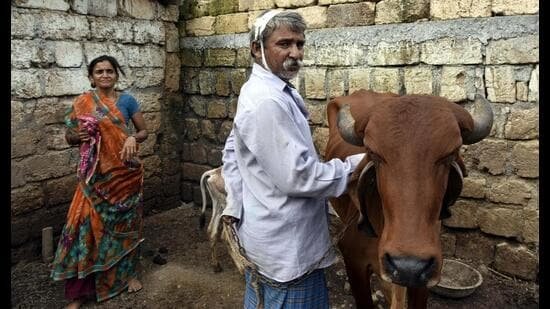
India has more cattle than China, the European Union, and the US combined. Livestock are central to our economy. India is the world’s largest producer of milk and one of the leading producers of eggs and poultry meat. Livestock contributes roughly 30% of India’s agricultural gross value added and supports the livelihoods of nearly 100 million rural households. For small and marginal farmers — who own the majority of the country’s livestock — animals are not just productive assets but a primary source of daily cash flow, nutrition, and financial security. Dairy income provides regular liquidity in contrast to seasonal crop earnings, making livestock health central to rural stability and economic resilience.
For millions of households, livestock are living savings accounts. A cow or a few goats are sold to finance school fees, medical care, or to buffer against crop failure. But livestock are also fragile assets. Disease-related mortality and productivity losses remain substantial in many low- and middle-income settings.
According to published estimates, mortality among indigenous calves in some states can range between 10% and 15% in the first year of life, with higher rates in poorly serviced rural areas. Small ruminants face similar vulnerability; Studies in arid and semi-arid regions report annual mortality in sheep and goats ranging from 8% to 12%, often spiking during disease outbreaks or drought. For smallholder households — who own over 85% of India’s cattle and nearly all small ruminants — such losses are devastating. When a milk animal dies or milk yield drops due to preventable disease, the impact is immediate — daily cash flow falls, nutrition suffers, and the household’s primary asset erodes overnight.
Vaccination is one of the simplest and most cost-effective tools to change this equation. Routine animal vaccination rates in India lag far behind those in other countries. The economic upside of wider livestock vaccination is enormous. Disease reduces milk yields, slows weight gain, impairs fertility, and increases mortality. Studies show that vaccination against diseases such as bovine viral diarrhea can raise milk production. The global variation in milk yield is striking: from a few hundred kilograms per cow per year in many parts of India to over 10,000 kilograms in advanced dairy economies. Genetics, feed, and management matter—but disease control is foundational. Healthier animals convert feed more efficiently, produce more milk, and require fewer medical interventions.
Even modest gains in productivity per animal would translate into higher incomes for millions of smallholders. Crucially, this can occur without necessarily expanding herd sizes.
Animal vaccines can also help tackle the climate crisis. Livestock contribute roughly 14.5% of global anthropogenic greenhouse gas emissions, amounting to about 7.1 gigatons of CO2 equivalent annually. Emissions intensity — the emissions per liter of milk or kilogramme of meat — varies dramatically across countries and is high in India, where productivity per animal is low. Increasing milk yield per cow can reduce emissions intensity substantially — by more than 70% when productivity rises from very low levels.
Vaccines can also help reduce antibiotic use in animals. When animals fall ill, antibiotics are frequently used therapeutically and sometimes preventively. Reducing disease incidence through vaccination directly reduces antibiotic demand. In poultry and pigs, vaccines not only prevent infection but also reduce disease severity, lowering reliance on antimicrobials.
Perhaps most compellingly, animal vaccination strengthens pandemic preparedness. Rising demand for meat and milk has intensified interactions among livestock, wildlife, and humans. Many pathogens with pandemic potential — avian influenza, swine influenza, Nipah virus — circulate in animal populations before spilling over into humans. Strengthening herd immunity through vaccination reduces amplification of pathogens within farms, lowering the probability of spill-over.
Vaccination also improves outbreak detection. In regions where routine vaccination against diseases like Newcastle disease is weak, highly pathogenic avian influenza can be misidentified or detected late because clinical signs overlap. Strong vaccination programs sharpen surveillance systems and help differentiate routine disease from emerging threats.
Of course, vaccines alone are not sufficient. Biosecurity, improved farm management, and surveillance remain essential. But vaccines provide a scalable, preventive layer of defense.
The barriers to scale are real. Smallholder farmers often lack information about the economic returns of vaccination or face liquidity constraints. Private vaccine manufacturers have limited incentives to serve dispersed, low-income markets. Many livestock diseases are region-specific, limiting the scale economies seen in human vaccine markets. Some important diseases still lack thermo-tolerant or multivalent vaccines suited to hot climates and weak cold chains.
However, as with human vaccines, on animal vaccines too, India is uniquely positioned to lead. The country has substantial vaccine manufacturing capacity, scientific talent, and experience in running massive immunization campaigns. Investments in high-quality animal vaccine production, particularly with flexible platforms such as mRNA technologies and ideally built to good manufacturing practice standards, could serve dual purposes. They would strengthen livestock health today and create “warm” production capacity that could be repurposed rapidly during a human pandemic. Few policy levers offer such broad and simultaneous benefits. A bold public investment in animal vaccines can be transformational for rural India. If we are serious about strengthening rural prosperity, meeting climate commitments, and safeguarding against the next pandemic, expanding access to animal vaccines deserves a place at the center of the roadmap for Viksit Bharat.
Ramanan Laxminarayan is president, One Health Trust. The views expressed are personal