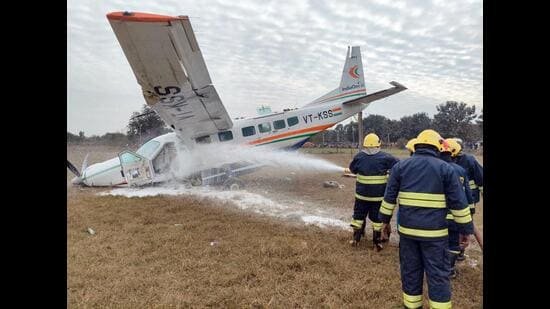
In recent times, it seems as if air disasters in the country have been vying for national attention. The crash near Ranchi on Monday that killed seven on board came just weeks after the one in Baramati in which all on board, including Maharashtra deputy chief minister Ajit Pawar, died. Amid all this, the AI171 crash from June 2025 lies forgotten by most, except for perhaps the victims’ families and the handful of parties with stakes in the investigation outcome.

The last several weeks have seen several incidents involving India’s flying training organizations (FTOs) and smaller trainer-aircraft. These escaped attention given there were no fatalities. In January itself, an IndiaOne Air Cessna Grand C208B aircraft with six on board crash landed in Odisha’s Rourkela — thankfully, there were no fatalities. And earlier this month, a Cessna 172 trainer aircraft aged more than 50 years, operated by the Redbird Flight Training Academy, made a forced landing in Karnataka due to inadequate fuel. The academy is a repeat offender: In 2023, the directorate general of civil aviation (DGCA) had indefinitely suspended flying training activities at all bases of the academy after it reported two crashes within four days.
Sector experts say that a serious concern dogging the aviation space in the country is the inexorable decline in the quality of flying training in India over the years. In the 1980s, commanders and former instructors say, India was a preferred destination for flying trainees. At the Madras, Delhi, and other flying clubs in the country, it was common to find trainees from Sri Lanka, Iran, Bhutan, Jordan, Malaysia and many other countries. But the flow has reversed since the early 2000s, and Indian trainees are going to Sri Lanka, the Philippines and even distant Monte Negro, among other countries. In fact, of every 1,000 commercial pilot licenses (CPLs) issued in the country annually, 700 are going to those who have completed their training outside India. The authorities must ascertain why India lost its pole position within just decades.
Coming back to the present issue, alarm bells went off after a May 2025 aircraft accident investigation board (AAIB) presentation on FTO aircraft accidents. The presentation highlighted that of the 38 accidents involving FTO aircraft reported in the last 13 years, 14 had been fatal. Between 2013 and 2016, five accidents occurred and then in a single year (2017), five more took place. In 2020, despite the cessation of flying due to the pandemic, four fatal accidents took place; 2022 recorded seven.
Industry, DGCA and the ministry of civil aviation sources say that a majority of these accidents occur due to a lack of discipline and failure to observe laid down standard operating procedures (SOPs). While some crashes and accidents are due to poor and irregular maintenance, or technical glitches or, at times, inclement weather, the majority can be attributed to human error or even careless actions. Instructors and trainers often fly the aircraft at lower than recommended heights, deviate from the authorized flight paths, try acrobatic manoeuvres, don’t follow patterns advised for take-offs and landings, and fly in low visibility conditions, often to/from unregulated airfields.
There have been several allegations of harassment and inappropriate behavior meted out by instructors to trainees. Illegal occupants in the cockpit during solo flights or sorties have been reported as well, with instructors and trainees offering unauthorized joy rides to friends and family members.
In 2022, there was a suggestion that CCTV cameras be installed in unregulated airfields, which has now largely been done by all the FTOs operating out of these. However, finding this level of monitoring still inadequate, DGCA in January has asked for all trainer aircraft cockpits to be fitted with on-board audio and video recording devices. This, industry experts say, is rather embarrassing as it amounts to resorting to desperate measures to keep pilots, commanders, and instructors in check. DGCA has advised operators to record flight data through suitable methods, including recording the communication between the cockpit and the air control towers. From October 2025, a bi-annual ranking of the FTOs has been instituted, to keep them on their toes.
That said, it remains to be seen how many of the 380 aircraft registered (including those that are no longer airworthy) with the close to 40 FTOs in India, across 60-odd bases, will comply — within the 120-day deadline set by the regulator or even at all. India’s FTOs have been long-time offenders with an unshakeable nexus between the operators and the authorities. Breaking this will require more than regulatory circulars.
Anjuli Bhargava writes about governance, infrastructure, and the social sector. The views expressed are personal