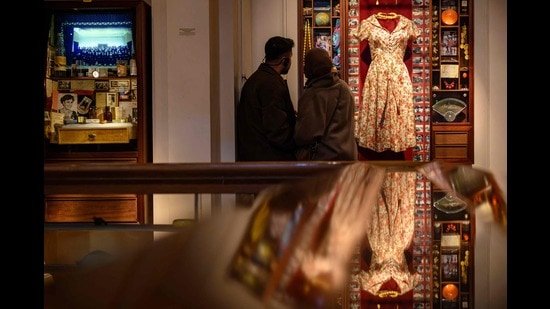
“I can physically not deal with the intensity of this show,” pressing the pause button, I texted my fellow screen addict. Needless to add, I spent an entire day binge-watching The Museum of Innocence, the nine-episode adaptation of Orhan Pamuk’s novel with the same title.
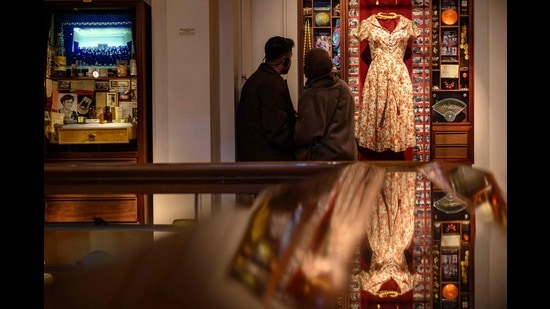
Can innocence only exist in a museum, after all? Perhaps.
Can we express desire only mediated by fetishising objects? Perhaps.
Can emotional vulnerability be risk-free? Perhaps.
The “love story” in Pamuk’s novel, set in the Westernised society of Istanbul of the 1970s and 80s, is closer to us than we might acknowledge. Kemal’s love for Füsun causes destruction that we are only now beginning to find the vocabulary for. He’s neither a hero nor a villain. He’s a “confused” man who does not know what he wants and where he belongs, as Selahattin Pasali, playing Kemal, and Zeynep Gunay, the director, share in an interview. Confused, uncertain, and emotionally unaware human beings often cause damage that resembles evil.
Such people desire to either destroy or deify; Kemal accomplishes both. They lie to protect; Kemal does so also to patronise. (Why should a girl like Füsun have access to his truths?) They wander to seek and find; Kemal loses and gets lost. Yet, we do find ourselves sometimes rooting for a fairytale ending for him and Füsun. The only happily ever after, however, is possible in the form of a memorial, a museum of objects Füsun touched.
It has been the nature of modern love, mediated by technology, to snuggle more comfortably under the blanket of materialism. We kiss the smartphone screen to greet the lover. We meet for dates in places that physically stimulate and satiate us. We love objects associated with love. We objectify love. Kemal, therefore, exists in our world more than his own. He has to ritualise romance to be able to do justice to it.
But what about Fusun? Does she represent innocence? Yes and no. At 18, she’s too smart and perceptive for her own good. She is successful in averting Kemal’s first advances. She appears at his doorstep on her own terms. “My beauty gave herself to me.” She starts a forbidden love affair with an older, soon-to-be-engaged man, who is way above her social stature. Yet, when she falls in love with him, she makes the mistake of admitting it to him. In this moment, her innocence stands unmasked in all its vulnerability.
Kemal’s museum of “innocence” — actually Füsun’s material world — is a retrospective attempt at redemption. It’s worth more to him than the living, breathing Füsun ever was. He is looking back in love, purer than when it was shared with Füsun. It’s no coincidence that the most representative artefact in this museum is a collection of cigarette butts that passed through Füsun’s lips over the years. Füsun gave him a high that was delicious and dangerous. She had to be stubbed. Füsun is aware of her desirability and vulnerability. Only, she deludes herself into believing that the latter could be conquered. She constantly seeks worlds that will insulate her against Kemal — moving incognito, marriage, the movies. Nothing does. Even when she makes her most ambitious leap, she trusts Kemal blindly. But Kemal loves her and cannot let her go. This is a love that can find nobility only in memory.
Is there anything called noble love? Or must love always have a tinge of darkness to protect it from an evil eye? From making love in memorialised spaces to dreaming about sunflowers — neither Van Gogh’s nor Cezanne’s — and Paris, love needs to be protected even from ourselves. Who destroys whom is but a quibble.
Is situationship, therefore, the mask we wear? Nobody wants to, ought to, pay a price for honesty. Nobody aspires to be taken advantage of in the name of love. If we do not name love as love, perhaps we’ll be spared its vagaries and vengeance.
But do we truly love without naming it so?
Nishtha Gautam is an academician and author. The views expressed are personal