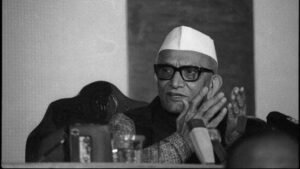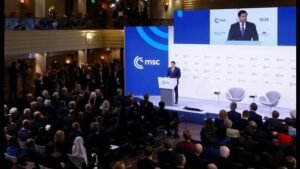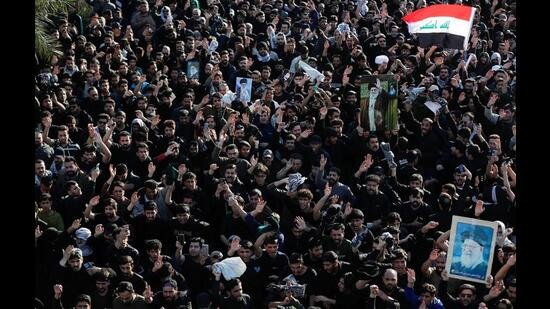
On the morning of February 28, a coordinated US-Israeli airstrike — codenamed Operation Epic Fury — reduced decades of carefully constructed Iranian theocracy to rubble, both literally and figuratively. Ayatollah Ali Khamenei, the Supreme Leader for 37 years, was killed in his office in Tehran along with top military commanders, including the commander-in-chief of the Islamic Revolutionary Guard Corps (IRGC). This is not merely a leadership transition; it is the violent unraveling of a geopolitical order that has stood since 1979.

Khamenei never publicly named a successor — a deliberate choice that has now produced a constitutional crisis at the worst possible moment. While Iran’s 88-member Assembly of Experts is constitutionally empowered to elect the next Supreme Leader, the interim leadership has fallen to a three-member council consisting of reformist President Masoud Pezeshkian, hardline judiciary chief Gholamhossein Mohseni-Ejei, and Ayatollah Alireza Arafi of the Guardian Council.
Ayatollah Mojtaba Khamenei, the 56-year-old second son of the late Supreme Leader, is widely regarded as a leading contender. However, concerns about hereditary succession could complicate his candidacy, potentially triggering internal power struggles. The State appears to be transitioning from a clerical theocracy to a military-led “garrison State”. The IRGC — a sprawling economic and political machine controlling roughly 60% of Iran’s economy — may be tempted to assume direct control, making Iran more aggressive, less diplomatically nimble, and far more dangerous.
The US military operation signifies a strategic shift. The larger objective appears not only to be regime change in Iran but also the establishment of uncontested Israeli hegemony in the region. By decapitating the Iranian leadership and neutralizing nuclear and missile infrastructure, Washington and Tel Aviv are pursuing a “decisive edge” doctrine aimed at systematically weakening major regional adversaries.
The goal appears to be to permanently dismantle the “axis of resistance”. Israel has pressed the Trump administration to expand its demands to include Iran’s total withdrawal of support for proxies such as Hezbollah and the Houthis. The strategy gambles that overwhelming force will create a regional vacuum where Israel remains the sole security hegemon, while rivals are too degraded to respond conventionally.
The timing of the attack is particularly striking, launched just 10 days after the inaugural meeting of US President Donald Trump’s Board of Peace in Davos. Officially tasked with overseeing the security and reconstruction of Gaza, the Board has emerged as a “bait-and-switch” mechanism — a rival to the UN Security Council under Trump’s personal control. The Board of Peace paradox allows the administration to invoke “demilitarization and technocratic governance” for Gaza while providing political cover for military action against Tehran. Trump has effectively used the promise of peace in one theater to justify war in another.
West Asia now stands on the brink of a multi-front escalation. The IRGC targeted numerous US military bases across Bahrain, Qatar, Kuwait, the United Arab Emirates, Saudi Arabia, Iraq, and Jordan alongside Israeli residential areas. Iran also struck Duqm Port in Oman, causing minor damage despite Oman’s established role as mediator. The most feared scenario — a closure of the Strait of Hormuz — is now a tactical reality. The waterway carries 20% to 25% of the world’s oil and LNG.
While Saudi Arabia and the UAE possess bypass infrastructure such as the East-West Pipeline (5 million bpd capacity) and the Fujairah terminal (1.5 million bpd), these routes are insufficient to offset a full blockade. Analysts warn that if flows are significantly impacted, global oil prices could rise to $120 to $150 per barrel.
For New Delhi, there is no comfortable corner in this conflict. India is uniquely exposed, as approximately 50% to 52% of its monthly crude imports — roughly 2.6 million barrels per day — transit the Strait of Hormuz. A sustained disruption would send India’s import bill spiraling, widen the current account deficit, and put immense pressure on the rupee.
The safety of the 10 million-strong Indian diaspora in the Gulf is equally critical. Remittances reached a record $135 billion in FY25, forming a vital pillar of the Indian economy. Meanwhile, the Chabahar Port project — India’s gateway to Central Asia — has effectively stalled. Following the re-imposition of US sanctions and Trump’s threat to impose a 25% tariff on countries doing business with Iran, New Delhi has slashed its allocation to the port to zero, marking a painful retreat from a decade-long investment.
Moscow and Beijing have responded with unambiguous condemnation. Russia declared Iran was “stabbed in the back” during mediation, while China framed the US as an imperial aggressor to rally the Global South. Both vetoed a US-sponsored resolution endorsing the strikes.
At home, Trump faces a fracture within his MAGA base. Isolationist figures such as Tucker Carlson have called the strikes a betrayal of voters seeking an end to “foreign wars”. Marjorie Taylor Greene and Thomas Massie have similarly accused the administration of abandoning America First. Trump is gambling his legacy on a war he once vowed not to start, gambling that a decisive victory will silence critics.
The death of Ali Khamenei has not resolved Iran’s crisis; it has internationalized it. The world now watches a nation of 93 million people, a heavily armed and leaderless Revolutionary Guard, and a global economy hanging by a thread at a narrow maritime chokepoint. The post-1979 order has died in Tehran’s ruble, but the new West Asia disorder that replaces it may prove far more volatile than the one it succeeds.
Ausaf Sayeed is a former secretary to the ministry of external affairs, Government of India, and former ambassador of India to Saudi Arabia, Yemen, and high commissioner to Seychelles. The views expressed are personal