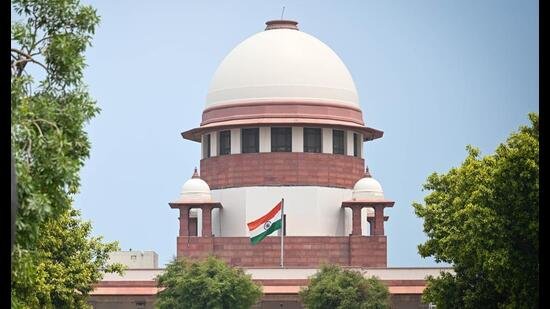
The Supreme Court of India recently ruled (NK Meena vs State of Rajasthan) that a State agency can investigate a complaint of corruption against a central government official without getting the Union government’s approval. In the apex court’s opinion, there is nothing in the law that prohibits a state government functionary from investigating charges leveled against a central official. This is a ruling that relied heavily on the judgment in AC Sharma vs Delhi Administration (1973), which dismissed the plea of the accused, a CPWD official, that only the CBI, and not the Delhi administration, could register a case against him. The recent ruling upsets the apple cart and could promote discord between the Center and the states, particularly at a time when there is an acute lack of trust in the fairness of investigating agencies, both at the Center and in states.

The Delhi Special Police Establishment (DSPE) Act, 1946, gives a legal status to the CBI. The latter can have a grandiose physical structure in a State, but it can exercise legal authority only with the consent of the state government. This can be unconditional or approval given on a case-by-case basis. The CBI cannot look into a complaint against a state government functionary unless the state specifically authorizes it. This means while state investigators can exercise unfettered authority to proceed even against a central government official, the Center does not have the same power against a state government servant. On the face of it, there is an invidious discrimination here.
The founding fathers of the Republic probably wanted to strike a balance between the Center and states. The apex court ruling, unfortunately, gives enormous power to the states. It nearly subordinates the Center to the states. This is dangerous considering the polemics that now dictate public debate. States that are unabashedly inimical to the Centre, may use the ruling as a weapon to intimidate New Delhi. We have witnessed the Center and some state governments squabble over powers. This is somewhat analogous to the abrasive exchanges between governors and state governments in non-BJP-ruled states. Hence, a public debate on the apex court ruling is called for, in order to restore parity between the two entities.
Our public scene is so polluted that I can foresee some erratic states waiting for an opportunity to snipe at Delhi by fabricating charges against central government officials. The current scene has thrown up a substantial number of flimsy investigations arising from an unconcealed desire to settle political scores.
The apex court ruling could open the floodgates for false charges. Those most vulnerable to such malicious triggering of legal processes are income tax and customs officers, who initiate investigations on suspected suppression of taxable income or attempts to smuggle contraband into the country. The Union government’s civil servants (including those in the CBI or enforcement directorate) routinely create enemies for themselves; those being probed by them could go to any extent to frustrate investigations or merely throw mud at honest officials. The imposition of a penalty on those who are party to untenable complaints is a time-consuming process, and we rarely see such action. The Union government should seek a review of the apex court’s ruling.
RK Raghavan is a former CBI director and a former head of the vigilance and anti-corruption bureau in Tamil Nadu. The views expressed are personal