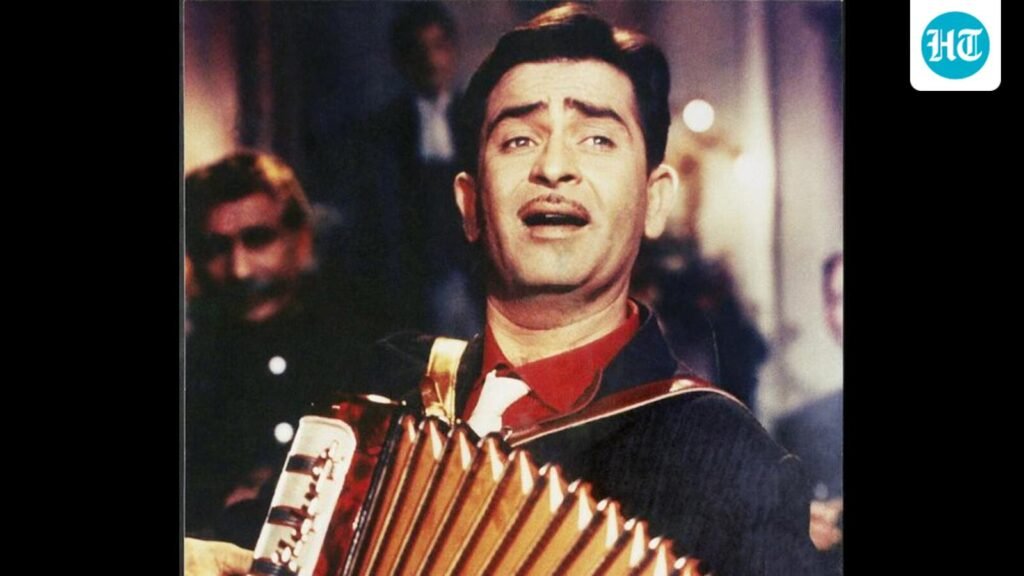
Stories of Raj Kapoor’s unflinching devotion to cinema are legion. Sample this one: Kapoor once bumped into poet Majrooh Sultanpuri at a central Mumbai studio. Packed off to jail for his Marxist poetry by the erstwhile Bombay government, Sultanpuri had just finished his penal servitude. When Kapoor asked how his 19 months behind bars were, Sultanpuri began to recount them at length. He also read out his latest poem, which he had penned during incarceration. Kapoor, so goes the story, grabbed the sheet from Sultanpuri, paid him 1,000 in cash—in circa 1949—and walked away triumphantly. Obviously, he was more interested in the song for his next film than Sultanpuri’s sob story. Twenty-five years later, Kapoor used “This day the mother will be sold and the key will be sold., I will keep loving you in my life.“as a defining moment in Dharam Karam (1975).

Kapoor, whose birth centenary concludes on Sunday, epitomized all that was best in Hindi cinema: Entertainment, egalitarianism and enterprise. During a pivotal era of socio-cultural transformation, he used cinema as a powerful tool to define post-independent India, and gave voice to the angst and aspirations of the millions.
Although Kapoor’s father, Prithviraj, was a famous actor, Raj refused benefits of entitlement. Instead, he, like the gritty Pathan that he was, chose to rise from the ranks, starting off (at his father’s recommendation!) as clapper-boy with veteran director, Kidar Sharma. Kapoor was only 10 when he acted in Debaki Bose’s Inquilab (1935).
Kapoor “arrived”, as it were, with Barsaat and Awaratwo back-to-back hits. At 27, he joined the elite club of Hindi cinema’s auteurs — V Shantaram, Mehboob Khan, S Mukherjee, Sohrab Mody, and Chandulal Shah. Soon, Kapoor set up his own well-equipped studio in Chembur, a verdant Mumbai suburb.
Kapoor’s films tackled with sensitivity and technical virtuosity a range of themes blending the profane and the sacred, modernity and tradition, wealth and hunger, power and conscience, individual and the State. He struck a fine balance between aesthetics and commerce, socialism and glamour. Kapoor’s black-and-white era films offer a broad cinematic framework for Nehruvian ideals, often pinpointing the flaws in the system and exposing the hypocrisy of the middle class. ,No great man can do anything without doing anything.”, Kapoor’s famous line in Stay awakeis a stark critique of the Nehruvian state and polity.
However, Kapoor never allowed his pro-Left views to obscure his agenda. Also, he offered his own image of femininity — a woman draped in spotless white, strong and sensitive: Nargis in Shree 420Vyjayantimala in ConfluenceZeenat Aman in Satyam Shivam SundaramPadmini Kolhapure in Prem Rogand Mandakini in Ram Teri Ganga Maili,
Music was RK Films’ strongest point. Poet Shailendra’s songs — “Awara hoon,Jeena Issi’s name is“, and “My shoe is Japanese” projected Kapoor’s Chaplinsque image on the silver screen. Kapoor handled his team with great care, straining every nerve to take out the best from them. He ate biryani and sipped wine with them, consulted them on a shot or a song, celebrated their birthdays and gave them monikers: Music director Shankar was Gendalal (with the soft d), while Shailendra was Pushkin, the legendary Russian poet. His films won global glory, especially in Southeast Asia, the Middle East, the Caribbean, and the erstwhile Soviet Union: Jagte Raho drew 33.6 million viewers in Soviet Russia in 1965.
There is a lovely story of how Pandit Nehru buttonholed Papa Prithviraj, at a high-profile dinner at the Rashtrapati Bhavan in New Delhi sometime in the 1950s, and quizzed him about a song from Raj’s film. “Panditji, I suppose you are talking about My shoe is Japanese“It has become a rage,” Prithviraj replied a little sheepishly,Arre bhaithe Russian PM Nikita Khrushchev has gone bonkers over the song,” Panditji replied with a laugh.
Kapoor slowed down work in the 1980s following health issues. He died in June 1988. A few days earlier he had received the prestigious Dadasaheb Phalke award at a function in New Delhi. The Union government issued a postage stamp in his honor in 2001.
Kapoor was a master story-teller. His life too was a fine blend of myth and reality: To borrow from his My name is joker song, “Aadhi Haqeeqat, Aadha Fasana”(half reality, half fiction).
Ambarish Mishra writes on politics and culture. The views expressed are personal