Addressing the gender gap in climate policies

Former UN high commissioner for human rights Mary Robinson summed it up succinctly when she said, “Climate change is a manmade problem that requires a feminist solution.” Women, already suffering from existing inequalities, are most affected by the climate crisis, with direct impacts on their livelihood, health and safety. COP30, at Belem, adopted a new Gender Action Plan (GAP), including a focus on care work, women’s health, and violence against women. Mirai Chatterjee, chairperson, SEWA Cooperative Federation, says, “We welcome the expanded scope of the Belem GAP, and its emphasis on women’s involvement at all levels of climate-related discussion and action, especially informal women workers. The integration with decent work, care work and social protection like health, is also an important feature. Now we look forward to its implementation with adequate resources and monitoring.” GAP was first adopted in 2017 and the final document submitted at Belem will form the framework for climate action which will, if implemented correctly, ensure that gender equality remains at the heart of the UN climate process.
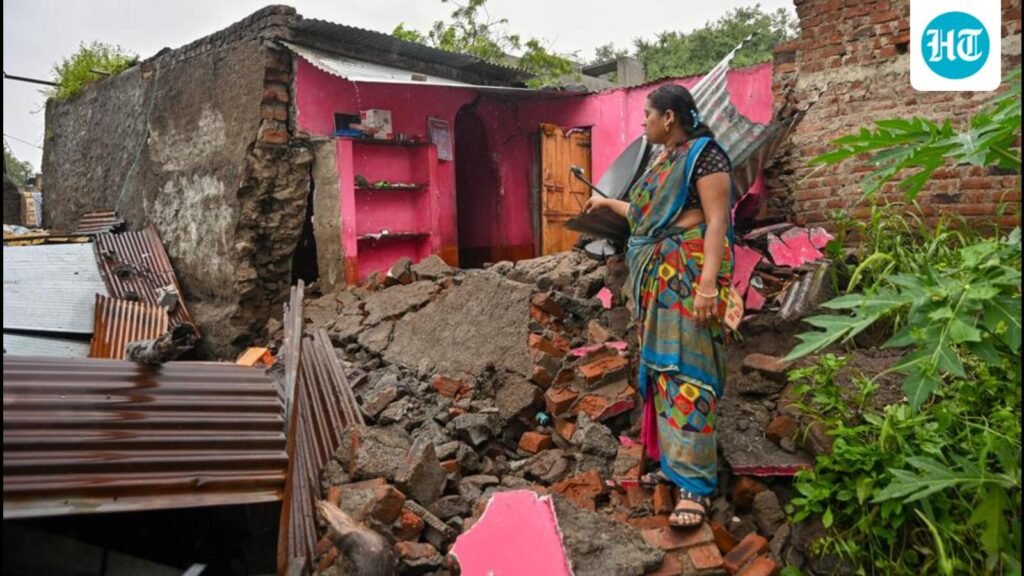
Countries such as India must internalize the fact that women and girls face unique climate risks and disproportionate stress from natural disasters. If the right policies are not put in place now, at least 158 million women and girls will fall into poverty by 2050, while 236 million could face food insecurity.
Mainstreaming gender into climate policies will ensure that existing inequalities do not get integrated into climate politics. “Women are often the first to feel the impacts of climate change, but they are also leading some of the most meaningful responses. Their knowledge and leadership are not just valuable; they are essential. We need to stop seeing women as peripheral to climate action. Their lived experience brings insight that science alone cannot offer — and at COP30, we saw a growing recognition of that,” says Christopher Nial, senior partner, FINN Partners, Global Health Impact.
Women’s groups must get more finance and technical know-how to tackle climate-crisis impacts; they must be mentored on preventive aspects as well. India doesn’t have enough disaggregated data in the field of climate. Without this, gender can’t be mainstreamed effectively into climate decisions. Real evidence is key to tracking progress and plugging gaps. The current GAP prescribes five priorities — capacity building, gender balance and leadership, coherence, gender-responsive implementation, and monitoring and reporting. GAP has to include the voices of women and girls, particularly from marginalized communities. It is here that the current GAP misses the gendered dimension of transformation, an insistence on advancing gender equality, and the need to invest in care and support economies and services. “However, this COP30, women from indigenous communities played a key role in amplifying the urgency of climate change and the action needed to scale up mitigation and adaptation,” says Sunita Narain, director general, Center for Science and Environment.
While committing to gender-responsive finances, more detailed recommendations on formulating gender-responsive budgets and resource allocation must be spelled out. Without such an institutional mechanism, it will be difficult to secure the resources to address structural barriers such as poverty and high vulnerability to climate threats. These cannot be afterthoughts but must form the core of every national climate action plan. Existing power imbalances must be corrected from the get-go, not get further entrenched in climate policies.
The views are personal