Recently, the Union government asserted that the Indian economy is experiencing a “Goldilocks moment” (a coinage borrowed from the popular children’s tale to denote when everything is just right). Inflation was under control, and the real rate of growth was the highest in the world. Unfortunately, that too is a fairy tale. India’s growth rate is at least two percentage points below what is needed to capitalize on a demographic dividend. Investors are clearly not buying the story. Foreign and domestic investors have turned 2025 into the year that saw the flight of capital from India, in turn, leading to the dramatic depreciation of the rupee.

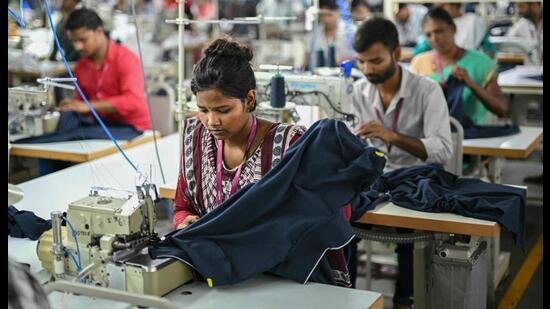
Global headwinds that followed the imposition of the Trump tariffs meant that India faces significant pressure. By the time the government works out a trade deal with the US, a large number of workers in sectors such as textiles would have lost their jobs. This compounds the challenge on the domestic front, where unequal growth and the steady dismantling of welfare have stressed household finances — savings are at a low and debt is at a high.
This budget was an opportunity for finance minister Nirmala Sitharaman to assure investors and the common people. However, she has failed on both fronts.
In the last budget, the finance minister highlighted four engines of growth — agriculture, micro, small and medium enterprises (MSMEs), investments, and exports. Reforms were to be the fuel for these engines. That formulation has been discarded for three kartavyas (responsibilities) — sustained economic growth, capacity building, and inclusive development. All noble targets, but the government’s actions are in a diametrically different direction. Health and education continue to receive a diminishing share of the budget funds, and human development suffers. Children still experience stunting and wasting, the majority of women are anaemic, and large numbers of children drop out before secondary school. Scholarships for SC, ST and OBC students have faced cuts.
With a per capita income of $2,700 and a large working-age population, India’s growth potential remains high. For the financial year 2026-27 (FY27), nominal growth is estimated at 10%, and real growth at 7.2%. Ideally, this should lead to sustained job creation in the formal sector and rising consumption.
Strangely, the government does not seem optimistic about a spurt in consumption. Revenue from goods and services tax is estimated to come down from ₹10.51 lakh crore to ₹10.24 lakh crore. But it does not explain why proceedings will fall dramatically when the economy is expected to be thriving.
The finance minister has repeatedly questioned the private sector on its inability to invest. She ignores the private sector’s lack of confidence in the government. Corporate India may sing praises in chorus on budget day, but they vote with their pockets and withhold investments thereafter. It appears they know more about the fragile future of consumption. The budget should have focused more on turning this crucial dimension around, instead of just talking about Swadeshi.
Targeting a reduction in the debt-to-GDP ratio is a welcome step. But this ratio should have never crossed 50% considering that this government does not invest sufficiently in welfare as the Congress-led United Progressive Alliance (UPA) did while in office. The UPA delivered high growth rates and championed a welfare state, while maintaining the central government debt-to-GDP ratio under 50%.
India’s external debt has continued to balloon in the last decade and stood at ₹63,94,246 crore by June 2025. This rising debt has not led to any serious positive change in the standard of living of common citizens. The government must answer where it has been investing the money. If it has gone into funding expenditure, has that led to significant infrastructure development? For instance, it is increasingly common to see most cities come to a standstill after a spell of rain. Roads are in a pitiable condition across large swathes of the country, railways are increasingly investing in expensive Vande Bharat trains instead of addressing the needs of the vast majority of poorer passengers, and the airport sector is essentially a duopoly forcing consumers to pay premium rates.
Post the pandemic years, the government bet big on capital expenditure. It eschewed a time-tested welfare strategy to propel demand and placed all its eggs in trickle-down economics.
As expected, it led to a shrinking welfare state. The dismantling of the Mahatma Gandhi National Rural Employment Guarantee Act (MGNREGA), which provided a crucial safety net for rural Indians, makes any talk of inclusive growth hollow. This government invests little in the social sector.
The Economic Survey and the budget have focused on ease of living. Sadly, for common people, living standards have fallen with every passing year. Rising air and water pollution have left our cities unliveable and impose a great economic cost on the economy in terms of increased illness and avoidable health care expenditure. The budget shows that the government is determined to ignore this mega challenge and continue to delude the public through empty slogans instead of concrete, proactive, protective action.
Rajeev Gowda is a former MP and chair of the Congress party’s research department. Akash Satyawali is joint secretary of the Congress party’s research department. The views expressed are personal