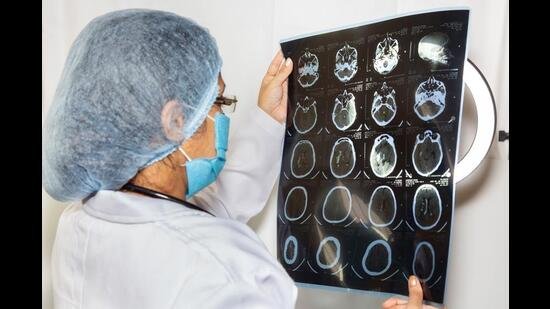
Union Budget 2026 recognizes brain health and human capital as a strategic asset and an important component of the mission to Viksit Bharat. The strengthening of mental health infrastructure, human resource expansion, and digital health and wellness initiatives reflects a welcome move towards a human capital-driven growth model. Economic Survey 2023-24 had first highlighted the significance of mental health in personal and national progress. The 2025-26 survey also focused on human capital in addition to flagging digital addiction as a major public health hazard as well as a risk for India’s long-term productivity. Recent scientific literature also highlights digital addiction as a major hazard for India’s demographic dividend and growth potential.

Brain health refers to the optimal functioning of cognitive, emotional, and psychological processes that enable individuals to learn, work, interact socially, and adapt to adversities. The World Health Organization (WHO) recognizes mental and brain health as fundamental to overall well-being and effective functioning of people and societies. Brain health directly influences learning abilities, creativity, and skill development. Thus, it is a key determinant of innovation, and economic growth. This approach reflects a shift towards treating mental wellness as foundational for economic growth. Mental disorders result in increased drop-out from schools, colleges and absenteeism from workplaces. They also add to health care costs and out-of-pocket expenses due to under-utilization of public health care. Poor brain health disproportionately affects poor people, deepening inequality and undermining societal development.
The transition from a brain-negative to a brain-positive economy has been estimated by the McKinsey Health Institute as key to unlocking $26 trillion in global economic opportunities by improving labor force performance, igniting innovation, and sharply improving the quality of life. The economic loss due to mental health conditions in India between 2012-2030 is estimated at $1.03 trillion.
India has a relatively high but underestimated prevalence of mental disorders. The National Mental Health Survey (NMHS) 2015-16 reported that 10.6% of Indian adults suffer from mental disorders with wide regional and gender differences. Mental health conditions are more prevalent in urban metro areas (13.5%) compared to rural areas (6.9%) and urban non-metro regions (4.3%). India has the dubious distinction of having the highest number of suicides in the world. According to latest National Crime Records Bureau (NCRB), more than 1,71,000 suicide cases were reported in 2023, up 23.2% from 2019. The age-adjusted suicide rate is about 21.1 per 100,000 people, reflecting serious psychosocial challenges — digital addiction and lifestyle changes are major risk factors among the youth, with nearly 38% of young people showing. depressive symptoms. An NCERT survey highlighted that 11% of students feel anxious, 14% experience extreme emotions, and 43% face mood swings. These are preventable and these young productive lives can be positive economic assets.
Mental health expenditure in India has traditionally been characterized by low public funding and high out-of-pocket costs. Consequently, the average family with members suffering from mental conditions often spends nearly 18% of its income on treatment. India has 47 government-run mental hospitals including three central institutions, NIMHANS Bengaluru, CIP Ranchi, and LGB Tejpur. Additionally, the National Mental Health Program mandates 10-bed in-patient services in district hospitals in all districts. There are also more than 170,000 Ayushmaan Arogya Mandirsproviding primary mental health care. However, India faces a severe shortage of mental health professionals, with only 9,000 psychiatrists (0.75 psychiatrists per 100,000 people), 3,500 neurologists and 3,500 registered clinical psychologists (0.07 per 100,000 people).
Addressing this pressing problem requires systemic reforms, strengthening of mental health facilities across all parts of the country as well as intersectoral synchronization. This must be coupled with improving mental health literacy with a focus on reducing stigma associated with mental health and bolstering societal commitment to improving mental health. This will not only enhance the well-being of our population but also help in realizing our economic growth potential. The commitment to establish a new central institute, NIMHANS 2, in North India and upgrading the two other central institutes in Ranchi and Tejpur are much-needed steps that will go a long way in providing quality brain health services across all parts of the country. Budget 2026 represents the commencement of a new era, in which brain health is placed at the center of India’s growth narrative with a vision to achieve healthy Viksit Bharat 2047.
Rajinder K Dhamija is director, IHBAS, and chair, National Task Force on Brain Health, Government of India. The views expressed are personal