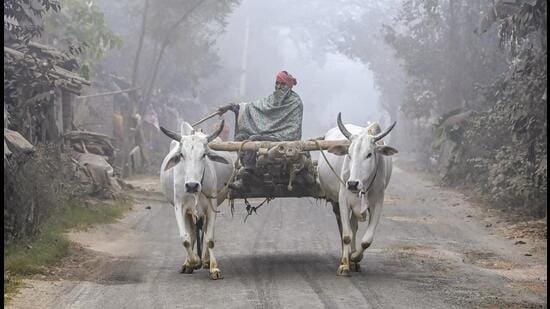
Twenty-five years have now passed since the launch of the Pradhan Mantri Gram Sadak Yojana (PMGSY). Introduced in December 2000 by the government led by Prime Minister Atal Bihari Vajpayee, the program set out with an ambitious mission — to connect India’s villages with all-weather roads and integrate rural communities into the broader economy. At the time, nearly half of India’s 500,000 villages lacked proper road connectivity. With over 70% of the country’s population living in rural areas, this meant that nearly 740 million people were effectively cut off from basic services, markets, and opportunities. The absence of roads was a structural barrier to development, limiting access to education, health care, jobs, and mobility.
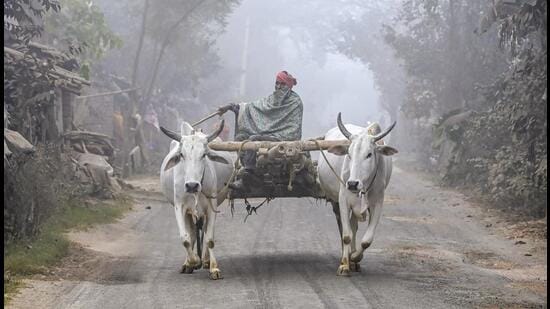
PMGSY was conceived as a direct response to this isolation. The rollout was phased, prioritizing larger villages first — those with populations above 1,000, then above 500. In tribal and hilly states, smaller villages were included from the start. The current, third phase of the program focuses on last-mile connectivity and upgrading or repairing roads built earlier. As of December 2024, 95% and 97% of sanctioned works under phase I and II, respectively, had been completed. The program is currently active in 25,000 villages, with ongoing construction aimed at finishing what was started. The cost – ₹3.96 lakh crore so far — makes PMGSY one of the most expensive centrally-sponsored schemes in India’s history.
But, in many ways, it has been worth every rupee. Roads built under the program have reshaped the rural economy in fundamental ways. A rich body of research shows that PMGSY has expanded non-agricultural employment, encouraged the adoption of modern farming technologies, improved access to markets, strengthened the performance of informal firms and micro, small, and medium enterprises, reduced price gaps between villages and towns, and promoted more diverse and nutritious diets. Beyond economic gains, it has improved access to health care — especially for women — and education. Our own research finds that road connectivity has raised school enrollment among girls, enhanced women’s mobility, and contributed to gradual but meaningful shifts in gender norms. These gains signal deeper transformations in the rural society.
Yet, despite these successes, PMGSY is far from perfect. Implementation delays, poor construction quality, and weak oversight have plagued it for years. Studies have found that some roads officially listed as completed under PMGSY either don’t exist or are in very poor condition. In many areas, roads degrade rapidly due to poor materials, inadequate maintenance, or both. Political interference in the tendering process is another concern. There have been allegations that contracts are often awarded to firms with political connections, undermining competition and quality.
The question now is of maintaining the roads. A road is not a one-time achievement. Without upkeep, it becomes useless within a few years. The government must now focus on three key areas. First, prioritizing maintenance. PMGSY can’t afford to be seen as a build-and-forget programme. Dedicated funding, routine inspection, and clearly assigned responsibility for road upkeep are essential. Second, strengthening accountability. From tendering to execution, every step of the process must be monitored more rigorously. Digital tools like geotagged images, GPS-based tracking, and community reporting mechanisms can help ensure that roads exist not just on paper, but on the ground. Third, rethinking evaluation metrics. Success must be measured not just by kilometers built or crores spent, but by actual usability and long-term impact. Are the roads functional during the monsoon? Are children able to get to school year-round? Can farmers reliably transport their produce? These are the questions that matter.
PMGSY has helped weave India’s villages into the national fabric, giving millions a fighting chance at economic and social mobility. But if the next 25 years are to match — or exceed — the gains of the last 25, the focus must now shift from expansion to consolidation, from building to sustaining. The road ahead is clear. Whether we travel well depends on whether we have learned from the journey so far.
Punarjit Roychowdhury is associate professor and head, department of economics, Shiv Nadar University, Delhi NCR; and Bharti Nandwani is associate professor, department of economics, Indira Gandhi Institute of Development Research, Mumbai. The views expressed are personal