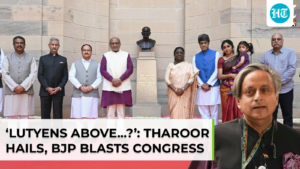
In a symbolic move reflecting India’s ongoing decolonisation efforts, the bust of British architect Edwin Lutyens has been replaced by a statue of C. Rajagopalachari at Rashtrapati Bhavan. President Droupadi Murmu unveiled the statue on February 23, marking what the President’s Secretariat described as part of a broader effort to shed vestiges of colonial mindset. Lutyens, who designed much of New Delhi’s imperial architecture, including Rashtrapati Bhavan, had long been commemorated in the central courtyard. His replacement by Rajagopalachari — independent India’s first and only Indian Governor-General — is being seen as a deliberate symbolic repositioning of national identity. Prime Minister Narendra Modi termed the move an act of “mental decolonization,” stating that India is moving away from colonial-era symbols and honoring its own leaders. The decision has sparked debate. Lutyens’ great-grandson, Matt Ridley, expressed sadness over the removal, noting that his ancestor was an architect rather than a colonial administrator. Historian Swapna Liddle described the decision as political, while Congress MP Shashi Tharoor welcomed the honor for Rajaji. The development fits into a broader pattern of symbolic changes aimed at reshaping public memory in post-colonial India.