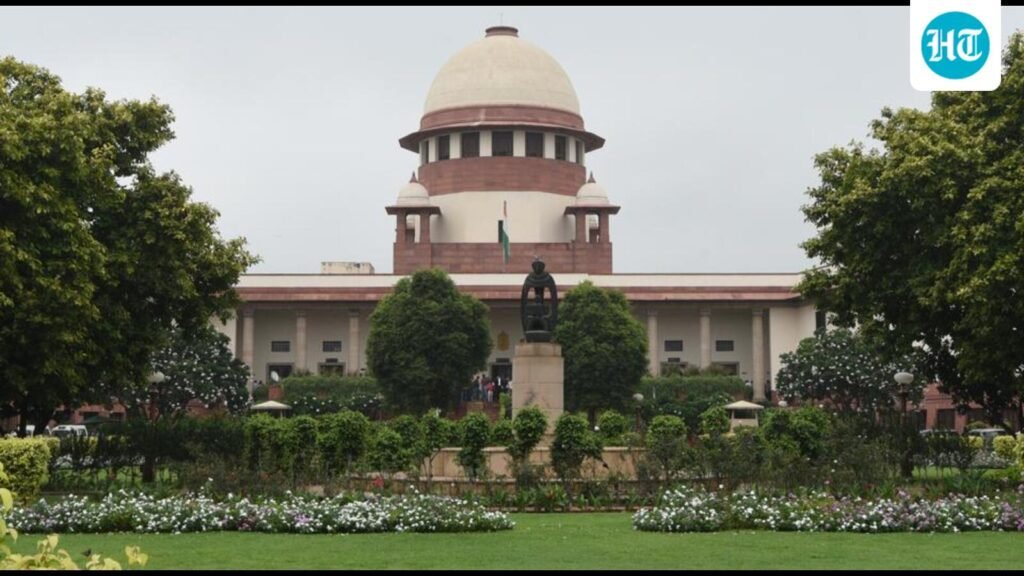
The news that the Supreme Court had suggested that people might be required to verify their age through Aadhaar authentication before watching an OTT show on Netflix or Amazon Prime (or other such platforms) caused both hilarity and consternation. The idea of a pop-up window requiring you to scan your Aadhaar just as you settle down to watch the new season of Pataal Lok is equal parts funny and terrifying. While such a move might not, ultimately, be implemented because of how difficult it is to enforce, the Court’s off-the-cuff observations do reveal the hazardous — and potentially dangerous — nature of the current legal discourse around the regulation of online content in India.

As I have previously written in this column, this process has seen a problematic blurring of legislative, executive, and judicial functions, in a way that places citizens’ rights in jeopardy. Ideally, legal regulation of any kind — especially one that impacts fundamental rights, such as the right to free speech — should originate with legislative deliberation and public consultation. Following the passage of a law after this process, the executive is tasked with bringing it into operation by framing rules to do so. The Court then stands as a body whose task it is to review legislation and executive action for constitutionality, and to strike them down if they unjustifiably encroach on citizens’ rights. This constitutionally envisioned process is meant to create a set of guardrails that mitigate the possibility of tyranny, or of the executive running roughshod over people’s rights.
In the current hearings, however, the Supreme Court has turned this carefully crafted procedure on its head. The case arose when a public interest litigation was initiated against certain comedians for allegedly making fun of disabled people in their shows. To start with, this case should never have been before the Supreme Court: If indeed these content creators had broken any laws, then the remedy lay in the procedures set up under those laws (for example, criminal or civil complaints), rather than litigation at the highest court of the land.
Once the case was before it, however, the Supreme Court seized the chance — as it often has in the past, and often with bad results — to significantly expand the nature of the case, and with that, the scope of its own jurisdiction. It voiced outrage at how the OTT sphere was not regulated, and took it upon itself to do the same.
The hearings that followed have resembled a consultation — but between the Supreme Court bench and the Union executive, about the nature and form of the “guidelines” that might be issued to regulate OTT content. On the last date, the Union executive submitted some draft guidelines that appeared to be modeled on the Program Code in place for TV content, and also contained exceedingly wide and broad phrases such as the prohibition of “anti-national content”.
This is troubling for many reasons. The first is that phrases such as “anti-national” have no fixed content — indeed, their content can be whatever the executive of the day wishes it to be — and thus opens the door not only for harassment and persecution, but also for self-censorship, where both content creators and OTT platforms will face a chilling effect upon their speech, as they try and sift through what might constitute “anti-national” content. Any speech-restrictive legal provision that accords vast discretion to enforcement agencies is extremely problematic, as the executive will necessarily use such a provision against dissenting speech or speech not to its taste. Indian constitutional jurisprudence is very clear: Speech restricting-provisions must be limited to the eight sub-clauses under Article 19(2) of the Constitution (of which “anti-national” is not a part, and for good reason), and they must also meet the test of reasonableness and proportionality (for example, “incitement” to public disorder may be prohibited, but advocacy may not).
In their present form, these draft guidelines evidently fail the test of constitutionality. But this is where the second issue with the nature of the proceedings comes in. In the normal course of things, if the executive issues an unconstitutional order or an unconstitutional set of guidelines, then these can be challenged before the court in an adversarial proceeding, and in the hope that the court will strike them down if they are unconstitutional. Here, however, instead of playing its role as a body that adjudicates the constitutional validity of State action, the Supreme Court is playing the role of co-drafter of the guidelines. This is emphatically not its task, but it also severely harms fundamental rights: Once these guidelines are issued with the Court’s imprintit will, naturally, become impossible to challenge them before that same Court. Incidentally, the Court’s intervention in this case has also deprived citizens of the opportunity of eventually challenging the guidelines before a high court, thus erasing an entire layer of constitutional safeguards designed to protect the rights of citizens.
For these reasons, whether or not we are forced to scan our Aadhaar cards before we start watching the new Netflix show that’s come out, these proceedings should alarm us. Our Constitution is built on the principle of the separation of powers, where tyranny is prevented because the three organs of State can check and regulate each other. The possibility of tyranny is magnified when these organs start to work together directly, instead of reviewing each other. It is hoped that the Court, too, recognizes this fact, and resumes its role as a constitutional guardian rather than as a secondary guideline-drafter.
Gautam Bhatia, a Delhi-based advocate, is the author of Offend, Shock or Disturb: Free Speech Under the Indian Constitution. The views expressed are personal