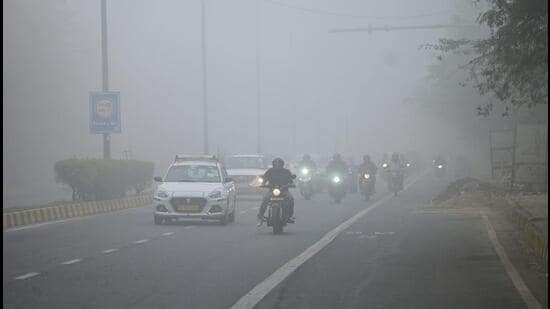
On severe pollution days in Delhi, frustration feels universal. Governments may feel they have acted, but the results appear evasive. Scientists understand the problem, but recognize the limits of intervention. Regulators confront enforcement gaps in a system shaped as much by chemistry and weather as by policy. Citizens endure air that remains punishing despite years of action. Across institutions and society, emotion converges on disappointment, tempered by the belief that progress will eventually arrive.
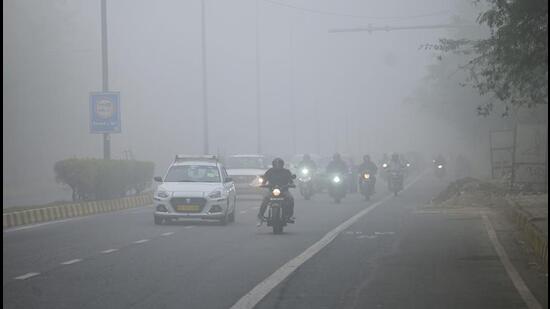
That dissonance reflects a familiar trajectory in air-quality management, when visible pollutants give way to invisible ones. For much of the past decade, Delhi focused, correctly, on what was overwhelming and measurable. PM10, and later PM2.5, showed massive excesses. Dust, fly ash, open burning, dirty fuels, and gross emitters dominated both monitoring data and lived experience. The priority was obvious: Control what is directly emitted, immediately harmful, and against which measures are enforceable. That sequencing was not a choice; it was a necessity. The transition of public transport to CNG, tighter fuel standards culminating in BS-VI, and emergency measures such as GRAP were appropriate responses to the problem as it then existed.
These first-order controls delivered real gains. Vehicle-related particulate matter (PM) and sulfur emissions fell significantly. Peak intensities shortened. Yet as these measures began to take effect, the problem quietly entered a more complex phase. Today, a substantial share of PM2.5 in Delhi is no longer emitted as particles at all. It is created in the atmosphere. Secondary particulate matter forms when precursor gases such as sulfur dioxide, nitrogen oxides (NOx), ammonia, and volatile organic compounds (VOCs) react to form sulphates, nitrates, and secondary organic aerosols. Multiple chemical speciation studies and long-term monitoring analyzes (by Central Pollution Control Board and Delhi Pollution Control Committee) show that secondary inorganic aerosols, particularly ammonium sulphate and ammonium nitrate, account for close to a third of Delhi’s annual PM2.5 load, rising to half during the winter smog. Much of this burden sits in finer fractions, including PM1 and ultrafine particles, which penetrate deep into the lungs and bloodstream.
This is where public perception diverges from physical reality. First-order controls target visible pollution. Secondary pollution is largely invisible. The mitigation trajectory, therefore, becomes non-linear. Air Quality Index averages may improve while the number of very poor or severe days falls slowly. Severity declines before frequency does. A peak that once crossed 600 may now reach 450. It remains severe, but it is meaningfully less harmful. Acute health risks drop quickly as concentrations fall. Chronic outcomes such as cardiovascular disease and COPD improve only over years as cumulative exposure declines.
Current action plans struggle at this stage because they were designed for an earlier phase of the problem. They are anchored in mass-based indicators and identifiable point sources. Secondary pollution, by contrast, is driven by atmospheric chemistry and non-point sources: Fertilizer use, dispersed combustion, transport intensity, waste burning, and regional inflow. A pollutant does not need to dominate ambient charts to dominate chemistry. Even near-threshold NOx, when ammonia is abundant, can generate large secondary particulate loads. But non-linearity is not an alibi for inaction. This is precisely why policy must become broader, kick in earlier, and curb pollution harder.
Cities that eventually succeeded passed through similar plateaus of effort and frustration. Los Angeles discovered that visible emission controls were only the beginning. Progress resumed when basin-wide governance coordinated NOx and VOCs reductions to address photochemical smog. London, after dramatic gains from coal smoke control, faced decades of secondary sulphate and nitrate dominance that required regional sulfur reduction and patience. Beijing cut primary particulate matter aggressively, yet a winter haze persisted until coordinated sulfur dioxide, NOx, and ammonia controls targeted secondary formation across the wider region. Tokyo followed a similar arc as transport-driven NOx chemistry replaced industrial smoke as the binding constraint. In each case, public disappointment peaked after early success.
Delhi NCR, however faces an additional constraint of supporting a large population within a near-landlocked airshed, with intense and continuous emissions from transport, energy use, construction, waste, and agriculture operating in close proximity. This magnifies non-linearity and narrows margins for error. What must change now is not intent, but focus. And that must begin with redefining success, moving beyond annual averages to sustained reductions in precursor chemistry.
These realities clarify the task ahead and the need for collective effort. Institutional responsibility must rest with government leadership, because only the government can align incentives, coordinate across jurisdictions, enforce standards, engage stakeholders, and sustain action beyond episodic crises.
First, action plans must treat secondary particulate matter as a core objective, tracked through precursor reductions and chemical speciation at monitoring supersites.
Second, precursor control must be sequenced and NCR-wide. Sulfur dioxide reduction through universal flue-gas desulphurisation at thermal power plants remains the fastest structural win. NOx control must extend beyond certification to real-world emissions, particularly from heavy transport. Action on ammonia, the most politically difficult precursor, can no longer be deferred. Fertilizer efficiency, stubble management, and waste control must be treated as air-quality measures. VOCs from fuels, solvents, etc., require low-solvent standards and waste-to-energy alternatives.
Third, particle size must enter policy thinking. Equal PM2.5 concentrations can hide very different health risks when finer particles dominate. PM1 and particle-number monitoring at representative sites is necessary to understand persistent health burdens.
Fourth, airshed-wide coordination is unavoidable. Delhi may control only a portion of its pollution load, but that makes leadership quite essential.
Fifth, equity must be addressed as chemistry. For millions in poorly sealed homes, the advice to stay indoors traps both outdoor pollution and indoor combustion fumes. Secondary pollution is, therefore, socially asymmetric. Precursor control must move in step with housing improvements and clean-energy access, or air quality will remain class-stratified.
Finally, emergency response must mature. GRAP should evolve from reactive thresholds to predictive action, triggered by meteorological forecasts rather than post-breach panic. The fact that relief arrives later makes early intervention more urgent.
None of this implies past failure. It reflects problem evolution. Policy attention follows the binding constraint, and that constraint has shifted from smoke to chemistry.
The task ahead is to manage expectations honestly while acting decisively. A realistic goal is not to wish 400 down to 100 overnight, but to drive 400 toward 200 consistently, shorten peaks, and reduce exposure even when categories do not immediately improve.
Delhi’s plateau is not proof of futility. It is proof that the easy gains are behind us, and the decisive phase has begun.
AK Mehta is former chairman, Central Pollution Control Board, and former chief secretary, J&K. The views expressed are personal