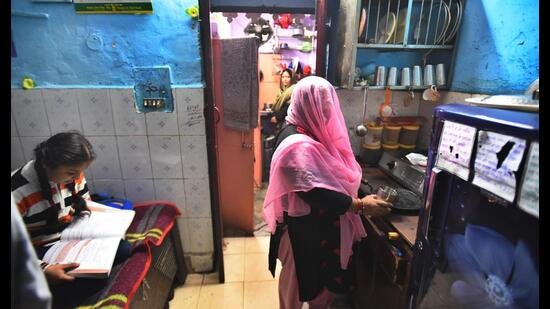
the girl Time Use Survey held in 1998-99 in six states of India was an epiphany as it made it bare a phenomenon which was otherwise omnipresent. It revealed that we were brazenly generous in tasking women to primarily run the kitchen and take care of care work, whereas men were frugal in both participating and spending time on these vital, life-sustaining tasks. Ironically, the 2024 all-India Time Use Survey offers a scenario not so different from that of 1998-99, or for that matter, the more recent 2019 survey.

Our analysis of the unit-level data of the Time Use Survey 2024, confined to the age group of 15-59 years, reveals that 92% and 41% of women participated in unpaid domestic maintenance and care work, respectively, in 2024. The corresponding proportions for men are: 30% and 21%. Taken together, 93% of women, as opposed to 44% of men, participated in unpaid domestic or care work in India. In terms of time spent, women spent, on average, 343 minutes or close to six hours a day in these activities. By contrast, men spent, on average, just 43 minutes a day in unpaid domestic or care work combined. This is a paltry four minutes larger than the average time spent by men (40 minutes) in these activities in 2019. Thus, the huge gender gap found in both 1998-99 and 2019, in participation in and average time spent on unpaid household work, persists in 2024 as well.
Do the southern states, hailed for higher autonomy and well-being of women, deviate from the all-India pattern? Equally, is the story different in the northeastern states? First, the northeastern states. They exhibit a progressive phenomenon, especially so in Nagaland, Arunachal Pradesh and Sikkim, where more than 75% of men participate in unpaid domestic maintenance and care work. At the other end, with the lowest participation of men, are Gujarat (31%), Andhra Pradesh (33%) and Maharashtra (37%). Interestingly, southern states do not exhibit a common pattern. While Telangana (57%) and Kerala (54%) come next only to north-eastern states, Tamil Nadu (46%) and Karnataka (45%) echo the all-India pattern.
As the attachment to social norms is known to be stronger in rural, older and less educated men, do these patterns emerge from urban, educated and younger men? Oddly, an increase in education does not guarantee a corresponding increase in men’s participation in unpaid household work. Equally, urban men tend to emulate their rural brethren. The only saving grace is the higher participation of younger men: 55% of men in the age group of 30-45 years, as opposed to 41% of men in the age group of 46-59 years, participate in unpaid household work.
Interestingly, the presence or absence of additional adult female members in the household seems to influence men’s participation in unpaid work. For instance, 64% of men participate in unpaid household work if the household does not have an additional adult female. By contrast, men’s participation drops significantly to 46%, by 20 percentage points, if the household has an additional adult female. The participation declines further to 36% if there are two additional adult female members in the household. These seem to indicate that the higher participation of men in unpaid household work in households where there is only one adult female is driven primarily by sheer compulsion rather than a willing act of shared responsibilities.
The Time Use Survey 2024 also reinforces yet another dimension of the gendered time-use pattern: higher participation of men than women in economic activities. For instance, 79% of men and 42% of women participated in economic activities in 2024. Men spent, on average, 376 minutes in economic activities, whereas the average time spent by women was 110 minutes.
Since men spend, on average, more than six hours a day in economic activities, is it the lack of time — “time poverty” — that constrains them from participating in unpaid domestic work?
The data reveal that participation in economic activities tends to go with a decline in time spent on unpaid work. For instance, about 95% of employed women participate in unpaid household work and spend, on average, 261 minutes per day. In contrast, the average time spent by women who do not participate in economic activities is 374 minutes, 113 minutes more than the former.
However, there is still a huge gap between employed men and employed women in time spent on unpaid work. Employed men spend only 45 minutes in unpaid work as opposed to 261 minutes by employed women, a difference of 216 minutes. What is more, in households where at least one female member is employed, unemployed men spend only a paltry 26 minutes. These indicate men’s attachment to social norms rather than time poverty.
The broad patterns rising from the Time Use Survey 2024 are a clear testimony to our unwavering allegiance to the rigid social norms despite our awareness about how they limit the contours of women’s freedom and opportunities as well as their well-being. Though women’s participation in economic activities has been rising significantly over the period, time use surveys of 2024 and 2019 reinforce that women continue to shoulder the primary responsibility of unpaid work in the household. Surprisingly, the average time women spend on household unpaid work did not register any decline despite a higher and growing access to social infrastructure, especially electricity, LPG connections, drinking water and household appliances, in this period. Agreeably, a larger proportion of men than women participate in economic activities. Yet, their lower participation and abysmal time spent on unpaid work appear to be associated with their attachment to social norms rather than time poverty.
The Time Use Survey 2024 confirms that even in the present era of Artificial Intelligence, our allegiance to patriarchal norms and gendered patterns in time use prevail without any change. It is a stark reminder of the stranglehold of social norms on women and their time use, as well as their freedom and well-being. Though larger participation of younger men and men from north-eastern states offers a silver lining, the broader patterns remind us that much needs to be done, through effective and innovative public policy, in both reducing women’s unpaid work responsibilities and redistributing it through increased participation of men.
Sunny Jose is professor and dean, School of Sciences and Humanities, SRM University, Sonepat and Athary Janiso is an assistant professor of Economics, School of Humanities and Social Sciences, GITAM (Deemed to be University), Hyderabad campus. The views expressed are personal