Freedom at Midnight Season 2 review
Cast: Sidhant Gupta, Chirag Vohra, Rajendra Chawla, Luke McGibney, Cordelia Bugeja, Arif Zakaria, Pawan Chopra, Ira Dubey, Rajesh Kumar, Abhishek Banerjee, KC Shankar, Anurag Thakur
Creator: Nikkhil Advani
Rating: ★★★★
Freedom at Midnight has often been compared to The Crown, Peter Morgan’s definitive series on the British royal family, which changed the way modern history is depicted in fiction. However, to be fair to Freedom at Midnight, it tackles a much more challenging task – showcasing the historical figures of the subcontinent who are revered as demigods and despised as villains almost simultaneously. Taking any one tone puts the whole enterprise at risk of being branded biased.

This is the line the second season of Nikkhil Advani’s show takes. It is detailed, audacious, meticulous, yet sensitive. It takes the viewer into rooms and conversations that we have only read about in history and figures we have only read of or seen in monochrome pictures. And it makes them come alive as human figures, with faults, just like hours. The series is far from perfect. It does betray some of the maker’s own biases and leanings, but it is still engaging. And it tackles an issue as sensitive as the Partition with the respect and tenderness it deserves.
The premises
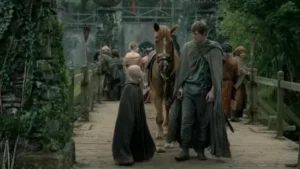
Season 2 of Freedom at Midnight begins in 1947 as the British are planning to leave India as hastily as they can. It traverses the formation of the boundary commission, sees Jinnah and Nehru’s ego clashes over the Partition, and also sees Sardar Patel and VP Menon deftly handling the 562 Princely States, including Junagadh and Kashmir. But it devotes its most significant portion to the widening divide between Nehru and Gandhi during the Partition, the ensuing riots, and the 1947 Kashmir War.
What works?
Freedom at Midnight knows that patriotism has different hues. It doesn’t always need to be loud. That is a grammar that has worked in everything from Gadar to Dhurandhar. But a more staid approach can also work, where the ‘enemy’ is not always loud and clear. The second season deals with events that are much more personal to Indians – the Partition, accession of Kashmir, and the assassination of Mahatma Gandhi. The show needs to navigate the communal divide and the inner minds of divisive figures in a world that is forgetting nuance or the need for it.
And it does so beautifully. Freedom at Midnight’s victory lies in its ability to present this as a human drama, instead of a historical epic. The stakes are high, but our focus always remains on what those stakes mean for our protagonists, not the nation at large. Nehru wants Kashmir because it is his home. Patel is frustrated with Jinnah’s changing demands, and Gandhi feels alienated that his two proteges no longer follow his path. These are human concerns, linked to geopolitical upheavals. But the way the show deals with them helps the viewer connect more to the characters as well as the incidents.
What irks
There are still a few things that drag out in Freedom at Midnight. The show simplifies and caricaturises anyone who is not part of the Indian establishment. Jinnah is reduced to a scheming, annoyed devious man, and Liaquat Ali Khan to a bumbling assistant. Even Maharaja Hari Singh of Kashmir is presented as a parody of a man. This is in stark contrast to the painful meticulous details taken to portray Nehru and Gandhi as men and not just figures. I get the lens with which the story has been told is Indian, and hence the Indians will be heroes. But the ‘villains’ need not always be as unidimensional as the ones here. A little gray would have made this canvas even richer.