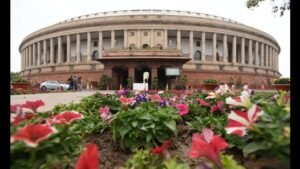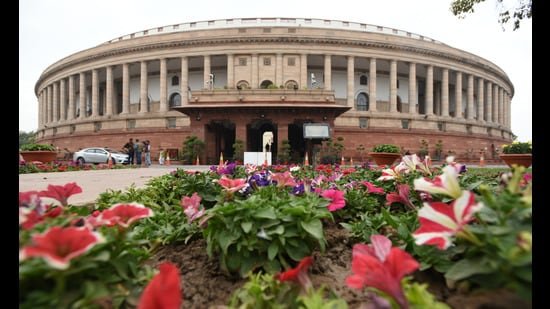
As the winter mist settles over New Delhi, the historic Samvidhan Sadan is hosting the custodians of the Commonwealth’s parliamentary traditions. It is with a profound sense of responsibility and pride that I welcome my fellow Speakers and Presiding Officers for the 28th Conference of Speakers and Presiding Officers of the Commonwealth (CSPOC).

We meet at a time when the very nature of our work is being reshaped by forces our predecessors could scarcely have imagined. The gavel and the rulebook, which have long represented our authority, must now work alongside algorithms and Artificial Intelligence (AI). It is fitting, therefore, that we have chosen to focus our deliberations on themes that are of contemporary relevance.
It is with a sense of profound legacy that we recall the genesis of our fraternity in 1969, established through the vision of Lucien Lamoureux of Canada to foster impartiality and the development of parliamentary institutions independent of executive influence. Since its inception, with a permanent secretariat in Ottawa, this forum has stood as a guardian of our shared democratic values. India has always been a pillar of this tradition, having had the distinct honor of hosting the Commonwealth family on three previous occasions: The second CSPOC in 1970-71, the eighth in 1986, and the 20th in 2010. We now prepare to convene the 28th CSPOC in January 2026 — marking the fourth time New Delhi welcomes this prestigious gathering, ensuring that our parliamentary institutions continue to evolve in the service of our citizens.
The choice of our venue is deliberate. The Samvidhan Sadan is not merely a building; it is the hallowed ground where India’s Constitution was debated and drafted. It represents the soul of the “Mother of Democracy”. By convening here, we affirm that while our tools may modernise, our foundational values of sovereignty, representation and debate remain immutable.
Yet, we cannot govern the future with the tools of the past. During the recent Standing Committee meeting in Guernsey, I emphasized that India’s emergence as a global hub for technology offers a unique opportunity for the Commonwealth family. We are witnessing a digital turn in democracy, and it is my vision that New Delhi serves as the platform where we forge a consensus on how to navigate this transition.
I am eager to share with my colleagues the strides India has made through our Digital Sansad initiative. We have moved beyond mere digitization to true digital empowerment. In the Lok Sabha (Lower House), we are deploying advanced AI tools to break down the barriers that distance citizens from their representatives. Foremost among these is the Sansad Bhashini project. In a Commonwealth defined by its rich linguistic diversity, language should never be a gatekeeper to democracy.
By utilizing AI for real-time interpretation and transcription, we can ensure that a Member of Parliament can speak in their mother tongue and be understood instantly by their peers and their constituents. Once developed fully, this technology will be in the service of inclusion — a principle I believe is vital for the 2.7 billion citizens of our Commonwealth nations.
I am aware of the capacity constraints faced by many of our sister nations, particularly across the Global South. In many of these jurisdictions, the imperative to undertake high-quality legislative research is often hampered by limitations in time, expertise and financial resources. Therefore, a cornerstone of my vision for the 2026 Conference is to demonstrate how AI can act as a transformative force multiplier. By supporting critical functions — ranging from intricate legislative drafting to the comprehensive analysis of complex budget documents, we can empower our Parliaments to operate with greater efficiency, ultimately advancing the welfare of our people with renewed vigor.
In the spirit of vasudhaiva family (the world is one family), India stands ready to share its digital public infrastructure with the Commonwealth. We do not see technology as a proprietary asset but as a public good that strengthens democratic resilience across the globe. However, our optimism must be tempered with vigilance.
The rise of social media has brought the Parliament closer to the people, but it has also introduced new vulnerabilities. We must have a candid dialogue about the security and well-being of our members in an era of online harassment and deepfakes. It is the duty of the Speaker to protect the dignity of the House, and today, that perimeter extends into the digital realm.
The 28th CSPOC represents a convergence of India’s democratic heritage and its technological future. I invite the Speakers of the Commonwealth to New Delhi not just to observe our progress, but to partner in it. Together, let us ensure that the legislatures of the future are efficient, inclusive and above all, anchored in the trust of the people we serve.
Om Birla is Speaker, Lok Sabha. The views expressed are personal