Sri Lanka is dealing with its worst disaster since the multi-faceted crisis of 2021. As of December 11, Cyclone Ditwah had claimed 639 lives and affected over 2.3 million people. Economic losses are close to $6-7 billion, derailing the country’s economic recovery and setting its infrastructure back by decades. The Sri Lankan government’s delayed and inadequate preparation has provided much-needed momentum to the Opposition. On its part, India launched Operation Sagar Bandhu to ensure Sri Lanka’s “early recovery, rehabilitation, and reconstruction”, securing its long-term interests.

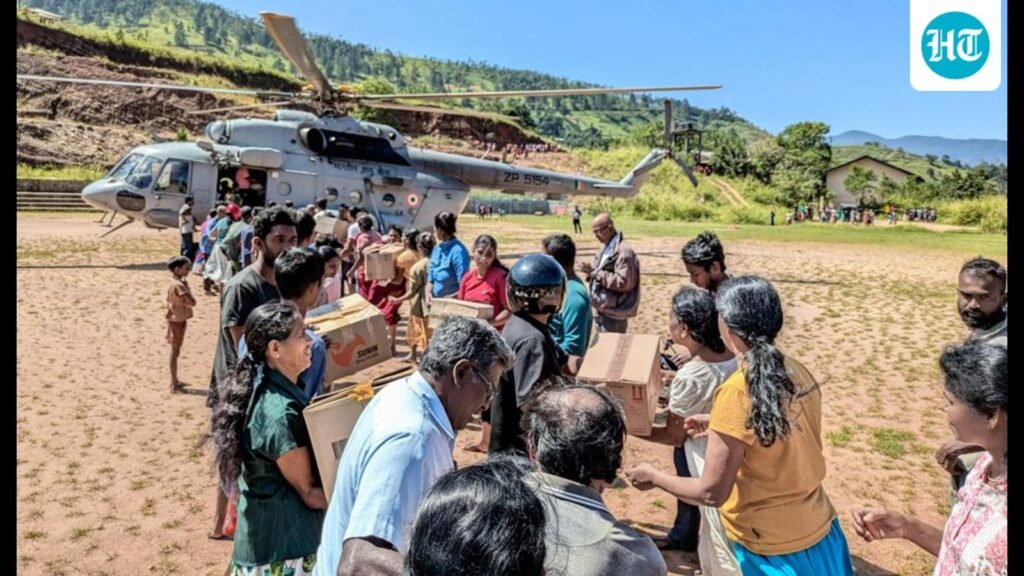
Since the operation’s November 28 launch, India has delivered over 1,058 tonnes of relief materials, and its naval and air forces have been deployed for rescue and relief assistance. These efforts are being complemented by National Disaster Response Force teams, medical personnel, medical centres, and a para-field hospital. Till December 8, over 450 people had been rescued and 3,338 treated. India has also flown its military engineers along with Bailey Bridge units to restore critical infrastructure.
India’s recent efforts build on its previous commitments. Since 2021, it has offered over $4.5 billion in aid. It comes at a time when the Sri Lankan government is facing immense challenges. One year into power, the high tide that Anura Kumara Dissanayake (AKD) rode to power is descending to its natural ebb. The Opposition has started gaining momentum by criticizing the government’s policies. The crackdown on former ministers and bureaucrats, especially president Ranil Wickremesinghe, has united the Opposition, motivating them to hold joint rallies.
The inadequate response during the recent disaster has given them further momentum. Increasing centralization and scrutiny in the name of accountability had left the bureaucracy paralyzed. The State mechanism hesitated to respond without the president’s intervention, and families were left with very little assistance. This has created new pressure points against the government. Over the last year, owing to its nationalist and protectionist constituencies and lobbies, the government reversed privatization and canceled energy projects in Mannar and Pooneryn. It also slowed negotiations on the Economic and Technology Cooperation Agreement (ETCA) and land bridge. The defense MoU signed with India has also drawn criticism. With the Opposition’s growing role, the government is now growing more vulnerable to politicization of its engagements with India.
Cyclone Ditwah has also shrunk Sri Lanka’s bargaining agency and necessitated Chinese assistance and funds. The AKD government has already initiated a recovery program to mobilize resources from multiple sources, including foreign governments and international organizations, to rebuild the country’s infrastructure. This comes at a time when China has resumed its projects in Sri Lanka. Recently, it offered a $500 million loan for the stalled highway project. It also offered cash donations and relief supplies during the latest crisis. Amidst these political and geopolitical shifts, Operation Sagar Bandhu will help India secure its long-term interests. Its swift response, gestures and efforts have generated a positive perception, especially after it allowed Pakistan to use its airspace to deliver humanitarian assistance to Sri Lanka. This has created goodwill for India that will go a long way in securing its interests and projects, especially as Sri Lanka’s political ground gradually shifts, and China’s influence increases.
Aditya Gowdara Shivamurthy is associate fellow, Neighborhood Studies, ORF. The views expressed are personal