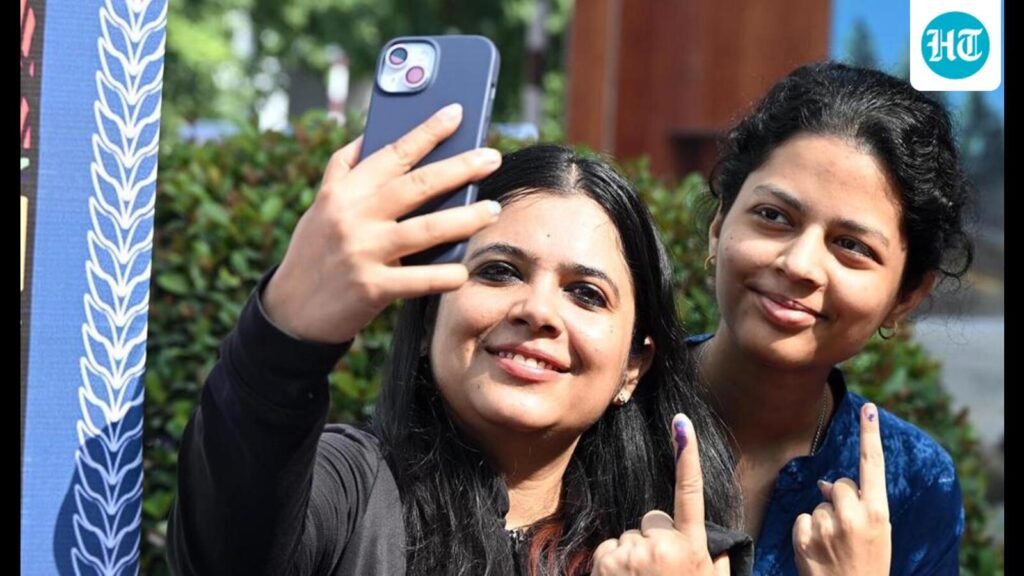
More than 50 years ago, a venerable British scholar of Indian politics wryly observed that elections are one of those things “Indians do rather well”. Coming in the backdrop of fears — not entirely illegitimate — of India’s democracy being put on permanent hold or becoming “guided”, the sanctity of the electoral process was perceived as a redeeming feature of public life. This basic pillar of democracy secured its ultimate endorsement in 1977 when, despite the shadow of the Emergency, India’s electorate voted out an authoritarian regime.

The ability of the Election Commission of India (ECI) to ensure that popular will is reflected in the legislatures has been tested over and over in the past seven decades of Independence. Although there have been instances of derailment — the West Bengal Assembly election of 1972 and the Jammu and Kashmir election of 1987 being two notable examples — India’s overall experience with elections has helped maintain the legitimacy of the political system.
As happens in a first-past-the-post that exaggerates legislative majorities, there have also been instances of incredulous losers whose anecdotal experiences of the campaign didn’t quite correspond with the outcome. In 1971, a defeated side insisted that the use of Soviet-made “invisible ink” helped Indira Gandhi win handsomely. Similar incredible claims of satellite manipulation of EVMs were heard after the 2009 general election.
What was once the prerogative of conspiracy theorists has become less of a fringe preoccupation in the past year. Encouraged by number-crunchers in his party whose predictions were at variance with the popular mood, the Leader of the Opposition has challenged the veracity of the electoral rolls. There have been loud assertions that ECI is contemplating using the Special Intensive Revision (SIR) of the electoral rolls to exclude minority voters on the ground that they may not be Indian. The controversy has become a subject of jousting between political parties in West Bengal and this may spill over to Assam and other Northeastern states.
Since Article 321 of the Constitution and the Representation of People’s Act gives ECI “exclusive jurisdiction” over the conduct of elections, the electoral process has been kept out of political interference. Over the decades, ECI has introduced many innovations to ensure the fairness of elections. Among the most important are the Model Code of Conduct that imposes curbs on untoward political behavior and EVMs which have made manipulation of votes more difficult — although not impossible. There are now norms guiding the deployment of police and paramilitary forces at polling booths. Additionally, with the spread of technology, ECI is insisting on CCTV cameras in polling booths to ensure that decorum is maintained, and officials and voters aren’t subjected to intimidation.
It is, of course, true that none of these innovations are foolproof. Crude muscle power often prevails at the local level, including at counting centres, and these have potentially perverted outcomes. Anecdotal evidence of manipulation by returning officers cannot be disbelieved entirely.
When Parliament discusses electoral reforms in the Winter Session, it is possible that the country may hear of many more deviations from exemplary democratic conduct that need to be addressed by ECI. As an important stakeholder in the democratic project, Parliament needs to collate its vast experience of elections for the public good.
However, the larger cause of good politics is not served if the political executive issues crude threats, including bodily harm, against ECI and prevents lesser government officials — on whose decorous conduct the system is completely dependent — from carrying out their constitutional obligations. The conduct of the ruling party in West Bengal over the ongoing SIR is shameful.
It goes without saying that the existence of accurate voter lists is a basic prerequisite of democracy. There is an understandable outcry if members of underprivileged communities are coerced into staying away from the polling stations.
Unfortunately, the outrage is significantly less when large numbers are either not included in the rolls or there are duplicate and triplicate entries that could potentially distort the outcome. ECI has tried to address the issue of impersonation through voter identity cards and photographs. However, the cheats have also found ways to short-circuit the system by voting on behalf of people who are either dead or have relocated permanently. In eastern India, there is the additional problem of the voter rolls having been padded by individuals who are ineligible to vote in Indian elections.
The ongoing SIR exercise isn’t the first time ECI is undertaking a thorough voter inventory. Although there is no stipulated time schedule, say once in 10 years or so, for this large-scale exercise, it is well recognized that unless this periodic audit is undertaken, the outcome of elections will not accurately reflect the popular will.
In the early decades of the 20th century it used to be said, in the context of Ireland, that people were advised to “vote early and vote often”. An enterprising scholar may find it worthwhile to document how innovative practices such as dead men voting or the votes of one candidate being effortlessly transferred to the tally of his rival are prevalent in parts of India.
SIR won’t turn all these examples of creative politics into history, but it will add some more conviction to the global belief that India does its elections well. The hope is that in the coming decades, it will not be said about any state or locality that elections there aren’t conducted, they are managed.
Swapan Dasgupta is a BJP leader and the author of Awakening Bharat Mata: The Political Beliefs of the Indian Right. The views expressed are personal