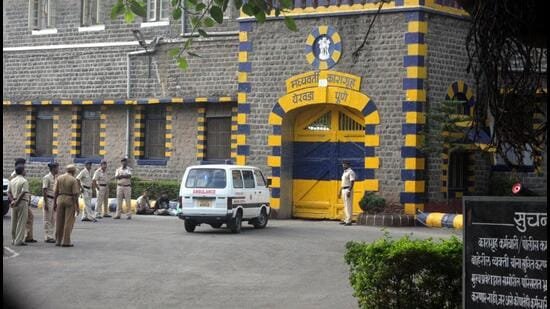
Earlier this month, the Supreme Court granted bail to five out of the seven accused in one of the most high profile cases related to the 2020 Delhi riots; Umar Khalid and Sharjeel Imam did not get bail as the Court felt their alleged involvement was prima facie at a greater level. With the apex court’s rejection of the defence’s argument of unconscionable delay, and its interpretation of section 43D (5) of the UAPA, the verdict has the potential to have a cascading effect on bail jurisprudence beyond UAPA prisoners. This would put even more pressure on already overcrowded prisons.

In India, four out of five prisoners are undertrials; confined not by conviction, but by the sluggish machinery of justice that turns their right to fair and speedy trial into a fading promise. This is something the apex court said in its Delhi riots order: “The Court does not proceed on the assumption that the entire delay can be laid at the door of the accused, nor does it characterize the proceedings as free from institutional or systemic constraints.”
For the lakhs of men and women awaiting trial, delay is denial; an act of collective amnesia, bolstered by systemic helplessness, or targeted indifference. According to the India Justice Report, the average occupancy across Indian prisons is 121%, i.e., they house inmates at 21% higher than the sanctioned capacity. Beyond the numbers lies a stark human cost — a profound curtailment of rights and of any chance at rehabilitation. The report also notes that undertrials, who comprise a majority of the prison population of 5.3 lakh, are spending more time in prisons, awaiting justice. The share of undertrials in detention for 3-5 years has almost doubled over 10 years (between 2012 and 2022), while the share of those above five years has tripled. Punishment wears a temporal guise.
The presumption of innocence, enshrined in the Constitution, appears to have no practical value inside prison walls. The law insists they are presumed innocent, but in practice many spend longer in prison awaiting trial than the maximum sentence for the offense they are accused of. Injustice here is not relegated to an incidental possibility; it is the unfortunate default outcome, regardless of whether the final judgment is acquittal or conviction.
They are as well treated as convicts in all but name; largely unable to access jobs, educational programs, vocational training, and rehabilitation schemes. Limited budgets, human resources, and infrastructure and equipment all compound to mean that practical skills to equip inmates for reintegration — an element that has been noted to contribute to the difference between rehabilitation and recidivism — will often be ad hoc or provided to a very limited number of prisoners (mostly convicts) despite the 2016 Model Prison Manual suggesting that these be provided to undertrials who volunteer.
Court records form paper trails that often suggest that the wheels of justice are turning, compliant with procedure: Productions logged, hearings listed, adjournments noted. But for those who are legally innocent since their trials have not concluded, this is little more than bureaucratic ritual, the tyranny of paperwork, and the banality of bureaucracy. With often little to sometimes endless productions, their life remains suspended in limbo while files move across desks and resolutions remain far from sights.
Numerous steps have been suggested to curb this, including the minimization of arrest. The Supreme Court’s Arnesh Kumar (2014) guidelines, illustratively, have pressed again and again that bail should be the norm, and which require police officers to complete a checklist setting out clear reasons for any arrest, which must then be scrutinized by a magistrate before authorizing further detention. The bench had said, “We believe that no arrest should be made only because the offense is non-bailable and cognizable and therefore, lawful for the police officers to do so. The existence of the power to arrest is one thing, the justification for the exercise of it is quite another.”
The existence of power to detain even indefinitely, on the other hand, is something that requires further introspection; especially for cases that are deemed too important for bail to be granted, but not so that the trial actually begins. As the priest in Franz Kafka’s The Trial says, “You do not need to accept everything as true, you only have to accept it as necessary.” And that is a lie that rules the world.
Valay Singh is co-founder & lead, India Justice Report. The views expressed are personal