The year 2026 has begun with significant shifts in global politics, forcing countries like India to re-evaluate their growth strategies for both the immediate and medium term. A series of recent events, including the India-EU Free Trade Agreement (FTA), the annual budget, and the India-US trade deal, provide a crucial moment to reflect on India’s future growth model and its driving forces.

It is truly remarkable that India has achieved an average GDP growth exceeding 8% over the last five years, maintaining extremely stable macroeconomic parameters. Despite this favorable “goldilocks” scenario, there is no room for complacency in policymaking, especially in a fragmented and uncertain global environment. The goal is not just high growth rates, but also ensuring the composition of that growth serves strategic purposes.
The year 2025 primarily saw policymakers employing cyclical instruments to support growth. On the fiscal front, personal income tax and GST cuts were implemented. Simultaneously, monetary policy saw a coordinated 125 basis point rate cut, a 100 basis point Cash Reserve Ratio (CRR) cut, and numerous other liquidity-infusing measures. We had estimated the combined impact of these stimulus measures to be over 1% of GDP, which is substantial. Including the depreciated currency, the total stimulus for 2025 could be even greater. These actions clearly helped, as India is projected to register nearly 7.5% growth despite acute global headwinds. However, it is important to note that most of this stimulus primarily targeted consumption activities.
Looking ahead in 2026, two key questions emerge regarding India’s cyclical growth. One pertains to how much self-sustaining impetus the earlier stimulus has created to carry forward the growth momentum into the new year. The other concerns how much policy space remains for further stimulus measures. On the first question, we believe the previous stimulus measures are still working their way through the system, as economic activity often experiences a gradual transmission and impact with a lag. Consumption-boosting measures, in particular, often require a positive wealth effect triggered by buoyancy in asset prices to improve sentiment toward spending. Unfortunately, this wealth effect has yet to materialize fully in the equity markets, and monetizing the wealth effect from rising precious metal prices is more challenging.
While the effects of the previous stimulus may continue to ripple through the system, our inclination is to assume that there isn’t much policy space left for additional measures. The government is committed to a fiscally conservative stance to avoid crowding out private investment, thereby limiting its scope for increased fiscal support in 2026. The Reserve Bank of India’s bias will likely be towards extending the low interest rate environment and improving the transmission of past rate cuts, rather than embarking on further monetary policy easing. Even on the exchange rate front, the scope for significant depreciation might be limited, given that the currency remains quite undervalued.
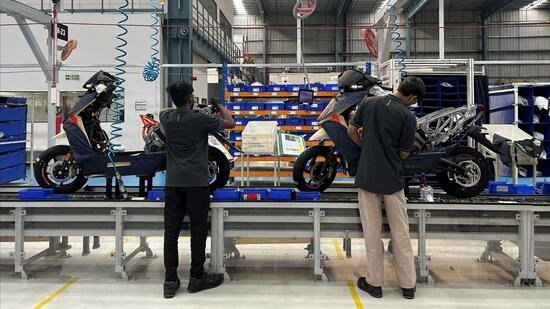
Moving beyond these relatively near-term cyclical policy tools, the government has clearly indicated its preference for a revamped manufacturing-led export growth strategy for India which will play out over a longer period. This vision is particularly relevant in an increasingly uncertain and geopolitically strained global environment, as highlighted in the recently published Economic Survey and Union Budget. The broad approach is designed to transition from strategic resilience to strategic indispensability.
The obvious beginning of this journey involves a continued focus on macro stability and fiscal discipline. This is essential for building buffers, with a particular emphasis now on reining in state government deficits and debt. Another crucial aspect supporting India’s manufacturing journey must come from lowering the cost of capital, which has traditionally been expensive in the country. While this has long been understood, the path outlined in the Survey offers a more unique perspective. It argues that economies with sustained current account deficits are likely to face higher capital costs because greater dependence on foreign capital for financing increases the risk premium and, consequently, borrowing costs for companies. In essence, this contention establishes a strong basis for promoting exports as a means for reducing the current account deficit.
Regarding exports, while the Survey acknowledges the importance of resilient services trade as a macro-stabilising factor in recent years, it cautions that services exports are not a substitute for a robust goods-export based ecosystem. In other words, manufacturing holds critical importance, as it necessitates deeper upgrades in State capacity, institutional frameworks, and logistics, which, in turn, promises beneficial secondary effects. Manufacturing gains further significance as a means to secure the supply of essential and infrastructure goods in a fragmented global landscape.
The latest budget has laid the groundwork for this strategic vision, outlining an industrial policy that includes providing higher budgetary allocations and schemes to key manufacturing sectors like semiconductors, electronics components, defence, and biopharma, alongside container and construction equipment, nuclear power, chemicals, critical minerals, and capital goods.
Besides this targeted support, public capital expenditure sees an emphatic growth with a 22% increase in effective public capex for FY27. The government is also committed to broadening the manufacturing base, focusing on micro, small, and medium enterprises (MSMEs) with equity, liquidity, payment, and credit guarantee support. Ecosystem infrastructure development is another priority, with plans to revive industrial clusters, including export-oriented special economic zones (SEZs). A significant step, following income tax and GST reforms, is the streamlining of import duties through tariff cuts on essential capital goods and raw materials for manufacturing, a move also set to benefit exporters. All these measures are designed to supplement the broader drive towards deregulation and ease of doing business, which has been central to recent policy actions, with 350 reforms rolled out in the last six months.
These extensive policy changes are occurring at a time when a significant risk — India’s potential geopolitical isolation — has been addressed by the recent trade deals with the EU and US. These FTAs are expected not only to favor more labour-intensive exports from India but also to boost foreign direct investment (FDI) inflows by eliminating a critical uncertainty.
The lowering of tariffs will be conducive to the China+1 diversification strategy of both American and European companies, making India an attractive destination to integrate into global value chains (GVCs). Complementing these FTAs, several measures announced in the budget to provide long-term tax certainty to investors will further enable FDI inflows.
The domestic financing of this manufacturing and export-led growth now requires a more balanced approach, incorporating a judicious mix of equity and debt. Additionally, the country must vigorously advance research and development and enhance skilling initiatives to maximize its human resource potential, which will significantly bolster this manufacturing push. A flawless and unwavering execution of this growth strategy could indeed catapult India to the next level of prosperity, even amid the uncertainties of a changing global order.
Samiran Chakraborty is managing director and chief economist, India, Citigroup.The views expressed are personal