Why do we celebrate January 26? A general survey of Indians will present a divided opinion. Some look at it as a routine government event while others associate it with the nation’s pride and honour. This division of opinion is our shared strength. We have a unique ability to keep moving ahead despite our differences.

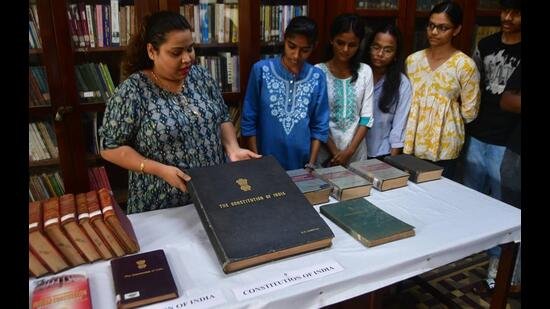
The fits-and-starts journey of the last 76 years presents an inspiring tale. Those unaware should know that the 299 members of the Constituent Assembly, tasked with forging a Constitution for India, had deep philosophical differences. For instance, the Hindu Code Bill that BR Ambedkar presented, proposed — among other things — settlement of property in case a Hindu man or a woman died intestate. It advocated equal distribution of the property among the widow and the sons and daughters of the deceased. It also recommended changes in Hindu marriage practices that gave Hindu women the right to seek divorce. There was stiff opposition to these proposals. Ambedkar and Jawaharlal Nehru tried to convince the Opposition with their arguments but failed.
Reservations for minorities, Scheduled Castes and Scheduled Tribes in government institutions too attracted vociferous arguments. Sardar Vallabhbhai Patel was against any reservation but Ambedkar was firm. Nehru, on May 26, 1949, said, “I try to look upon the problem not in the sense of religious minority, but rather in the sense of helping backward groups in the country … I am glad that this reservation will also be limited to ten years.”
Today, those who view everything from a communal perspective should look at the statement carefully. Tajmul Hussain, a Constituent Assembly member from Bihar, had denounced any reservation in government institutions on the basis of religion or caste, “In principle any reservation based on religion or caste is wrong. My firm conviction is there shouldn’t be any reservations for anyone and as a Muslim I say it shouldn’t be extended for Muslims too”.
It’s clear that drafting the Constitution was as tough a task as the legendary sea churning (the mythical churning of the ocean). The Constituent Assembly had to deal with a country with a wide range of divisions and inequalities.
Ambedkar and Nehru were in favor of a strong Centre. They insisted that, after Partition, a strong Center was needed to maintain the integrity of the nation and to eradicate poverty. K Santhanam and his supporters were in favor of more powers for the states as well as financial support. They argued that if it wasn’t done, states would become liabilities.
There was constant tussle between the Gandhian and European idea of a State. Many members felt the Constitution should have special emphasis on village panchayats. Ambedkar was dead against it. He saw villages as dens of parochialism and ignorance. Patel wanted the right to property as a fundamental right to ensure security for farmers and landowners. Nehru and socialist leaders wanted to restrict it so that social and land reforms could be initiated.
The issue of a national language, however, trumped all the debates. Members of the Assembly from South India were against making Hindi the national language. But the member from Andhra Pradesh Durgabai Deshmukh raised her voice in support of Hindi.
Three reasons ensured that the draft Constitution was finally ready. As everything was debated, no provision was accepted on the basis of a majority decision. Even the innocent looking words were debated for hours. The 12 volumes of Constituent Assembly debates are a testimony that every opposing view was heard and efforts were made to present a better argument.
As the chairman of the drafting committee, Ambedkar acted as a bridge between various ideologies. He answered all the queries logically and from a legal perspective. Although the Congress Party was in the majority in the Constituent Assembly, various ideological strains were present within its fold.
For instance, the persistent demand for a separate electorate based on religion was becoming a sensitive issue. Muslim League leaders kept demanding it while majority members saw it as a threat to the integrity of the country. In the end, the demand was rejected.
You may be thinking that language, reservations, and a common civil code are still contentious issues. I don’t find any problem if people of a country are ready to keep moving ahead despite debating these issues for years. Since the days of the Constituent Assembly, India has preserved national unity, co-existence, and democracy as its elixir. This separates us from our neighbors.
We should be grateful to our founding fathers who created the unique document we call the Constitution. It’s our holy duty to preserve the sanctity and the soul of the great text.
Shashi Shekhar is editor-in-chief, Hindustan. The views expressed are personal