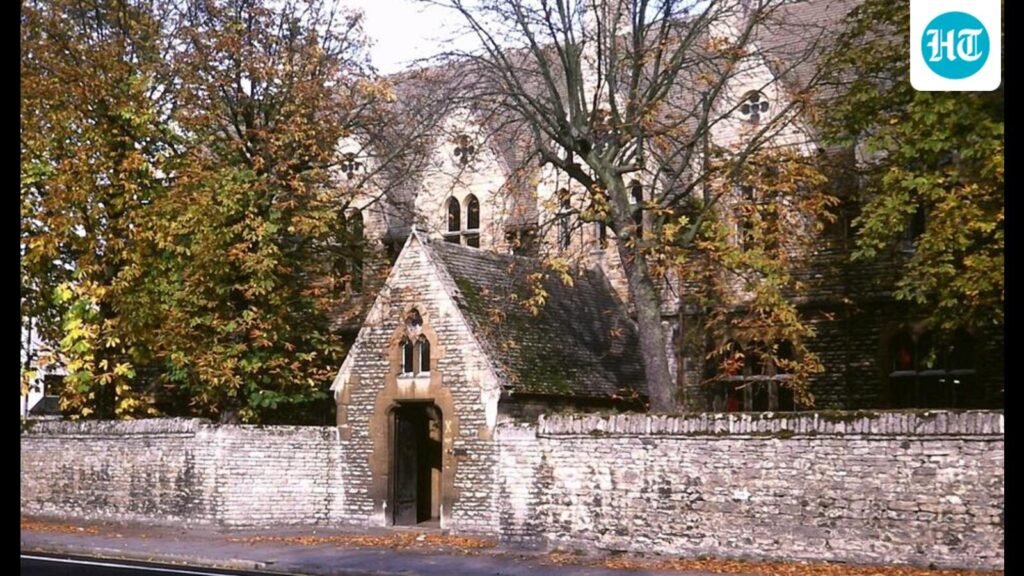
Jayasankar Krishnamurty, born on January 7, 1941, in New Delhi, to Parvati and S Jayasankar, passed away on December 5, 2025. He was an eminent academic and international civil servant who worked for decades on employment, labor and demography, with a distinguished academic career, completing his BA (Hons) in Economics from St Stephen’s College, his MA from the Delhi School of Economics, and his PhD from the University of Delhi. A defining milestone was his selection as Agatha Harrison Fellow at St Antony’s College, Oxford, which left a deep imprint on his intellectual journey. These academic embellishments are daunting. But for me, he was my closest friend. My friendship with him is a journey I must recount.

I came to Delhi in 1957 to pursue the same course he did at St Stephen’s College. I was ill at ease and often jeered as the “Patna Boy” in a Delhi dominated by values somewhat alien to East India. Delhi was not the metro it is today. It still bore the aftermath of Partition and was trying to recoup, even as Delhi University and colleges like St Stephen’s and Hindu College had established roots. By then, St Stephen’s was regarded as the IAS factory of India. The civil services had become the aspiration of many in our generation. Jayasankar, Kitchu to me, however, had a different calling. Given his own preference, he nudged me in the direction of academia. When I followed his example, he dubbed me “professor”, his voice carrying a degree of finality, even while recognizing that my growing public speaking skills were already being acknowledged.
He had an innovative Tamilian mind, constantly seeking out-of-the-box responses. Kitchu was a source of encouragement in my debates. I vividly recall a debating contest in the aftermath of the 1962 Indo-China war. The motion was, “This House believes that the rise of China is inevitable.” I had to speak against it and shared my anxiety with him. We decided to seize the attention of the audience and judges. Three minutes into my speech, he deliberately dropped crockery loudly in the hall. This enabled me to say, “Ladies and gentlemen, China has just fallen.” There was roaring applause and I won the prize.
In many senses, his career path synchronized with mine until 1964, both at St Stephen’s and the Delhi School of Economics, and during my brief bout of teaching at St Stephen’s. Thereafter, I moved into administration and he into academia, yet our friendship never weakened. He would invariably be present on every social occasion, including my marriage.
Personal anecdotes and nostalgia overcome me with emotion. Some traits about Kitchu must be recounted.
First was his unwavering commitment to academia. His obstinacy in this matter was quite extraordinary. His father was in the Indian Defense Accounts Service and his brother, Jayasankar Shivakumar, rose to senior positions in the IAS and later moved to the World Bank. His nephew, S Jaishankar, is now our foreign minister. None of this deviated from Kitchu, who was fired by the world of knowledge, academia and research as a passion he pursued till the end. He was research associate and, later, professor of economics at the Delhi School of Economics for 11 years. He concentrated on issues that are only now becoming mainstream, particularly labor markets, employment and demography, the compelling challenges of today. As editor of the Indian Economic Review and editorial advisor to the Indian Economic and Social History Reviewhe significantly raised the quality of both journals.
Thereafter, he spent decades working in multiple capacities in the International Labor Organization, instead of other more sought-after Bretton Woods institutions. He served as advisor in its Bangkok office and later as population and development advisor in Geneva. He was deeply concerned with countries of the Global South beset by poverty, scarce education, political violence and uncertain political landscapes, choosing daunting missions in Indonesia, Myanmar, Bangladesh, Vietnam, Laos, Mongolia, Mozambique and the Solomon Islands. He sought to promote credible economic policies to improve social outcomes. He was a formidable copyright editor, having edited three major Oxford University Press volumes and authored over 40 peer-reviewed papers in leading journals, including the Economic and Political Weeklythe Cambridge Economic History of Indiaand the Indian Economic and Social History Reviewamong others.
Second, it is somewhat puzzling why he selected employment and demography as his areas of interest. These were not necessarily the first choices of academics at that time. Today, employment lies at the heart of policymaking amid productivity growth, technological disruption and Artificial Intelligence. Shifting demographic patterns and geopolitics are the defining challenges of our time and will remain so tomorrow. It still amazes me how early he recognized these as the central issues of the 21st century.
Kitchu was supported throughout his life by his wife Sunanda, an economist and academic herself, who nursed and stood by him till the very end. She was his constant guide and companion. His two daughters, Parvati, an economist, and Arundhati, a communications specialist, and their children are enjoined to carry forward his rich legacy in their own ways.
There is an old adage: Marriages are made in heaven. So are friendships. I have often reflected on that saying. My bond with Kitchu was not forged by circumstance alone, but deepened through countless moments of shared life and quiet affection. Kitchu was endowed with extraordinary understanding and empathy. I spent most of my weekends at his house to evade college food. The rule was to rise every Monday morning in time to catch the university special. To induce me to wake up, he would play on the gramophone a lovely rendition of Raag Bhairav,Jaago Mohan Pyare,” sung by Lata Mangeshkar. The Mohan is awake, and so is the Patna Boy, missing you immeasurably.
NK Singh is president, Institute of Economic Growth, and chairman, Fifteenth Finance Commission. The views expressed are personal