The ministry of home affairs (MHA) released India’s first comprehensive national counterterrorism policy this week. The policy, PRAHAAR, aims to address various types of terrorist acts and deny terrorists their support system. The document spells out seven pillars: Prevention; swift responses; aggregating internal capacities; human rights and rule-of-law-based processes; attenuating the conducive conditions enabling terrorism; aligning and shaping international efforts; and recovery and resilience. Although it is reasonably comprehensive, a few crucial facets have been overlooked. These could be included in subsequent iterations.
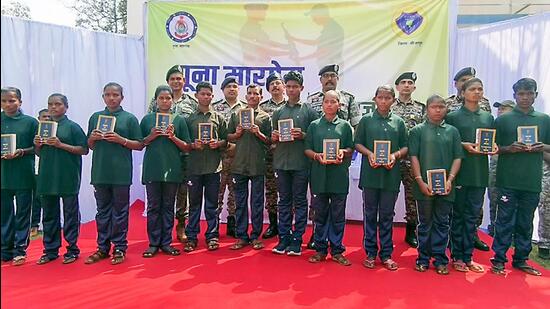
In our internal-security lexicon, insurgencies are characterized by the agency possessed by the local population. As a golden rule in such conflicts, focusing on the population is a cornerstone of winning hearts and minds of people (WHAMP) strategies. The document, while being Jammu & Kashmir-centric, is silent on combating insurgencies and the related strategy of WHAMP. The MHA charter also covers combating armed movements in the Northeast and Maoism, which qualify as insurgencies. The issue of foreign sponsorship, though not irrelevant, may not be applicable in an absolute manner to all circumstances. By singularly asserting the support of external factors behind terrorism, there is a likelihood of distraction that could prejudice our policies, by overlooking important factors like introspection, reconciliation and justice.
As part of “response”, the document aptly underlines the role of state police and the seminality of jointness in planning and execution of tactical operations. However, a mention of jointness in governance that emanates from the joint structure at the apex level in the state is given a miss. The model of joint command comprising various stakeholders across the federal structure has yielded positive results in the past and ought to be invested in.
On human rights and the rule-of-law-based approach, while redress is emphasized, alienation as a factor that distances the local population from the government should have been incorporated. We have witnessed large-scale speculative arrests, custodial high-handedness, deployment of bulldozers in the aftermath of a terror strike. These are counter-productive in the mid and long term.
The document is right in emphasizing the role played by radicalization and the imperative to counter it for “attenuating the conditions conducive to terrorism”. However, it must also consider the dignity of the affected population to ameliorate structural violence.
Leveraging of the internet and social media by terrorists for recruitment and propaganda is covered, but PRAHAAR is silent on perception-building as part of the government’s strategic communication policy. In this information age, terrorists remain ahead in the realm of rhetoric. The domain of narrative warfare cannot be ignored as an effective tool by the government.
The government should factor in modifications in the modus operandi of security agencies, subject to the evolving security scenario. A case in point is the current gains by security forces vis-à-vis the Maoist insurgency, which has seen a marked decline in the insurgents’ combat capabilities. Security agencies must redefine their roles, to employ minimum force and avoid collateral damage. In a nutshell, far more than being transactional, an anti-terror policy needs to be transformational to achieve the larger good of conflict transformation.
Shashank Ranjan, a retired colonel with experience in counter-insurgency operations, teaches at OP Jindal Global University, Haryana. The views expressed are personal