A well-known personality’s post on social media, questioning the use of vaccines and urging parents to avoid vaccinating children to reduce risks of autism, has stirred up controversy. While medical professionals have criticized the comment, he has stood his ground. It is sufficient to say that current evidence does not support his claim.

However, vaccines are often a target for such controversies. Let us start with some non-controversial statements on vaccines that, hopefully, everybody will agree to.
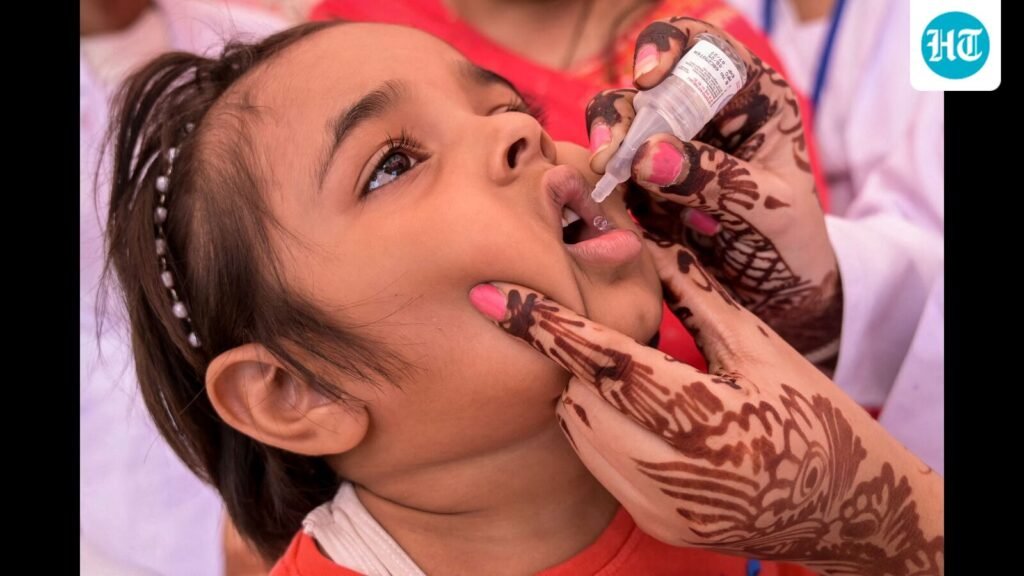
Vaccines have been incredibly useful in preventing deaths from infections, especially in children. This has been a major public health gain of the last century. We can’t afford not to have this weapon in our arsenal. Most, if not all, vaccines have adverse effects — both minor/major, short-term/long-term — and we need to have mechanisms to capture these data. Long-term adverse effects due to specific vaccines are hard to measure and attribute at a population level, which is true for other long-term public interventions as well.
Any policy decision to include a vaccine in a national immunization schedule — as opposed to a clinician-based recommendation that can be customized to needs of the individual — needs careful consideration of the benefit-risk ratio.
Also, some vaccines do report rare serious adverse effects, and as and when it occurs, we need to have systems to get these children treated and supported in all possible ways, with the costs borne by the government.
India’s disease surveillance and monitoring of adverse effects of vaccines, though considerably improved in recent years, is still below the desired level. The technical body for recommending vaccines is the National Technical Advisory Group on Immunization (NTAGI), which looks at the burden of disease, effectiveness, adverse effects data as well as a more formal cost-effectiveness analysis and health system issues before making such recommendations.
Covid-19 provided an impetus to vaccine doubters. However, that was an extraordinary situation that focused more on immediate gains and less on long-term risks. In routine, most vaccines take years to be included in the National Immunization Schedule. Public health professionals are concerned that many effective vaccines are not being taken up for children as well as adults.
Most childhood vaccines currently being given in India have been included after decades of international use.
However, things are changing, both in the nature of the newer technologies for vaccination and speed at which these technologies get transferred to the public. We need to ensure that due diligence continues to be done in the risk-benefit assessment before any new vaccine is introduced. Having a robust adverse-effect reporting system is an inherent part of this process. We need to do better in this regard.
Global experience shows that exaggerated claims of side-effects of vaccines have invariably led to a drop in vaccine acceptance, promote vaccine hesitancy and harm the very children whom both the groups want to protect. Globally, we have enormous experience of the harm done due to such claims in the case of measles and pertussis vaccines. A singular experience is expressed in broad strokes and generalized to target vaccines and discourage vaccination.
As communities develop, the risk of infections goes down (unrelated to vaccines) and the benefit-risk ratio would also change (become averse to vaccination) and our approach could also change from universal to a more targeted approach.
For example, if the access to safe water becomes universal, use of vaccines against diarrhea causing infections will have to be revisited. However, at least in the Indian context, one can say that we have not reached such an inflection point for any of the childhood vaccines.
Since the universal vaccination approach concerns everyone in the population, there is bound to be the odd, influential voice offering contrary views.
It is incumbent upon us to create a system and communications outreach that addresses such concerns effectively and gain the trust of even the skeptics. In today’s social media-driven world this is challenging but needs to be done. This battle will never be over.
Anand Krishnan is a professor of Community Medicine at the All India Institute of Medical Sciences, New Delhi. The views expressed are personal