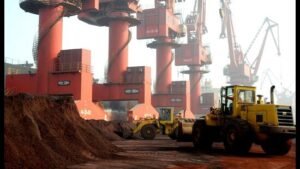
Last week, the Union Cabinet approved the “Scheme to Promote Manufacturing of Sintered Rare Earth Permanent Magnets” with an outlay of Rs 7,280 crore. The scheme will support several stages of the supply chain, among them the conversion of rare earth oxides to metals, metals to alloys, and alloys to finished magnets. This scheme only shifts the import reliance from Chinese magnets to Chinese rare earth oxides. The missing trick is recovering rare earths from end-of-life electronics. These discarded devices can form an essential pillar of supply security.

China controls approximately 70% of global rare earth mining and nearly 90% of refining capacity. This structural dominance was built through decades of subsidies and a willingness to absorb environmental costs that other countries would not. When western competitors tried to enter the market, Chinese State-backed firms flooded the markets with under-priced rare earths, forcing rivals into bankruptcy. India will have to fight China on these terms to compete in traditional mining and refining. Even with massive reserves, in the form of monazite sands, building refining capacity requires significant capital and an ability to absorb sustained initial losses. Furthermore, any such new plant would be exposed to volatile prices and Chinese market manipulation, which could quickly make it unviable, unless it is extensively hand-held through purchase guarantees and government subsidies.
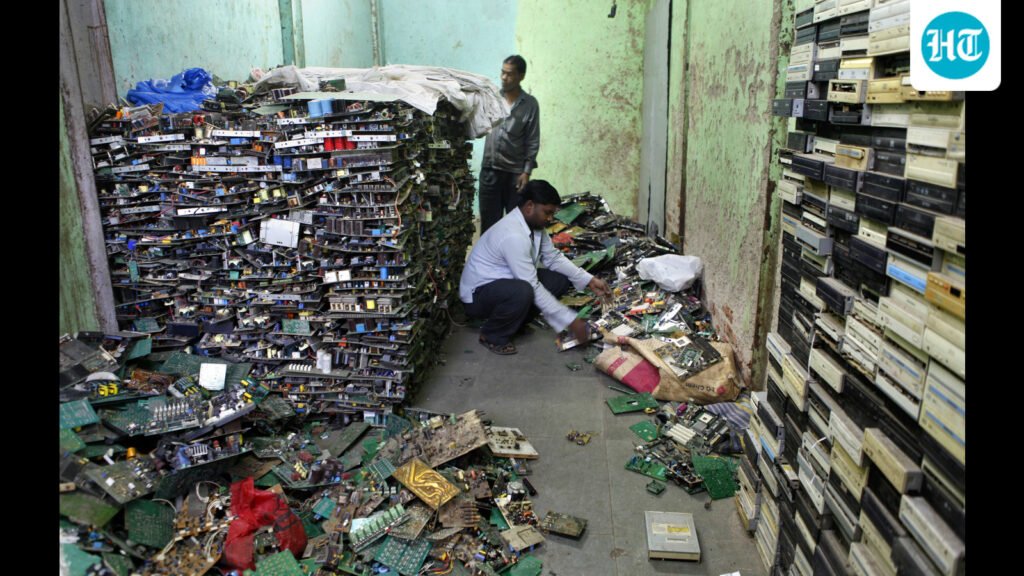
That’s where urban mining comes in. India is the third-largest generator of electronic waste worldwide, producing between 1.75 and 3.8 million tonnes of e-waste each year. With a growth rate estimated at around 30% annually, this waste is a far richer resource than natural ore. Electronic products contain far higher percentages of rare earth content than most ore deposits. For instance, NdFeB magnets in hard disk drives (HDDs) can contain around 28% rare earth elements (REE) by mass.
Further, computer equipment comprises roughly 70% of India’s total e-waste. Within this category, HDDs account for about 8% by mass. This yields an annual feed of about 100,000 tonnes of HDDs. Each hard disk contains about 15 grams of rare earth elements. This means the total recoverable mass from hard disks alone reaches roughly 4,000 tonnes of magnet material per year, which translates to about 1,300 tonnes of rare-earth oxide. While this is not yet enough for complete substitution, it can help increase the rare earth feedstock within a few months.
Air conditioners and electric vehicle batteries are other potential sources with permanent magnets, and, therefore, high REE concentration. Unlike mining, which requires new capital investment and lengthy permitting processes, this feedstock already exists within India’s borders.
Yet, India recovers essentially zero REEs from its e-waste. Official figures state that 43% of Indian e-waste is recycled. However, this does not reflect the actual value of what is being recycled. A vast, informal network of kabadiwalas (rag pickers) dominates the sector, handling an estimated 85-90% of all e-waste. The kabadiwalas offer immediate cash, which is a far more lucrative proposition for most consumers than following a formal recycling process. These collectors are not interested in recycling for REEs, since that involves complex chemical processes. Their business is built on recovering easy-to-get metals like gold, silver, copper, and aluminum, using simple dismantling and acid-burning methods, which destroy the rare earths.
Even the small formal recycling sector, which handles only 5-8% of e-waste, largely avoids REEs. REE prices are highly volatile, which makes revenues hard to guarantee. Extracting these minerals also requires specialized, expensive machinery. This is a substantial capital investment involved, which recyclers are unlikely to make without stable returns in the foreseeable future.
On top of all this, feedstock is not guaranteed, as formal recyclers must always compete with the informal sector’s offer of immediate cash.
Current policy frameworks have failed to reduce these barriers. The E-Waste (Management) Rules, 2022, follow an extended producer responsibility (EPR) framework. On paper, this system requires producers to meet annual recycling targets by acquiring EPR certificates from formal recyclers. However, the rules create a fundamentally flawed incentive because all recycled materials are treated equally. The rules provide the same credit for one tonne of easy-to-recycle copper as for one tonne of strategically valuable, difficult-to-recycle dysprosium. No rational business would choose the more expensive and complex option.
Recent government interventions have not focused on this comparative advantage. An attempt to help was a 1,500-crore scheme under the National Critical Minerals Mission. This is inadequate for a single REE recycling plant costs between ₹1,500 crore 3,000 crores. More pointedly, this scheme caps the incentive at just 50 crore per entity, which is too small to spur investment. Similarly, the newly announced The 7,280-crore PLI scheme for permanent magnet production excludes recycling and focuses only on production using primary minerals.
India’s path to REE security lies in a smart, asymmetric policy that builds on its comparative advantage. Urban mining, as explained, transforms a domestic liability into a strategic asset. This requires tweaking the incentives.
The most effective first step would be to reform the EPR rules. Policy must differentiate between materials by providing higher EPR credits for REEs. This would create an immediate, market-based demand and secure the feedstock pipeline. De-risking private investment is also necessary. This could be done through purchase guarantees or price floors, which would address volatility and incentivize investment.
The entire system could be further strengthened by mandating better collection practices.
The goal is not total self-sufficiency, which is neither feasible nor necessary. The goal is to develop a defensible position in one segment of the supply chain that provides strategic leverage and reduces critical dependencies.
Tannmay Kumarr Baid and Pranay Kotasthane are researchers with the Takshashila Institution. The views expressed are personal