The launch of the Lancet Commission on Reimagining India’s Health System late January prompted the question: Are we building a health system for yesterday’s diseases or tomorrow’s India? India’s health challenge is not just about paying for care, but ensuring that people are guided through the system with dignity and continuity.

As the founding CEO of Ayushman Bharat, I have witnessed both the promise and the limitations of health reform firsthand. When the scheme was launched in 2018, many doubted whether India could pull off the world’s largest government-funded health assurance programme. Eight years on, the results are hard to ignore. More than 10 crore hospital treatments have been provided, and by one estimate, households have saved nearly ₹2 lakh crore in out-of-pocket expenditure.
India’s health outcomes have undoubtedly improved over the decades. Life expectancy has increased, maternal and child mortality have declined, and several infectious diseases are better controlled. Yet progress has slowed, and gains remain deeply unequal. A child born in a poor district or marginalized community still faces far worse health prospects than one born into an urban middle-class household. At the same time, non-communicable diseases and mental health conditions are rising steadily, while the climate crisis and antimicrobial resistance pose new and serious risks.
Ayushman Bharat has achieved considerable success, but there are also limitations that need addressing. While physical access to care has expanded, the experience of care remains fragmented and often poor in quality. Our system continues to be hospital-centric and curative. Primary care, which should anchor prevention, continuity, and trust, remains underpowered. During my time at the National Health Authority, it became evident that even the best health assurance scheme cannot compensate for weak primary care. Too many hospitals were treating complications that could have been avoided with timely counselling, medicines, and follow-up.
Chronic underinvestment lies at the root of many of these problems. Public health spending as a share of GDP has remained largely stagnant for two decades. Compounding this is the way money is spent — fragmented across schemes, departments, and line items, with limited flexibility or accountability. Line-item budgeting in the public sector and fee-for-service payments in the private sector reward volume, not outcomes. They encourage episodic treatment rather than long-term health.
This is why the Lancet Commission argues that India must move from a fragmented, facility-driven system to one that is comprehensive, coordinated, and people-centred. Citizens must no longer be passive recipients of services, but active rights-holders. Quality, dignity, and respect must count as much as coverage numbers. Equity must be treated as a core measure of success.
A key message of the Commission is the need for decentralisation. Health is ultimately local. States, districts, and blocks face very different disease burdens, capacities, and social contexts. During the rollout of Ayushman Bharat, the most successful states were those that adapted intelligently to local realities. A reimagined health system must, therefore, empower states with greater financial flexibility, better data, and real autonomy — while holding them accountable for outcomes.
India’s Digital Public Infrastructure, particularly the Ayushman Bharat Digital Mission, can enable continuity of care, real-time surveillance, and learning health systems. But digital tools can strengthen coordination and decision-making only if they are underpinned by trust, sound governance, and strong ethical safeguards.The Commission also squarely addresses the role of the private sector. India cannot achieve Universal Health Coverage without private providers, but neither can afford it weak stewardship. Managed care principles — emphasizing prevention, gatekeeping, defined provider networks, and rational payment systems — must replace today’s volume-driven incentives. Regulation should enable innovation while protecting the public interest, not tilt excessively in either direction.
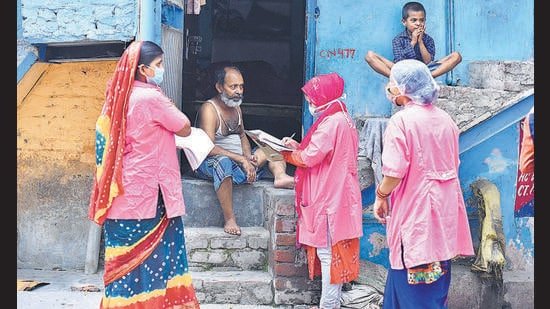
Programs such as ASHAs, women’s self-help groups, and community action platforms have shown that informed and engaged citizens improve system performance. A reimagined health system must institutionalize their voice.
Many of the Commission’s recommendations are already reflected in policy intent. The challenge lies in execution — aligned financing, institutional capacity, and political commitment across electoral cycles. Vested interests will resist change. Health governance reform is never purely technocratic; it is inherently political.
India’s ambition to become a developed nation by 2047 cannot be realized without a health system that is fair, resilient, and people-centred. Ayushman Bharat demonstrated that bold reform at scale is possible. The next phase must go deeper — from coverage to care, from schemes to systems, and from promises to lived reality. The choice before us is clear: Continue to patch a fragmented system, or finally reimagine it for the India of the future.
Indu Bhushan served as the founding CEO, Ayushman Bharat (AB-PMJAY), and is a commissioner, Lancet Citizens’ Commission. The views expressed are personal