In recent months, Uttar Pradesh has been in the news for troubling reasons. The latest incident comes from Bareilly, where police detained 12 Muslim men for offering Namaaz (prayers) inside a private home, with the permission of the homeowner. Citing Section 170 of the Bharatiya Nagarik Surakhsha Sanhita (which permits warrantless arrests on suspicion of a serious offence) the police justified the action on grounds of “public order” after a secretly recorded video of the prayers surfaced on social media. Evidence pointing to intent or actual threat to public order, however, remains absent.

In September 2025, a controversy began in Kanpur, where police filed FIRs against citizens displaying banners reading “I love Muhammad”, sparking widespread protests. The crackdown quickly spread to other districts, leading to a staggering 4,500 Muslims being booked under various charges. In Bareilly, the state escalated matters with violence, shop closures, and FIRs for rioting. Most alarming, however, was the open defiance of judicial authority. Despite the Supreme Court’s order in Re: Directions in the Matter of Demolition of Structures and clear Allahabad High Court directions expressly prohibiting punitive demolitions, properties linked to protesters were bulldozed. These are not administrative overreach; they are constitutional injuries that reveal a system that penalizes group identity rather than individual culpability.
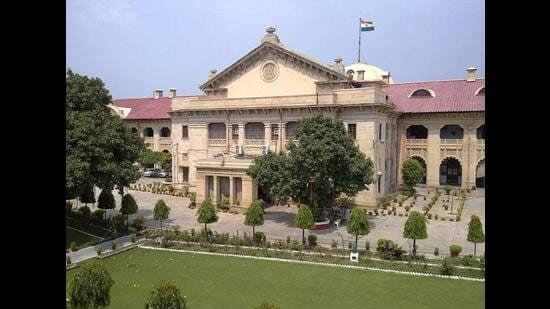
The legal position, however, could not be clearer. Article 25 of the Constitution guarantees the freedom to profess, practice, and propagate religion. The Allahabad High Court has explicitly affirmed that private prayer meetings require no administrative permission. Even the infamous and often-misquoted Ismail Faruqui v. Union of India (1993) judgment — a constitutional travesty that mutilated Article 25 by declaring mosques non-essential to the practice of Islam — nevertheless conceded that Namaaz may be offered anywhere, including in the open.
And so, before we proceed further, we must first confront the nature of the failure. The law on this is settled, so this is not a crisis of legal ambiguity. Nor are these one-off breaches or the work of a few rogue officers. Treating each incident as an exception would be a mistake — it blinds us to the web of policies, incentives, and institutional silences that enable systemic violations, leaving undisturbed the conditions that made them possible in the first place. So, the broader question we must ask is why the system allows, and in some cases facilitates, the differential treatment of communities.
Because these systemic distortions are not theoretical; we see them play out clearly in daily enforcement. Hindu religious practices such as kirtans, jagransGanesh Chaturthi pandals and Kanwar Yatra processions proceed with administrative coordination and cooperation. By contrast, last year the Meerut police publicly announced that people offering prayers in the open on Eid will be prosecuted and have their passports and licenses canceled — arbitrary penalties with no statutory basis. Such selective enforcement flouts natural justice and tramples upon key constitutional guarantees including Article 14 and 15 (equality and non-discrimination), Article 19 (fundamental freedoms), Article 21 (life and liberty), and Article 20 (protection against arbitrary punishment). While UP offers the starkest example, backed by scale and political support, similar patterns are visible across the country.
When the rule of law is flouted, it doesn’t just harm those immediately targeted, it erodes accountability across the board. Police act with impunity, administrations ignore rules, even courts risk being sidelined. And once this precedent is set, the genie cannot be put back in the bottle. When laws are bent against some, they will inevitably be bent against others. Whether arbitrary fines, canceled permits or demolished properties, harassment that begins with one group will eventually cascade to affect all citizens. In time, freedoms become conditional and institutions lose their power to protect. Ultimately, the rule of law is the spine of modern civilization; break it and the whole body collapses.
So, where do we go from here? Back to the pillars that always steady us when we falter: Our Constitution and the democratic values that define us. They are the heart of our Republic, a steel that must hold firm. And yet, they are not self-enforcing. They may measure our freedom but cannot endure unless we protect and stand guard over them. This work is ours.
Insiyah Vahanvaty is a sociopolitical writer and author of The Fearless Judge. Ashish Bharadwaj is ex-Dean at BITS Pilani and Jindal Global University. The views are personal