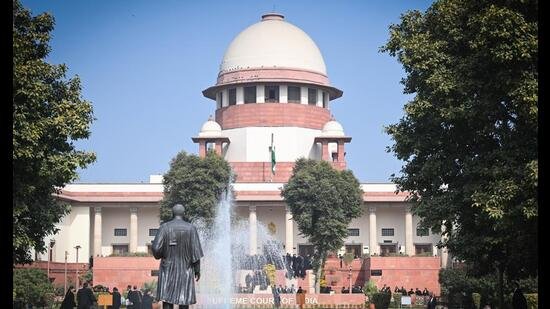
‘This is a deep-rooted conspiracy. It seems to us that there is a calculated move to undermine the institutional authority and demean the dignity of the judiciary. Heads must roll. There must be a deeper probe into this issue. Who are the persons behind this? We want to know. We must.” Chief Justice of India (CJI) Surya Kant’s words shocked and warned at the same time. We are heading towards a phenomenal decline of institutions. In the game of leveling allegations and verbal duels, the judiciary isn’t alone. From Parliament to the public, we can easily find innumerable instances.
Just look at what unfolded in Himachal Pradesh on Wednesday night. Two dozen armed men entered a resort and forced three youths into their vehicles. They allegedly also destroyed the CCTV footage. Himachal Pradesh police swung into action almost immediately and, soon enough, the Delhi-bound vehicles bearing the three youths were intercepted at a checkpoint near Dharampur. Only that the three youths were Youth Congress members who had participated in the shirtless protest at the AI summit in Delhi, and the posse taking them to Delhi were from the Delhi Police.
The Congress is in power in Himachal Pradesh. So, it is alleged that the three youths had political patronage.
Perhaps, the Himachal Pradesh Police was well aware at Dharampur that they were detaining fellow informed cadres, just from another state. But in a Shimla court before which the three youths and the team that arrested them were presented, Himachal Pradesh Police cited several charges against the Delhi Police personnel. They accused the Delhi police of violating the norms and procedures, saying the latter should have informed the Himachal Police and also sought a transit remand after getting the arrested youths’ medical examination done.
A similar confrontation between police forces and investigating agencies was seen in West Bengal last month, during a central agency’s raids on the election consulting agency I-PAC’s Kolkata office. The chief minister of West Bengal reached the site along with a state police contingent and seized the documents that had been collected by the probe agency during the raid. Earlier cases against Enforcement Directorate (ED) officers were registered in Jharkhand and Tamil Nadu.
The politicization of the police is against the federal structure of India but short-sighted politicians refuse to learn any lessons.
We have discussed this earlier, so let’s talk about the judiciary.
A chapter, titled Role of Judiciary in the Class 8 social science textbook is at the heart of the present controversy. According to the Supreme Court, “Though a full chapter is dedicated to the judiciary’s role in our society, the glorious history of the Supreme Court, high courts and district courts has been brushed aside. The text fails to mention the role of the judiciary in upholding constitutional values, basic structure.”
In the last few years, broadsides against the Supreme Court have increased. People may ask why they should bother about allegations against the judiciary. I disagree. I just want to say with utmost humility that if the judges want to silence stray, eccentric voices against the institution, they should also set their house in order.
A few weeks ago, the Supreme Court commented on a bail order issued by the Allahabad High Court. It said the Court was “unable to understand what the High Court intends to say”. “In a serious case like a dowry death, what was the criterion the high court applied to issue bail to the accused?” it asked. Reacting to the observation, the Allahabad high court judge, Pankaj Bhatia, wished to be recused from bail plea cases. Was it a case of moral responsibility or dissent?
There are many such contentious issues that the Supreme Court must judge. The case related to Justice Shekhar Kumar Yadav of the Allahabad High Court is one of them. Justice Yadav used derogatory language against the minority community while speaking on the Common Civil Code at a Vishwa Hindu Parishad meet on December 8, 2024. As the controversy grew, the Supreme Court took cognizance of it. But it couldn’t reach a conclusion. Later, lawyer and politician Kapil Sibal, along with 55 Rajya Sabha members, requested the Court to initiate action against Yadav for “hate speech and disturbing communal harmony”. Delhi High Court judge Yashwant Verma’s case has also been pending for months in the Supreme Court as well as before Parliament.
The list is endless, but you get the drift. The judiciary is the last hope of millions of vulnerable people in the country. Securing its integrity will protect the hopes of those people. It’s the responsibility of the government and society to preserve judicial probity. But the judiciary needs to shoulder some part of it too.
Shashi Shekhar is editor-in-chief, Hindustan. The views expressed are personal