India’s history is littered with bold experiments that fizzled and grand pursuits that stumbled under the kaleidoscope of its complex society. But some institutions became glorious successes, earning respect and shaping the nation.
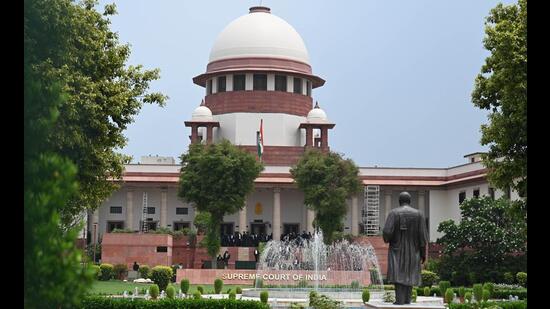
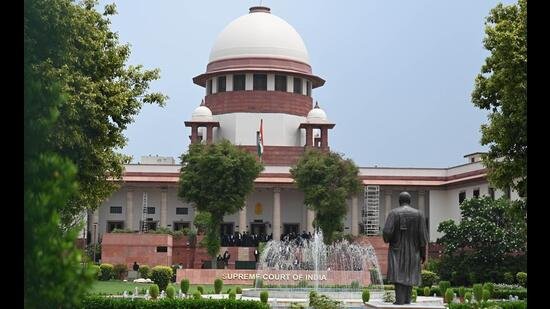
On January 26, 1950, India adopted its Constitution and two days later, the first hearing of the Supreme Court was held with a total strength of eight judges led by the first Chief Justice of India, Justice HJ Kania. Eight years later, the Court found a permanent address on Tilak Marg in the national Capital, named after Lokmanya Tilak. A lawyer by training, Tilak was charged in arguably India’s first significant sedition case, in 1897, for publishing newspaper articles. Who knew that censorship, free speech, and freedom of press would be the center of attention in the first year of the founding of the Supreme Court!
Within a few weeks, the first storm broke, in AK Gopalan v. State of Madras. At its heart was a provision that still sparks debate today: Preventive detention. The government, armed with the Central Preventive Detention Act, 1950, had detained Communist leader Gopalan. His habeas corpus The petition challenged this on grounds of violation of constitutionally guaranteed rights. The Court was faced with a question that still matters today: How far can the State go in curbing personal liberty in the name of security? Ultimately, and regrettably, the Court upheld the Preventive Detention Act, but it did strike down the provision that allowed the State to hold people without disclosing why. The Act is no longer in force, but preventive detention survives in other, newer Acts.
Ironically, just a week later, the Court faced two more cases of State overreach, involving the fundamental right to free speech. In Romesh Thapar v. State of Madras and Brij Bhushan v. State of Delhitwo publications critical of the government had been banned on the grounds of threatening public order.
Deciding both cases on the same day, the Court tore down the censorship, holding that freedom of speech cannot be curtailed except under narrow grounds such as incitement to violence or threats to security of the State. It was a powerful affirmation of dissent, one that prompted a panicked Parliament to swiftly enact the Constitution (First Amendment) Act, 1951. The first year of the Court’s life proved uncannily prophetic. It was neither uniformly heroic nor consistently timid. It faltered in Gopalaneven as it quickly steadied itself to defend free speech in Romesh Thappar and Brij Bhushan.
Its resonance is painfully clear today, stirring courtrooms and hallowed corridors of the judiciary. Similar freedoms are under pressure in ways those early rulings sought to prevent. The 76 years since have followed the same jagged rhythm — eyes occasionally cast downward as freedoms fell, punctuated by flashes of rare, startling courage. For every judge that has bowed to political power, there has been another willing to forego personal ambition to defend citizens’ rights. The Court is a constant contest between caution and courage, restraint and resolve. It is not a neutral umpire; it exists because the citizen and the State do not stand on equal footing. Its role is to act as a bulwark when power overreaches, and to do so in time.
In recent years, the Court has often appeared hesitant. Dissent has been punished, preventive detention laws have been invoked casually, and speech has been chilled through arrests, internet shutdowns, and prolonged trials. With constitutional questions left undecided, the Court occasionally retreated into cautious distance. Yet, behind those same doors once sat the inimitable Kesavananda Bharati bench of 1973. They stared down the might of Parliament itself, some at great personal cost, to give us the basic structure doctrine that may well be the reason any of our rights survive at all. Freedoms are neither won nor guaranteed, they are defended. Today, the Court is both a monument and a mirror. It is time to rejoice and ruminate.
If the rights won in 1950 are to persevere and fairness is to be delivered without undue delay, the Court’s first duty must be to the citizen not the State. It must never look away if it wants to ensure “complete justice” for all.
Ashish Bharadwaj is ex-Dean at BITS Pilani and Jindal Global University. Insiyah Vahanvaty is a sociopolitical writer and author of The Fearless Judge. The views expressed are personal