Sometimes, policy does not shift loudly; it shifts decisively.
With the Union Budget 2026–27 committing to a national rollout of the human papillomavirus (HPV) vaccine for adolescent girls, India has signaled that cervical cancer prevention is no longer a peripheral agenda item, but a matter of political priority. After years of deliberation, technical endorsement, and incremental pilots, prevention has moved from advisory consensus to executive intent. The Union government is expected to launch a special nationwide HPV vaccination campaign this month for girls aged 14 years to combat cervical cancer.
For decades, India has lived with a contradiction it could not justify. The science to prevent cervical cancer exists. Yet, the deaths continued, claiming the lives of nearly 80,000 women annually. Ironically, the disease is slow-growing, detectable, and largely preventable. This was never a failure of biomedical knowledge. It was a failure of timely execution.
In 2020, the World Health Organization (WHO) called not for incremental control but for elimination, defined as reducing cervical cancer incidence below four cases per 100,000 women. The strategy was precise: vaccinate 90% of girls against HPV, screen 70% of women with high-performance tests, and treat 90% of those identified with the disease. It was a rare moment in oncology, a malignancy with a defined exit pathway.
India endorsed the ambition. Endorsement, however, is not institutionalisation.
Progress remained fragmented. Screening was embedded within the National Program for Prevention and Control of Non-Communicable Diseases (NPCDCS). Health and wellness centers (HWCs) expanded preventive access. An indigenous HPV vaccine reduced procurement cost concerns. Yet vaccination, the most powerful upstream intervention, did not become uniformly embedded within India’s routine immunization architecture. Access depended on geography, administrative will, and phased initiatives. Prevention remained uneven.
The 2026 announcement alters that trajectory.
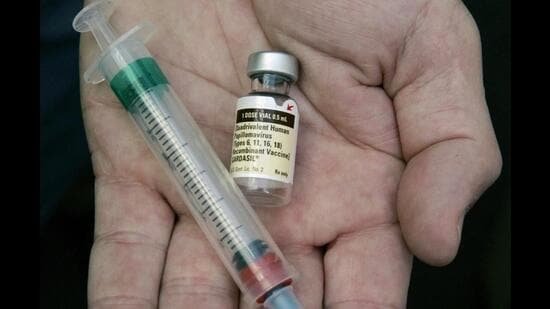
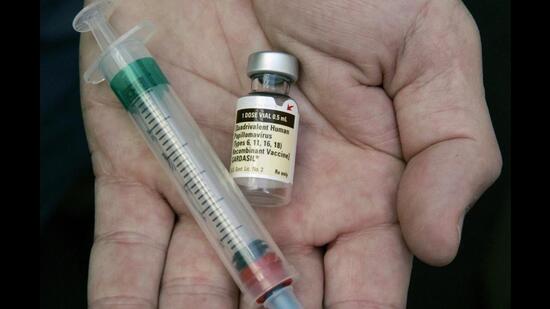
The proposed rollout is expected to use the quadrivalent HPV vaccine, which protects against HPV types 16 and 18, responsible for roughly 70% of cervical cancer cases globally, as well as types 6 and 11, which cause genital warts. By targeting adolescent girls before viral exposure, the intervention interrupts infection at its earliest stage, preventing the cellular transformation that precedes cancer mortality.
Vaccination at scale does not merely reduce incidence; it bends the epidemiological arc before disease takes root. It interrupts infection before it hardens into malignancy. It prevents biopsy before dread, chemotherapy before hair loss, and debt before diagnosis. It protects families before illness forces negotiation with mortality. In public health terms, few interventions offer comparable cost-effectiveness.
Yet optimism must remain disciplined. Elimination is not secured by announcement. Announcements create headlines. Architecture creates history.
India’s earlier caution was framed as prudence, fiscal constraints, competing health priorities, and social sensitivities around adolescent vaccination. These concerns are not trivial. HPV vaccine production is technologically complex, dependent on specialized biologic inputs and global supply chains. National expansion requires reliable cold-chain systems, trained personnel, procurement stability, and digital monitoring mechanisms capable of functioning beyond metropolitan centres. Manufacturing at scale cannot be improvised.
To be sure, constraints complicate action. But they do not justify inertia. Delay, in prevention, is not neutral. It compounds.
Countries such as Rwanda achieved high HPV coverage with limited resources through coherent delivery strategies. Australia moved from vaccination to near-elimination through sustained political clarity and program continuity. India itself has demonstrated, during polio eradication and the COVID-19 vaccination campaigns, that when leadership aligns with logistics, scale becomes operational rather than aspirational.
The deeper vulnerability has not been awareness. It has been fragmented.
Cervical cancer prevention is a continuum: vaccination, screening, diagnosis, and treatment. Across parts of the country, women who screen positive still encounter delayed referrals, constrained pathology capacity, and inconsistent follow-up. A system that detects disease without guaranteeing timely care risks eroding public trust, particularly among women already negotiating mobility constraints, care-giving burdens, and unequal decision-making authority.
Cervical cancer is not merely a biological diagnosis. It is a social verdict rendered disproportionately against women.
Prevention requires engagement around sexuality and reproductive health, in contexts where silence persists. Paucity of time suppresses participation. Fear delays screening. Social hierarchies shape consent. Successful elimination programs integrate school-based platforms, community outreach, self-sampling innovations, and trusted frontline workers into a unified delivery ecosystem. Vaccination must be embedded within this broader architecture, rather than operate as a standalone campaign.
This is where the present moment becomes decisive.
If HPV vaccination is institutionalized within India’s universal immunization program (UIP) with assured financing, supply continuity, transparent monitoring, and parallel strengthening of screening and treatment pathways, the country could compress decades of projected mortality into a generational shift. If, however, the rollout remains episodic, and the campaign operates without continuity, the epidemiological curve will bend slowly, if at all.
The WHO has demonstrated that elimination is mathematically feasible. Several countries are approaching the defined elimination threshold. India possesses the scientific capacity, domestic manufacturing base, and programmatic experience to join them. What it now requires is coherence and consistency.
The price of delay has already been paid in preventable funerals, in households pushed into financial distress, in children growing up without mothers, and in families navigating grief that did not need to exist. Every year without coverage was not a pause. It was a progression.
The promise of prevention now stands within reach. This vaccine is not merely an addition to a schedule. It is a declaration that prevention precedes crisis, that women’s health warrants anticipatory investment, and that elimination is not a distant aspiration but a measurable national responsibility.
The science has long been settled. Political will has finally moved.
Elimination is not a metaphor. It is a choice, and history will record which one we make.
Prapti Sharma is research associate, center for universal health assurance (CUHA), Indian school of public policy (ISPP). The views expressed are personal