Iran once again stands at the epicenter of a geopolitical storm, navigating what may be its most dangerous convergence of crises since the 1979 revolution. The Islamic Republic is no longer merely managing dissent — it faces a systemic uprising fueled by economic suffocation and the erosion of its strategic deterrence. Unlike the reformist movement of 2009 or the civil liberties protests of 2022, the current wave of unrest, which began on December 28, 2025, is an existential outcry born of collapsing living standards under the strain of US led sanctions.

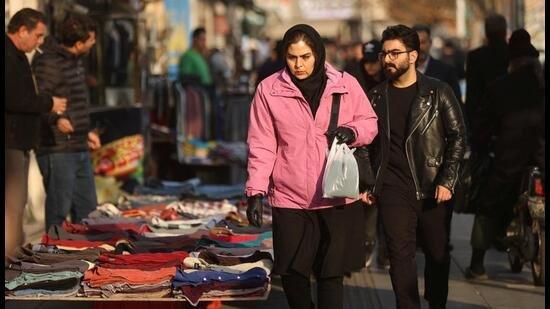
With inflation soaring to nearly 50% and food prices spiking, the rial has lost about half its value since early 2025. This hyperinflation has gutted the middle class, merging economic desperation with overt demands to overthrow the system. The unrest has quickly spread to more than 300 locations across all 31 provinces, exposing a fatal rupture in the social contract. Notably, the regime’s traditional base — the bazaaris and the conservative working class — has aligned with restive ethnic peripheries, forming a unified front the clerical establishment has rarely confronted.
The state’s response follows a familiar pattern of mass arrests, internet blackouts, and lethal force. Yet repression today carries higher stakes. The population is younger, less ideological, and openly skeptical of leaders who invoke foreign conspiracies while daily survival grows increasingly precarious.
For the wider region, Iran’s instability is deeply unsettling. Tehran’s influence runs through a network of allied militias across Iraq, Syria, Lebanon, and Yemen. Despite the scope of the unrest, the regime is not on the verge of collapse. Unlike personalist dictatorships, Iran retains a built-in survival mechanism: The Islamic Revolutionary Guard Corps (IRGC). Now a vast socio-military-economic conglomerate, the IRGC has a vested interest in the State’s survival and has already deployed ground forces to suppress what it portrays as a foreign-backed insurgency.
The international response is hardening into a familiar divide between western coercion and eastern pragmatism, now sharpened by a dispute over diplomacy itself. President Trump claims Tehran has “called” to negotiate and that a meeting is “being set up”, even as he warns the US is “locked and loaded” and may “act” before any talks occur. Iran has not corroborated this account — officials have either withheld confirmation or rejected the premise, insisting they are “ready for war but also for dialogue”. Similar denials followed past US claims of Iranian outreach.
In this context, Washington and Israel have shifted from covert pressure to overt leverage. Trump’s public threats aim to paralyse decision-making in Tehran by raising the cost of repression, while Israel — after degrading Hezbollah and Hamas — views the unrest chiefly through the lens of nuclear risk and is preparing for a “day after” strategy to permanently dismantle what it calls the regime’s “octopus” in Tehran.
In contrast, the Gulf Arab States — particularly Saudi Arabia and the UAE — have adopted a posture of cautious neutrality. While they quietly welcome the weakening of Iranian power, they fear a destabilizing vacuum that could jeopardize their own economic transformations, including Vision 2030, through regional spillover or refugee flows. Meanwhile, China and Russia have cast the unrest as an internal affair, prioritizing energy security and strategic partnership, respectively. Yet their backing remains diplomatic rather than decisive; Neither Beijing nor Moscow wields the influence to reshape Iran’s internal trajectory.
For India, the turmoil in Iran poses immediate and multi-layered risks despite limited direct economic exposure. The main concern is an escalation involving the US or Israel, which could disrupt maritime traffic through the Strait of Hormuz — leading to spikes in global oil prices, increased shipping and insurance costs, and higher inflation and fiscal pressures in India. Even without direct conflict, instability in Iran introduces uncertainty into energy markets and raises risks for Indian nationals regarding consular support and evacuation.
The crisis also strikes at the heart of India’s connectivity ambitions. Iran remains a critical link in India’s outreach to Afghanistan, Central Asia, and Eurasia through the Chabahar port and the International North–South Transport Corridor (INSTC). These projects are strategic counterweights to Pakistan’s geographic leverage, but fresh sanctions or prolonged unrest threaten their viability by deterring financial and logistics partners. As great-power rivalries sharpen across West Asia, New Delhi must balance its cautious neutrality with pragmatic engagement, prioritizing stability and access over alignment.
Looking ahead, if the current equilibrium collapses, the region could follow three distinct trajectories. The most plausible medium-term outcome is a shift towards a de facto military dictatorship, with the IRGC sidelining the clerical establishment to safeguard the State’s security apparatus while seeking limited sanctions relief. A more dangerous scenario is messy fragmentation — where the breakdown of central authority triggers civil conflict and armed autonomy in ethnic peripheries, potentially drawing in neighbors such as Turkey and Pakistan. The most hopeful, though presently improbable, path is a negotiated transition driven by a broad opposition coalition and external mediation, which could fundamentally reshape West Asia’s political order.
Ultimately, the crisis in Tehran is a stress test for the entire region — and the clock is ticking. If the Islamic Republic unravels, West Asia will descend into prolonged chaos, with Iran either retreating into a militarized fortress or fracturing under the weight of its own contradictions. For India, sitting on the fence is no longer tenable. New Delhi must act now — shaping outcomes, not reacting to them — or risk waking up to a reordered neighborhood where energy lifelines are severed, strategic investments lie abandoned, and instability spirals beyond control.
Ausaf Sayeed is a former secretary to the Government of India and former ambassador of India to Saudi Arabia and Yemen. The views expressed are personal