The court has it
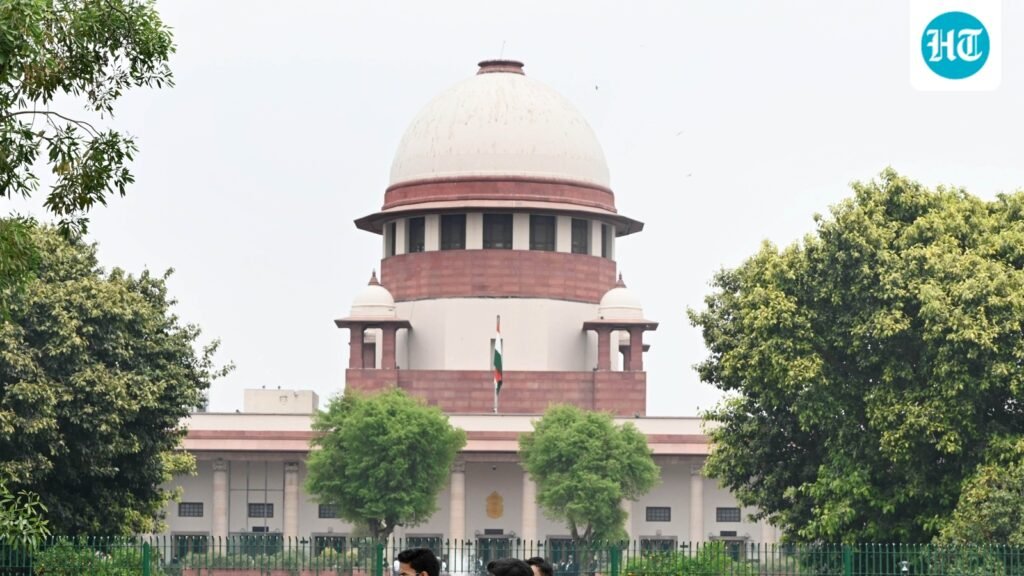
There is no denying the fact that an April 8 judgment of the Supreme Court, prescribing timelines for governors to deal with bills forwarded by the state legislature, exceeded by extending the same prescription for the President.

By doing so, it raised constitutional questions that prompted a Presidential reference, one that did not seek a review of the April 8 order, but posed larger questions.
A Constitution Bench responded to that reference this week, and effectively scrapped the April 8 order.
To be sure, it said it would intervene if states approached it when governors sat on bills for too long, but the subjective nature of this promise simply means that the situation reverts to what it was before April 8.
The judgment clearly demarcates the writ of the judiciary from the powers of the executive – but leaves the third pillar, the legislature, in limbo.
Is expertise fungible?
As in, if someone is good at something, does that make them good at everything else?
There are two answers to these questions – but only one correct one.
One answer, given the context – we live in an age when influence is mistaken as expertise – is simply, yes.
The other answer, the correct one, is no.
If not enough people understand it is (again), the context that is to blame.
Which explains why there are enough people supporting Zoho’s Sridhar Vembu when he links vaccines with autism – there is no scientific evidence to support his argument – or Zomato’s Deepinder Goyal, when he speaks about how gravity makes us age faster (again, there’s no scientific evidence to support this).
Both men are role models, having built not just successful products, but also successful organizations. They are also Indian middle-class success stories – first-generation entrepreneurs who have created wealth for themselves, their employees, and their investors. People who know them well (I have met Goyal, not Vembu) say they are both very likeable. And Vembu has also become something of a national and nationalist icon.
But none of this makes them right – on the two issues they have chosen to weigh on.
I was also reminded of Aldous Huxley’s After Many A Summer (Dies The Swan), about a billionaire’s quest for longevity.
There’s been a lot of work in the space (and I track it closely) – but I have also come around to the realization that it is actually pretty pointless to obsess about longevity while living in a city where the air is slowly, but surely, killing us.
For some, it’s air. For others, it’s water.
What good is longevity?
The current life expectancy in India is 72.5 years. One of my favorite musicians turned 73 this summer, and released a new album a few months back. I didn’t immediately like David Byrne’s Who is The Sky? when it released in September, but like much of his work, I am sure it will grow on me.
I liked his new release, a single simply called T Shirt and co-written by the redoubtable Brian Eno, better.
Byrne, of course, is most famous for his work with Talking Headsand I believe the three Heads albums that Eno produced helped shape their music. Of these, I like Fear of Music the most.
So, to answer the original question, I am all for longevity…
…and dinosaurs
I am also all for dinosaurs, which is why I have subscribed to and will watch closely, the progress of Equator, a magazine (currently digital and, from sometime next year, hopefully in print too) launched by several worthies including my friend and former colleague at Mint, Samanth Subramanian.
My colleague Dhrubo Jyoti spoke to Samanth for a small piece he did on the new magazine for HT Wknd. As the founders say in their longish mission statement on the website www.equator.org, the idea is aimed at creating “a more cosmopolitan home for thought and art than the one assigned to them by provincial Western periodicals” and to “restore dignity to the concept of truth, and create a public space where the values of justice, solidarity and compassion can flourish”.
Speaking to Dhrubo, Samanth said the founders “envision revenue from three sources: grants, individual big donors and membership tiers already on the website”.
As Dhrubo writes: “The global landscape, of receding internationalism and mounting nativism, hostility to outside cultures and internet-fuelled culture wars, is not the most conductive. But the founders of Equator are steadfast in their belief that there is a community of people with a hunger to read about the world as viewed from a more pluralistic and cosmopolitan lens.
“Practically speaking, it’s frightening to start any publication today, given attention spans, misinformation and changing revenue models. But this is the publication we believed in,” Subramanian says. “We think the aspiration for global solidarity shouldn’t be discarded along with declining American power.””